📜Spiritual Teachings
In-depth articles on spirituality, well-being and mindful living from across the world's great traditions.







All Spiritual Teachings

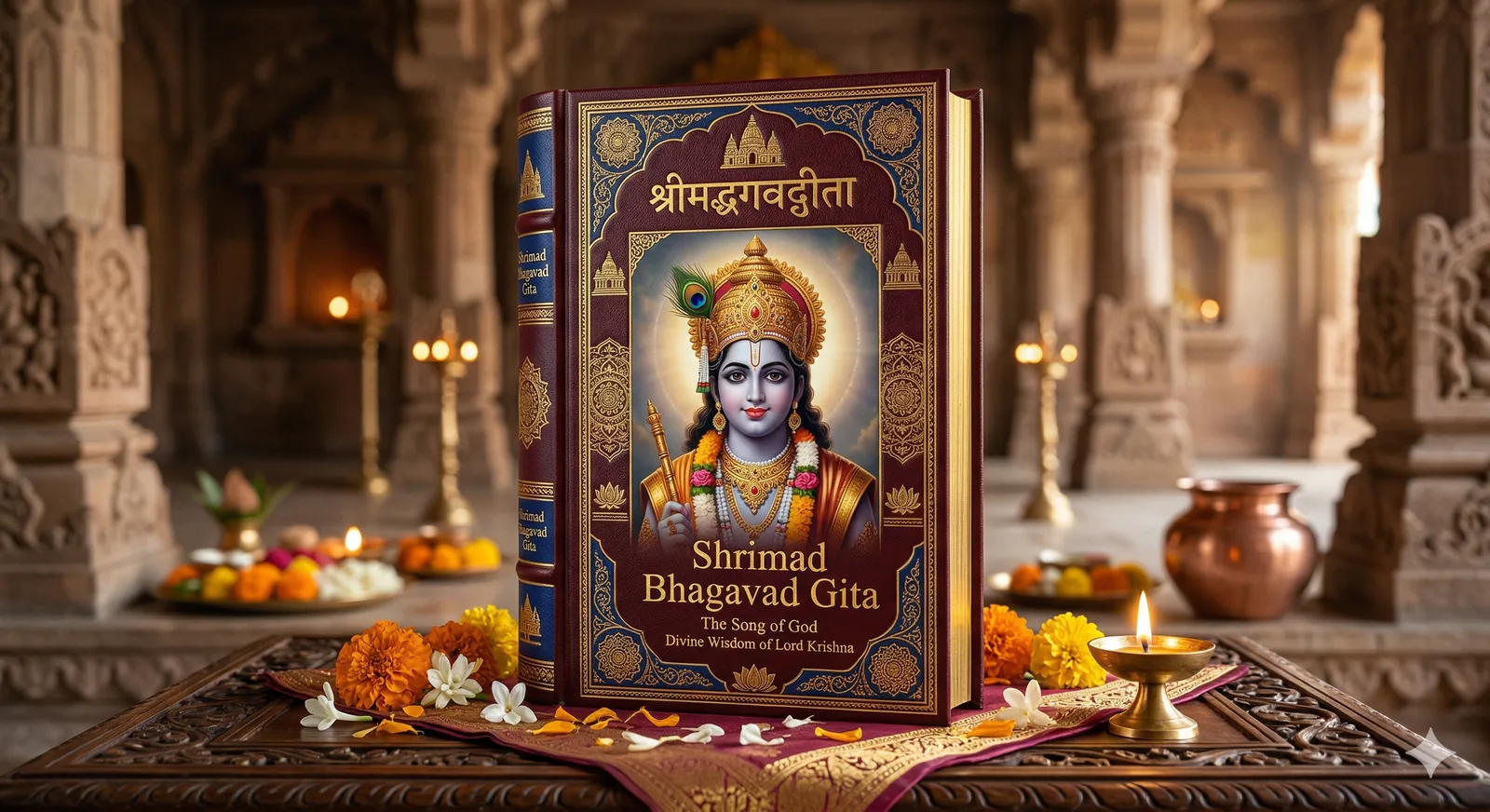
The Bhagavad Gita's Guide to Anxiety and Stress in Modern Life
Discover how Krishna's teachings on Nishkama Karma, Dharma, and the witness self offer practical, modern solutions for burnout and daily anxiety.
What Is Hinduism? A Complete Guide to Sanatan Dharma for Modern Life
Discover what Hinduism truly teaches about God, the Self, karma, dharma, rebirth and liberation — and how Sanatan Dharma can transform modern life.

Do Hindus Really Worship 33 Crore Gods?
Does Hinduism really have 33 crore gods? Discover the 33 Vedic devas, Brahman, Ishvara, and why Hindus approach one divine reality through many sacred forms.
Karma Yoga: How Selfless Action Transforms Your Work, Relationships, and Soul
Discover how Karma Yoga and Nishkama Karma offer a direct cure for workplace burnout, transactional relationships, and outcome-driven anxiety.

The Ancient Science of Yoga: What 5,000 Years of Practice Can Teach You Today
Discover Patanjali's eight limbs, the neuroscience of pranayama, and a daily 30-minute practice that restores yoga to a complete spiritual path.

Karma and Reincarnation: What Actually Happens After Death?
Explore what Hinduism teaches about karma, death, rebirth, heaven, past lives and moksha — without superstition, fear or victim-blaming.
Hindu Scriptures Explained: Is There One Hindu Holy Book?
Discover how Hindu scriptures fit together, from the four Vedas and Upanishads to the Bhagavad Gita, Ramayana, Mahabharata, Puranas, Agamas and Dharma Shastras.
Meditation: The Vedic Science of Knowing Yourself
Discover how Vedic meditation (Dhyana) goes beyond stress relief to reveal pure consciousness through the Yoga Sutras, Gayatri Mantra, and Upanishads.

Dharma: Discovering Your True Purpose in the 21st Century
Beyond "duty" and "righteousness", Dharma is the law of your own being — and the reason so many comfortable lives still feel hollow.

Lord Shiva: The Meaning Behind His Most Powerful Symbols
Discover who Lord Shiva is and what his third eye, crescent moon, Ganga, trishul, damaru, serpent, sacred ash, Nataraja form and Shiva Lingam truly represent.
Bhakti Yoga: How Devotion Heals Loneliness and Opens the Heart
Discover the nine forms of Bhakti, the medicine of Kirtan, and why a broken heart is often the doorway to the deepest spiritual awakening.

Who Is Lord Krishna? His Life, Teachings and Spiritual Meaning
Discover Krishna's birth, childhood, love for Radha, Govardhan, role in the Mahabharata, spiritual teachings and the meaning behind his flute, peacock feather and blue form.

The Ramayana: 12 Spiritual Lessons for Modern Life
Discover 12 timeless Ramayana lessons about duty, inner strength, service, leadership, loyalty, ego and moral courage — with honest reflection on its difficult episodes.
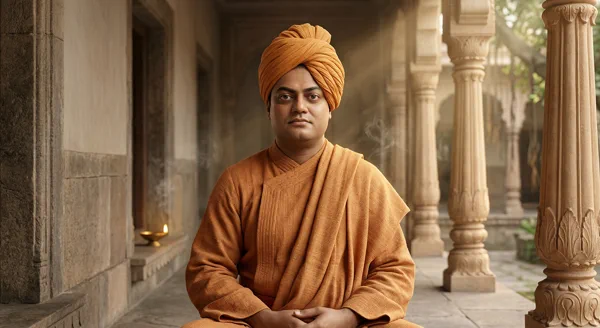
Who Am I? Vedanta and the Question That Changes Everything
Discover Advaita Vedanta and Atma Vichara (Self-Inquiry). Explore Adi Shankara, Ramana Maharshi, Aham Brahmasmi, and the 5 Koshas.
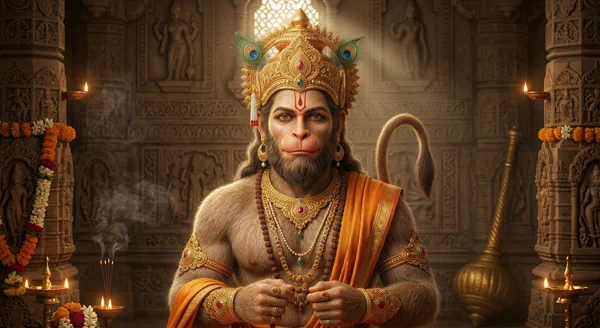
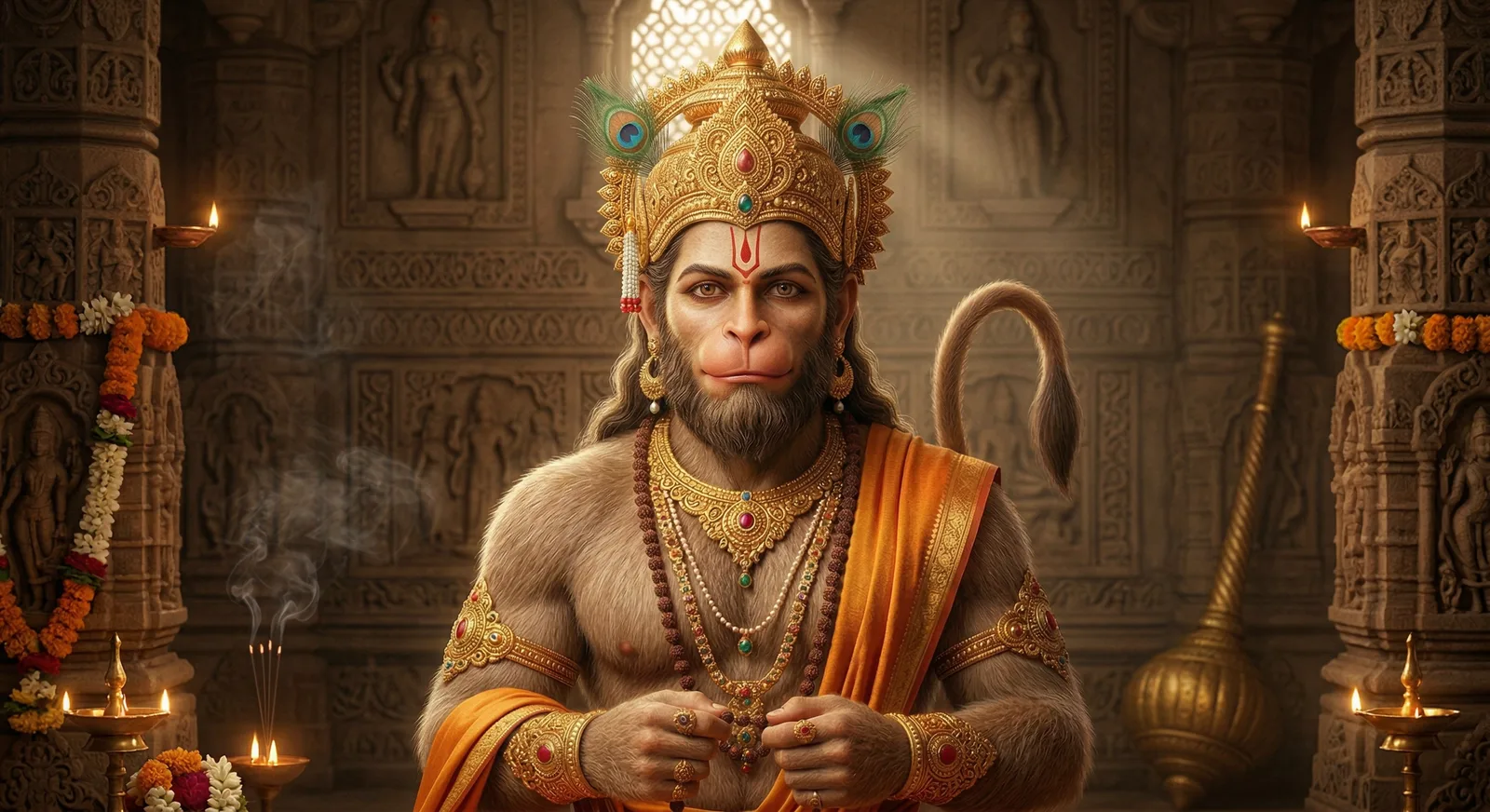
Hanuman's Courage: Spiritual Lessons in Resilience for Your Darkest Times
Discover how Hanuman's mythology provides a precise psychology of resilience—turning self-doubt, grief, and impossible challenges into spiritual strength.
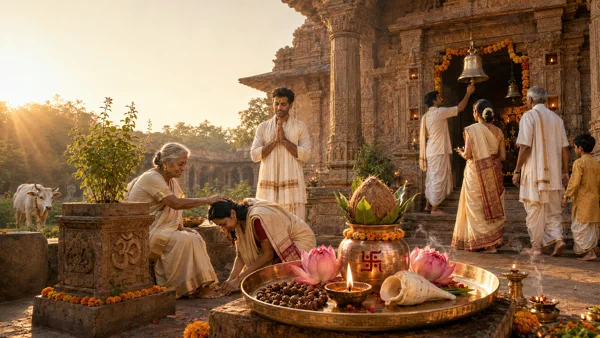
15 Hindu Symbols and Traditions Explained
Understand the spiritual meaning behind 15 important Hindu symbols, sacred objects and everyday traditions.

How to Perform Hindu Puja at Home
Learn how to perform a simple Hindu puja at home using a diya, water, flowers, incense, food and heartfelt prayer.
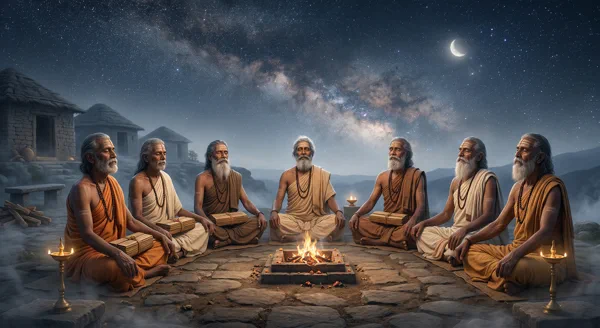
Sanatan Dharma: The Eternal Truth the World Needs Now
Discover Sanatan Dharma — the eternal cosmic law behind Hinduism. Explore Rigveda seers, Vasudhaiva Kutumbakam, and the four Purusharthas.

The Upanishads on Fear, Death, and What Lies Beyond
Discover how the Katha and Brihadaranyaka Upanishads address the fear of death (thanatophobia) through the story of Nachiketa and the immortality of Atman.
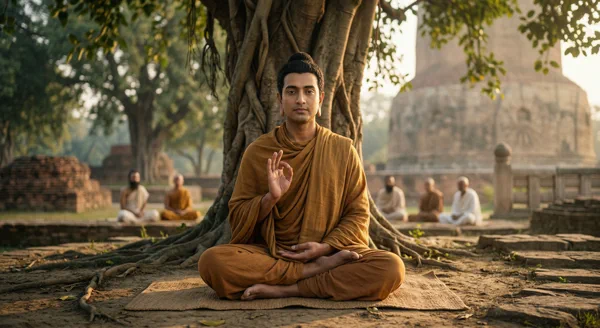
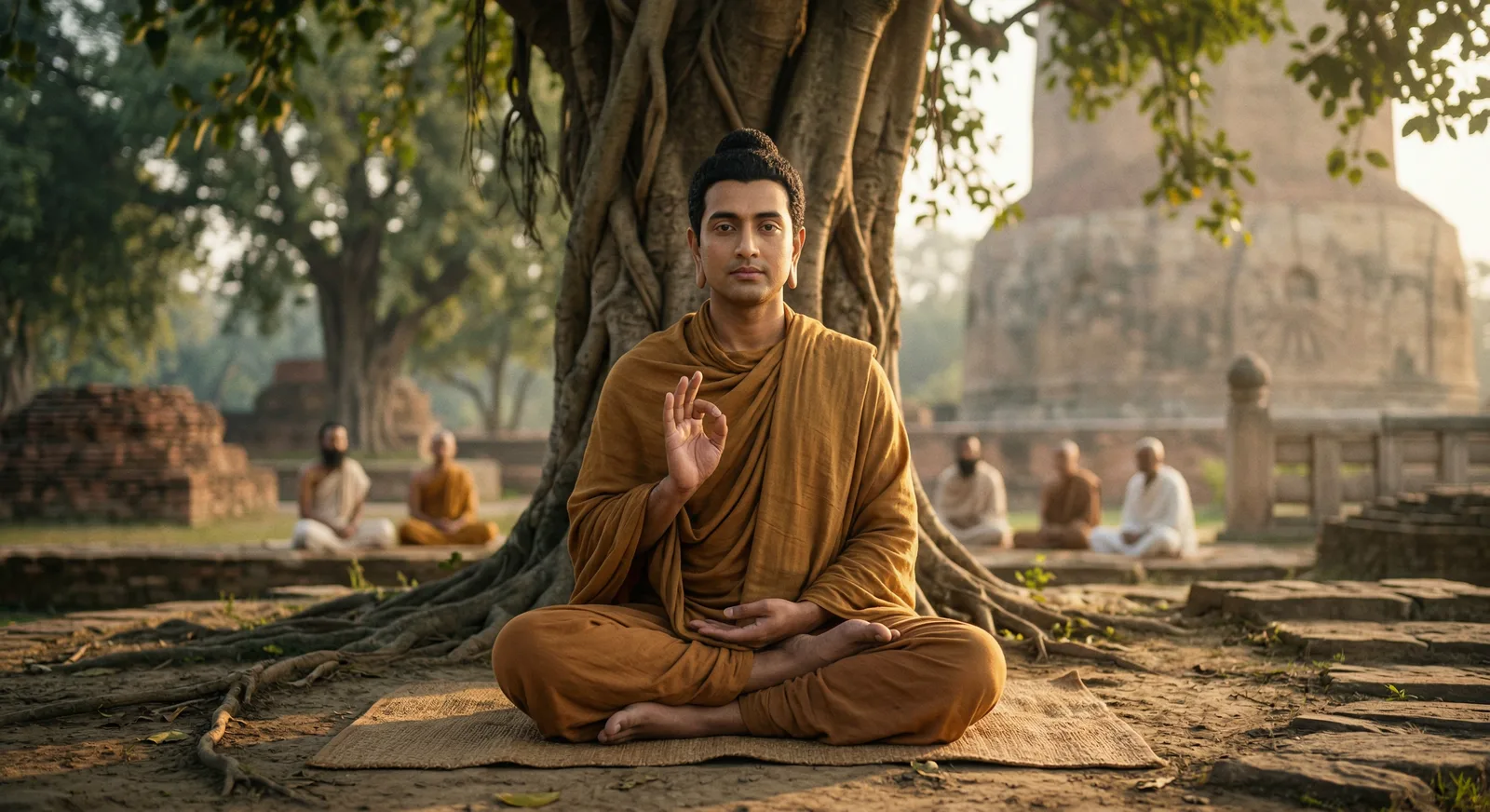
The Four Noble Truths: Buddhism's Map of Human Suffering and Freedom
Discover the Four Noble Truths (Dukkha, Samudaya, Nirodha, Magga) and the Noble Eightfold Path — the Buddha's psychological blueprint for liberation.

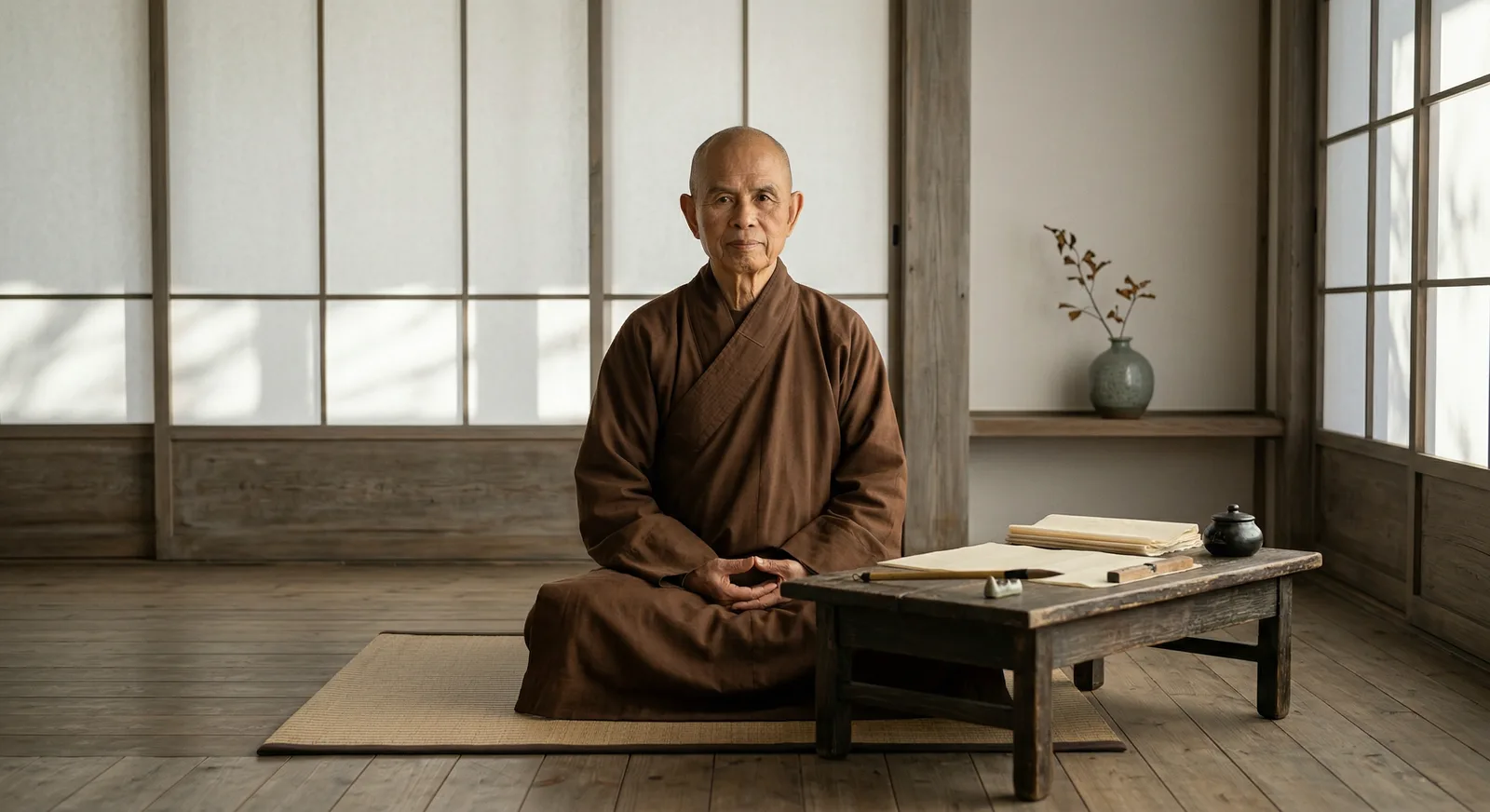
Mindfulness: The Buddhist Art of Being Present in a World That Never Stops
Discover Buddhist mindfulness (Sati) — the Satipatthana Sutta's 4 Foundations, Anapanasati breathwork, Thich Nhat Hanh's practice, and brain neuroscience.

The Sermon on the Mount: Jesus's Most Radical Teachings for Modern Life
Discover how Jesus's Sermon on the Mount (Matthew 5–7) overturns worldly assumptions about power, anxiety, revenge, and radical love (Agape).
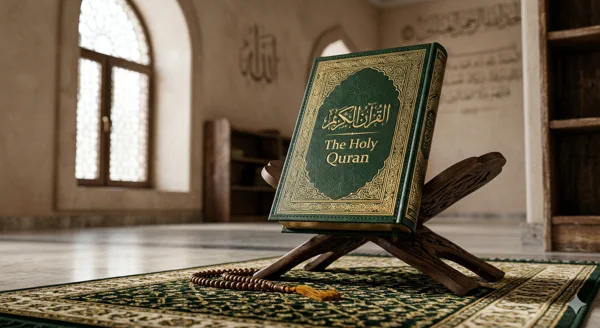
Sabr, Shukr, and Salah: The Islamic Path to Inner Peace
Discover how Sabr (patience), Shukr (gratitude), and Salah (mindful prayer) provide a complete framework for inner peace, grounded in the Quran and Hadith.

Wu Wei and the Tao: Ancient Chinese Wisdom for a World Obsessed with Hustle
Discover Taoism's Wu Wei (effortless action) from the Tao Te Ching and Zhuangzi — the ultimate antidote to hustle culture, anxiety, and micromanagement.

Guru Nanak's Message for a Fractured World: One God, One Humanity
Discover Guru Nanak's Sikh philosophy — Ik Onkar (One Universal Creator), the 3 Pillars (Naam, Kirat, Vand), Langar equality, and daily Seva.

Confucian Wisdom for Modern Relationships: Family, Friendship, and Loyalty
Discover Confucian ethics — Ren (humaneness), Li (ritual propriety), Xiao (filial piety), the 5 Relationships, and the ideal of the Junzi.
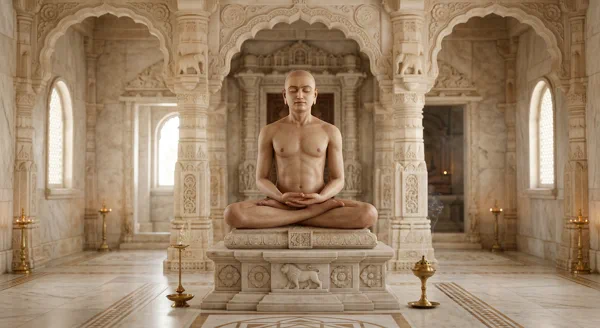
Ahimsa in Action: How Jain Non-Violence Can Heal Your Mind and the Planet
Discover Jainism's radical philosophy of Ahimsa (non-violence), Anekantavada (multi-sided truth), and Aparigraha (non-possession) to transform daily life.

Tikkun Olam: The Jewish Vision of Healing the World
Discover Tikkun Olam — the Jewish spiritual mandate to repair a broken world. Explore Kabbalah's Shevirat HaKelim, Maimonides' Tzedakah, and Pirkei Avot.
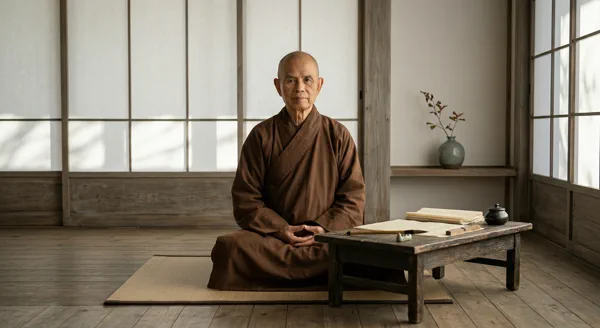
Loving-Kindness: The Buddhist Practice That Heals Relationships and Opens the Heart
Discover Metta (loving-kindness) meditation — the Karaniya Metta Sutta, the 4 Brahmaviharas, self-compassion, neuroscience benefits, and 5-stage practice.