The Fear Beneath Every Other Fear
Beneath our daily worries—work stress, relationship friction, financial insecurity, aging—there is a single root fear that silently drives human anxiety: the fear of annihilation (Thanatophobia).
The fear of ceasing to exist, of losing our identity, and of losing those we love casts a long shadow across human life. Modern culture excels at distracting us from this reality through constant entertainment, workaholism, and consumerism. Yet, when the noise fades in the quiet of the night, the existential question remains.
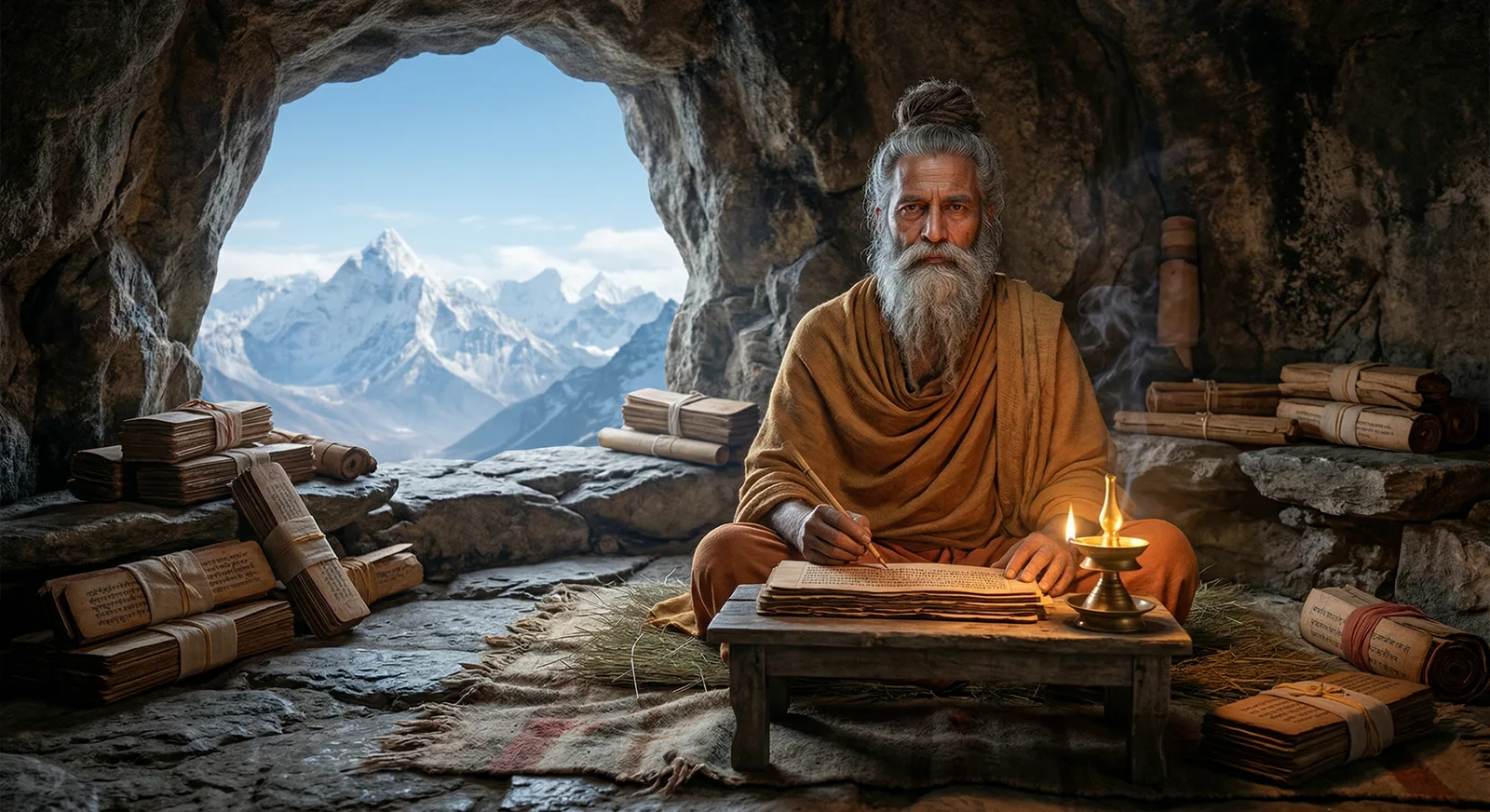
Over 2,500 years ago, the sages of the Upanishads—the philosophical summit of the Vedas—faced this fear without flinching.
Rather than offering sentimental comfort or demanding blind belief in dogmas, the Upanishads approached death as an empirical investigation into the nature of consciousness. Their findings remain among the most profound discoveries in world literature.
Key Takeaways from the Upanishads on Death
- You Are Not the Body: Death claims the physical vehicle (Sthula Sharira), but cannot touch the eternal observer within (Atman).
- The Choice of Nachiketa: True wisdom begins when we prioritize the eternal path (Shreya) over fleeting sensory comfort (Preya).
- Death as a Teacher: Contemplating impermanence does not make life morbid; it strips away trivialities and unleashes authentic living.
The Katha Upanishad: Nachiketa's Dialogue with Death
The Katha Upanishad tells the dramatic story of Nachiketa, a brave young boy who travels to the realm of Yama, the Lord of Death. Nachiketa waits at Yama's doorstep for three days without food or water.
Impressed by the boy's resolve, Lord Yama grants him three boons. For his third boon, Nachiketa asks the ultimate question:
"When a human being dies, there is a doubt: some say 'he still exists,' and others say 'he exists no more.' Taught by you, I wish to know the truth about what lies beyond."
                     ┌────────────────────────────────┐
                     │     NACHIKETA'S 3RD BOON       │
                     └───────────────┬────────────────┘
                                     │
         ┌───────────────────────────┴───────────────────────────┐
         │                                                       │
┌────────▼────────────────┐                    ┌─────────────────▼───────────────┐
│ YAMA'S INITIAL TEMPTATION│                    │    NACHIKETA'S UNWAVERING     │
│ Wealth, Kingship, Fame, │                    │            REJECTION          │
│ Power, Long Life.       │                    │ "All these pass away. Give me  │
└─────────────────────────┘                    │  the truth about Death!"      │
                                               └─────────────────┬───────────────┘
                                                                 │
                                               ┌─────────────────▼───────────────┐
                                               │    YAMA REVEALS THE ATMAN      │
                                               │ "The Self is unborn, immortal,  │
                                               │  and indestructible!"         │
                                               └─────────────────────────────────┘
Yama tries to dissuade Nachiketa, offering him vast kingdoms, armies, long life, and endless luxury. But Nachiketa stands firm:
"All these pleasures pass away, O Death! They wear out the vigor of our senses. Keep your horses, dance, and song for yourself. Can wealth satisfy a person who has seen Death? Tell me the secret of the Great Beyond!"
Realizing Nachiketa is a rare, authentic seeker, Lord Yama reveals the core Vedantic secret: The Atman (Self) is immortal.
The Immortal Atman: Sacred Verse 1.2.18
In Verse 1.2.18 of the Katha Upanishad, Lord Yama delivers the foundational declaration on human immortality:
"Na jayate mriyate va vipaschit na ayam kutachit na babhuva kashchit |
Ajo nityah shashvato 'yam purano na hanyate hanyamane sharire ||"Translation: "The conscious Self is never born, nor does it ever die. It came from nowhere, and nothing came from it. It is unborn, eternal, ever-existing, and ancient. It is not slain when the body is slain."
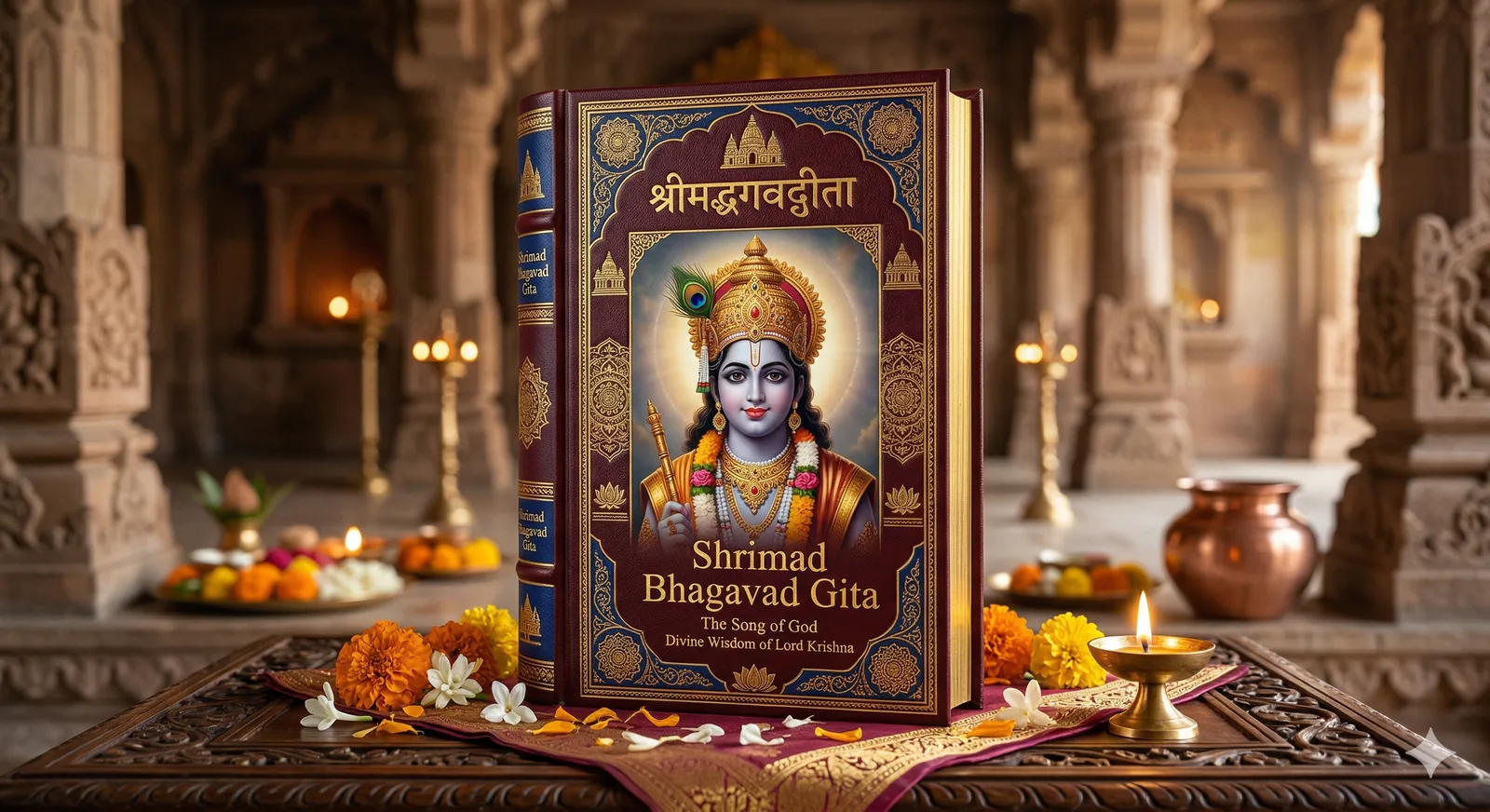
This insight was later reiterated by Lord Krishna in the Bhagavad Gita (Chapter 2, Verse 22): just as a person discards worn-out garments and puts on new ones, the embodied soul discards worn-out physical bodies and enters new forms.
Shreya vs. Preya: The Two Paths of Life
Lord Yama explains to Nachiketa that every human being stands at a constant crossroads between two choices:
| Path | Meaning | Nature & Outcome |
|---|---|---|
| Preya (प्रेयस्) | The Pleasant | Pursuit of immediate sensory pleasure, social status, and short-term comfort. Leads to ongoing attachment, fear of loss, and spiritual bondage. |
| Shreya (श्रेयस्) | The Good / Evolutionary | Pursuit of spiritual truth, self-knowledge, and lasting freedom. Requires discipline, but leads to peace and liberation (Moksha). |
The fear of death thrives when we build our entire life around Preya—attaching our identity to impermanent things. When we choose Shreya, we build our life around the eternal.
Brihadaranyaka Upanishad: The Immortality Prayer
The Brihadaranyaka Upanishad (1.3.28) provides the sacred mantra invoked for millennia to transcend mortality and grief:
"Om Asato Ma Sadgamaya |
Tamaso Ma Jyotirgamaya |
Mrityor Ma Amritam Gamaya ||"Translation:
"Lead me from the unreal to the real,
Lead me from darkness (ignorance) to light (wisdom),
Lead me from death (body identification) to immortality (Self-knowledge)."
This prayer is not a petition for physical bodies to live forever. It is a petition to awaken from the illusion that we are merely physical bodies.
3 Upanishadic Contemplations to Dissolve Fear
You can practice these classic contemplations to build existential resilience:
1. The "Unchanging Witness" Exercise
Sit quietly for 10 minutes. Revisit memories from your childhood, adolescence, and present life.
- Notice how your physical body, thoughts, emotions, and roles have completely changed over time.
- Ask yourself: "What in me has remained identical through all these decades?"
- The quiet, observing consciousness that watched you as a child is the exact same consciousness reading these words now. That witness is Atman.
2. Daily Impermanence Reframe (Pratipaksha Bhavana)
Once a day, when you feel overly anxious about a project, argument, or status symbol:
- Gently remind yourself: "In 100 years, every person in this room, including me, will have left their physical body."
- This reflection is not depressing; it instantly restores perspective, dissolving petty ego concerns and highlighting what truly matters: love, wisdom, and peace.
3. Recitation of the Asato Ma Mantra
Incorporate the Asato Ma Sadgamaya mantra into your daily Vedic Meditation routine. Feel the resonance of the ancient Sanskrit sounds shifting your mind from body-identification to spacious awareness.
Interlinking & Further Wisdom
Continue your exploration of death, karma, and self-realization across our wisdom library:
- How soul evolution works across lifetimes: Karma and Reincarnation
- The science of self-inquiry: Vedanta & Self-Inquiry (Who Am I?)
- Applying non-attachment to daily stress: The Bhagavad Gita's Guide to Anxiety
- Foundational scriptures overview: Hindu Scriptures Explained
Conclusion: Living with Fearless Wisdom
The Upanishads do not ask us to ignore death or suppress grief. They invite us to see death as the ultimate teacher. When you know that your core identity is unborn and indestructible, the terror of death dissolves—and for the first time, you become truly free to live.
Are you ready to discover deeper spiritual freedom? Start My Transformation and explore AI guidance trained on the Upanishads and sacred traditions worldwide.