A Battlefield That Looks a Lot Like Monday Morning
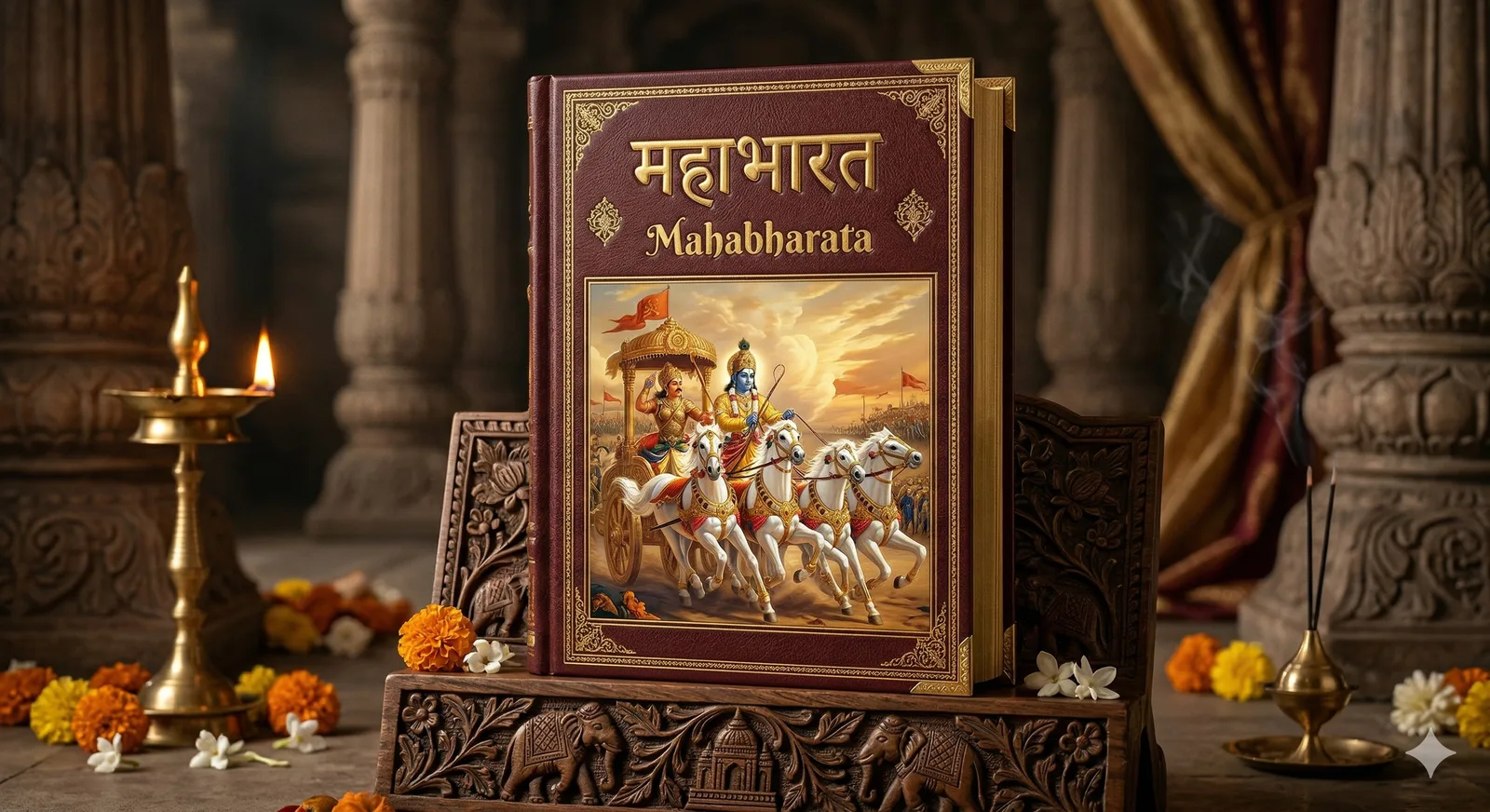
Arjuna was standing between two armies, bow in hand, when he collapsed. His limbs went weak, his mind raced, and he could not breathe. He told his charioteer, Krishna: "I do not see how I can do this."
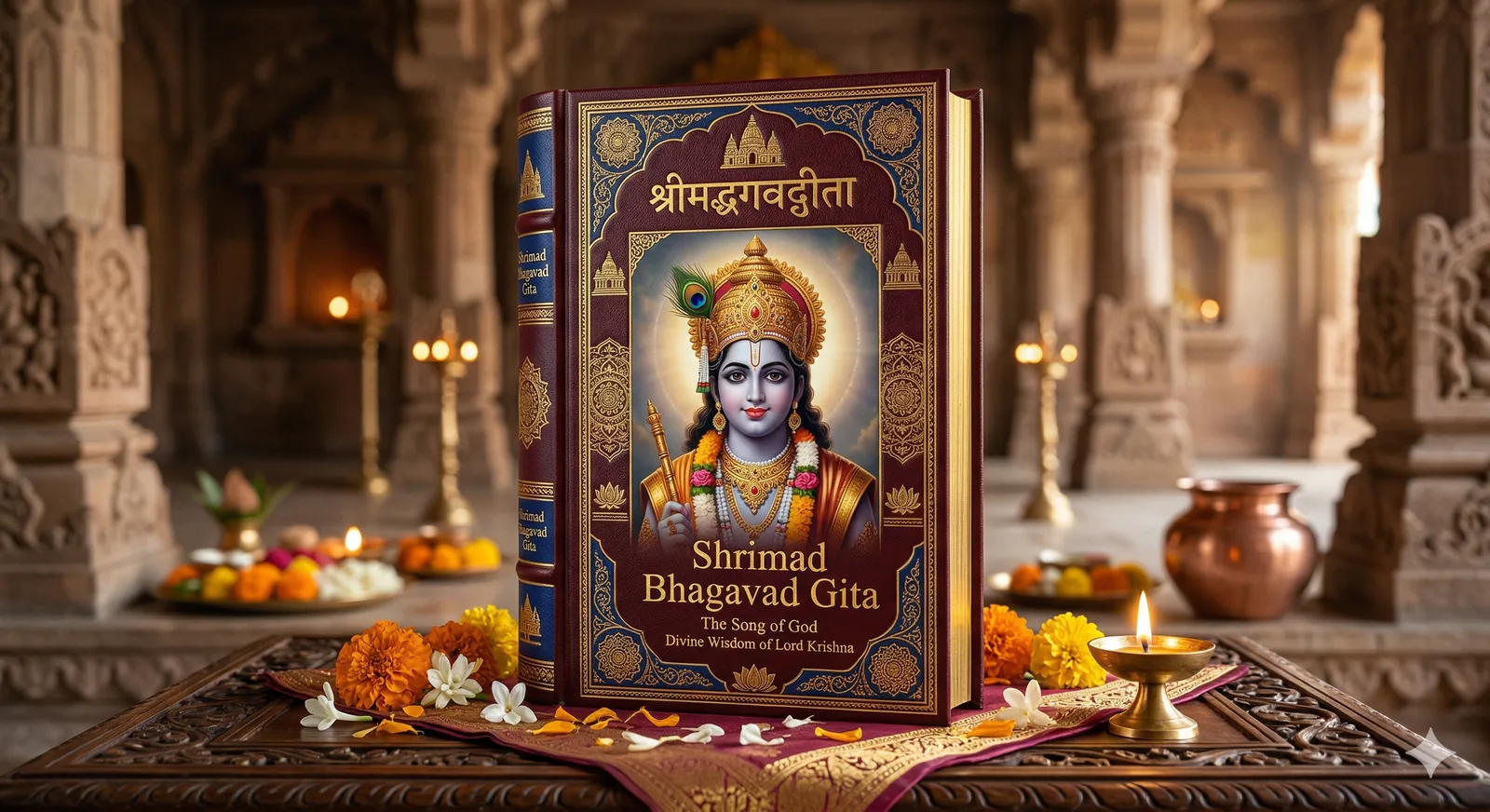
Sound familiar? You may not be standing on a literal battlefield, but the paralysing anxiety Arjuna felt is the exact same stress millions experience every day in boardrooms, relationships, and the quiet of 3 AM. The Bhagavad Gita was not written for monks in quiet caves. It was written for a person in the middle of the most impossible, high-stakes situation of their life.
Key Takeaways from the Gita on Mental Health
- Anxiety stems from attachment: We suffer when we tie our identity to impermanent things like job titles, wealth, or the opinions of others.
- Focus on the process, not the outcome: The practice of Nishkama Karma teaches us to give our absolute best effort while releasing control over the final result.
- You are the observer: By practicing Kshetrajna (the inner witness), you can observe your anxious thoughts without letting them consume your core identity.
The Diagnosis: What the Gita Actually Says About Anxiety
Krishna's first teaching to the shaking Arjuna is not a superficial pep talk; it is a profound psychological diagnosis. In Chapter 2, Verse 11, he tells him: "You are grieving for those who do not deserve grief. The wise grieve neither for the living nor for the dead."
This is not cold logic—it is the most liberating concept you can grasp when drowning in anxiety. Most of our modern suffering, Krishna explains, comes from treating impermanent things as if they were permanent. We attach our sense of self to our careers, our relationships, and our social standing. When any of these inevitably change, we fall apart.
The Restless Mind (Abhyasa and Vairagya)
In Chapter 6, Verse 34, Arjuna complains that the restless mind is "more difficult to control than the wind." Krishna does not promise controlling it will be easy, but he outlines a direct prescription:
- Abhyasa (Consistent practice)
- Vairagya (Gradual non-attachment)
It is not about forcing the mind into silence, but training it like a muscle—gently, consistently, and without self-judgment.
Nishkama Karma: The Ancient Antidote to Burnout
One of the Bhagavad Gita's most radical teachings is found in Chapter 2, Verse 47: "You have a right to perform your prescribed duty, but you are not entitled to the fruits of action."
Definition: Nishkama Karma (Sanskrit: निष्काम कर्म) translates to "desireless action." It is the practice of performing your duties with full dedication, without being attached to the final outcome.
Modern psychology refers to this as focusing on the process rather than the outcome. The Gita diagnosed this 5,000 years ago. Consider what drives workplace burnout and daily anxiety: the fear of failure, imposter syndrome, and stressing over metrics we cannot fully control.
Nishkama Karma does not ask you to be passive or lazy. It demands you give your absolute best effort, and then release your grip on what happens next. The moment you stop measuring your self-worth by the external outcome, you are free to act with full presence and energy. This concept is thoroughly explored in our guide to Karma Yoga: Selfless Action, which breaks down the science of acting in the world without being enslaved by it—at work, at home, and inside your own mind.
Sanatana Dharma: Realigning with Your Core Purpose
Much of modern anxiety comes from living out of alignment with our true nature. In the Gita, Krishna speaks extensively about Dharma—one's inherent duty or righteous path. When we try to live someone else's life (whether dictated by societal pressure or parental expectations), we experience deep existential stress.
To understand this deeper, exploring the foundational question of What Is Hinduism reveals how Sanatana Dharma can transform modern life by connecting us back to universal truths regarding God, the Self, karma, and rebirth.
3 Practical Ways to Apply the Gita This Week
The Bhagavad Gita is a manual for living. Here are three concrete ways to apply its teachings to your modern life today:
1. The Witness Practice (Kshetrajna)
In Chapter 13, Krishna describes the Kshetrajna—the inner witness. This is the part of you that observes your thoughts and emotions without being consumed by them.
- The Action: Begin each morning by sitting quietly for five minutes. Watch your thoughts arise and pass like clouds. Remind yourself: You are not your anxiety; you are the one watching it. You can pair this practice with classical Yoga and Breathwork to unite your body, mind, and spirit.
2. Reframe Work as Service (Seva)
Anxiety thrives on ego. When we make everything about our own success or failure, the pressure becomes unbearable.
- The Action: Whatever your job—teacher, developer, parent, or driver—ask yourself: Who does this work truly serve? When work shifts from personal performance to serving others, the ego's grip loosens, and deep meaning returns to the mundane.
3. The Daily Surrender
The practical application of Nishkama Karma requires an active release of control.
- The Action: Each evening, write down three things you worked hard on today. Then, consciously "offer" the results to something greater than yourself—whether you call it God, the universe, or simply the natural flow of life.
The Bhagavad Gita's deepest message is this: You are not your anxiety. You are not your fear. You are the eternal, undying Atman—the true Self. Everything else is simply weather passing through a clear sky.
Are you ready to explore your deepest spiritual questions without judgment? Meet the Gurus and start your transformation with AI-powered guidance drawn from the Bhagavad Gita and wisdom traditions worldwide.