Key Takeaways
- Dharma Is Not Static Duty: It spans cosmic harmony (Rita), universal morality (Sanatana Dharma), social context (Varna Dharma), and your individual calling (Svadharma).
- The Core Gita Insight: Performing your own inherent path—even imperfectly—brings true spiritual integrity, whereas imitating another person's success causes internal friction.
- Purpose Evolves Over Time: Through Ashrama Dharma (the four life stages), your obligations shift naturally as you age and mature.
- Soul Friction as a Signal: Emptiness amidst material success is often an intuitive warning that your actions are out of alignment with your deepest nature.
The Quiet Crisis of a Life Without Purpose
By many external measures, millions of people today are "succeeding." High salaries, comfortable homes, regular holidays, and curated social media profiles define modern achievement. And yet rates of depression, anxiety, burnout, and quiet existential emptiness remain at historic highs. Something foundational is missing—and that something is Dharma (the cosmic order and inherent truth of life).
Dharma is one of the most vital yet frequently misinterpreted concepts in Sanatana Dharma. It is commonly translated into English as "duty," "religion," or "righteousness." However, these translations are thin shadows of the original Sanskrit meaning. Derived from the root dhri (meaning "to uphold" or "to sustain"), Dharma is the law that sustains the universe. On a personal level, it represents "the law of your own being"—the unique truth of who you are and how your life is designed to blossom.
The Four Dimensions of Dharma
The Hindu tradition describes Dharma through four interlocking dimensions, each contributing to a complete and meaningful life.
1. Rita: Cosmic Harmony
Rita is the principle of cosmic order that underlies the entire universe. It is the natural law that governs the motion of planets, the turning of seasons, the flow of rivers, and the rhythm of day and night. In the words of the Upanishads, Rita is "the rhythm of the cosmos," the unspoken harmony that ensures the universe functions as a coherent whole. On a personal level, living in alignment with Rita means recognizing that our actions have ripples that extend far beyond ourselves, affecting the larger balance of existence.
2. Sanatana Dharma: Universal Ethics
Sanatana Dharma refers to the eternal moral laws and ethical principles that apply to all beings, regardless of time, place, or culture. These are universal virtues such as ahimsa (non-violence), satya (truthfulness), asteya (non-stealing), aparigraha (non-possessiveness), and daya (compassion). Unlike dogmatic religious rules, Sanatana Dharma is based on the enduring truths of human consciousness. Living in accordance with Sanatana Dharma creates the foundation for individual well-being and social harmony.
3. Varna Dharma: Social Context
In the ancient Vedic understanding, Varna Dharma describes the responsibilities that arise from our role within society. Historically, this related to one's aptitudes, skills, and natural inclinations rather than birth-based caste. Varna Dharma acknowledges that different individuals have different capacities and contributions to make, and that society functions best when these different roles are performed with integrity and skill. The goal is not to divide people, but to recognize the unique value each person brings to the collective.
4. Svadharma: Individual Calling
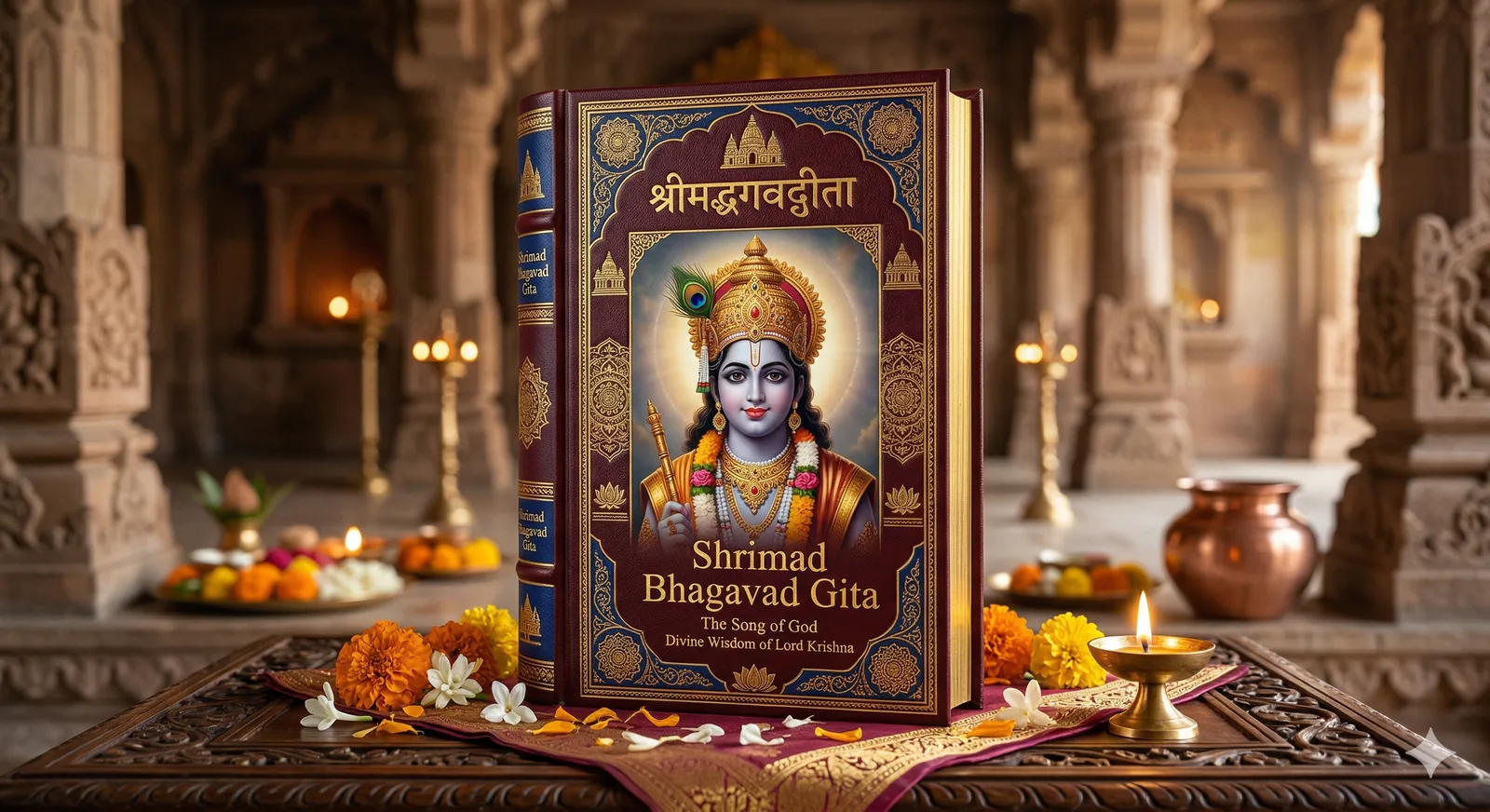
Svadharma is perhaps the most personally significant dimension. It refers to your unique purpose, your specific path, and the particular way your being is meant to express itself in the world. As the Bhagavad Gita famously states, "Sreyan svadharmo vigunas"—your own dharma, even if imperfectly performed, is superior to the perfectly executed dharma of another.
based on your innate nature (Svaprabhava).
┌────────────────────────────────────────┐
│               RITA                     │
│         (Cosmic Order)                 │
│  ┌──────────────────────────────────┐  │
│  │        SANATANA DHARMA           │  │
│  │      (Universal Ethics)          │  │
│  │  ┌────────────────────────────┐  │  │
│  │  │       VARNA DHARMA         │  │  │
│  │  │    (Social Role/Context)   │  │  │
│  │  │  ┌──────────────────────┐  │  │  │
│  │  │  │      SVADHARMA       │  │  │  │
│  │  │  │   (Personal Path)    │  │  │  │
│  │  │  └──────────────────────┘  │  │  │
│  │  └────────────────────────────┘  │  │
│  └──────────────────────────────────┘  │
└────────────────────────────────────────┘
It is Svadharma that the Bhagavad Gita addresses with urgent clarity. In Chapter 3, Verse 35, Krishna makes a revolutionary declaration to Arjuna:
"Sreyan svadharmo vigunah para-dharmat sv-anusthitat"
"It is far better to perform one's own dharma, even if imperfectly, than to master the dharma of another."
This teaching is not an excuse for sloppy work. Rather, it is a reminder that copying someone else's path—no matter how glamorous or lucrative it appears—is a fundamental betrayal of your own soul's blueprint.
How to Discover Your Svadharma
While Western culture often frames purpose through the lens of short-term "passion" (which can be fleeting and ego-driven), classical wisdom views Svadharma as an uncovering of your inherent nature. You can locate your Svadharma at the intersection of three key self-inquiries:
- Innate Aptitude (Sahaja): What activities flow through you with natural ease, where focus happens without forceful effort?
- Worldly Need (Loka Sangraha): What genuine suffering or practical necessity in your immediate environment calls for your specific skills?
- Processed Experience (Samskara): How have your life stories—including your trials, heartbreaks, and mistakes—uniquely equipped you to help others?
| Western "Passion" | Vedic "Svadharma" |
|---|---|
| Driven by personal preference & emotion | Grounded in innate nature (Prakriti) |
| Focuses on what I want to get | Focuses on what I am built to give |
| Changes frequently with trends | Evolves steadily with maturity |
| Often creates anxiety & pressure | Brings deep inner alignment (Rta) |
Purpose in Phases: Ashrama Dharma
Vedic tradition recognizes that human needs and duties change as we age. Through Ashrama Dharma, life is divided into four distinct stages:
- Brahmacharya (Student Stage): Focuses on discipline, education, acquiring skills, and cultivating character.
- Grihastha (Householder Stage): Focuses on career, raising a family, creating wealth (Artha), enjoying ethical pleasures (Kama), and supporting society through Karma Yoga.
- Vanaprastha (Forest Dweller / Mentorship Stage): Gradual transition away from material accumulation toward spiritual contemplation, reflection, and mentoring the younger generation.
- Sannyasa (Renunciant Stage): Total spiritual absorption, letting go of worldly attachments, and seeking liberation (Moksha).
Understanding these stages removes the panic of trying to do everything at once. You are not meant to have the same focus at 25 as you do at 55. Changing priorities are not interruptions to your Dharma—they are your Dharma expressing itself through time.
Living Dharma in the Modern World
Living your Dharma in the 21st century does not require quitting your job, moving to an ashram, or cutting ties with normal life. It requires bringing conscious awareness and selfless service to whatever role you occupy:
-
In Healthcare: A practitioner who views every patient interaction as an opportunity to lighten human suffering is practicing Dharma.
-
In Business: An entrepreneur who conducts trade with transparent honesty and uses profits to uplift their community is practicing Dharma.
-
In Creative Fields: An artist or writer who creates works that inspire clarity rather than distraction is practicing Dharma.
-
In Family Life: A parent who raises children with patience, presence, and moral integrity is practicing Dharma.
The ultimate test of Dharma is internal. When you act in alignment with your true nature, you experience what the Upanishads describe as Rta—an unmistakable sense of harmony, like rowing with the current of a great river. When you violate your Dharma for quick profit or praise, a quiet friction arises in the soul. That friction is not a punishment; it is a gentle compass guiding you back home.