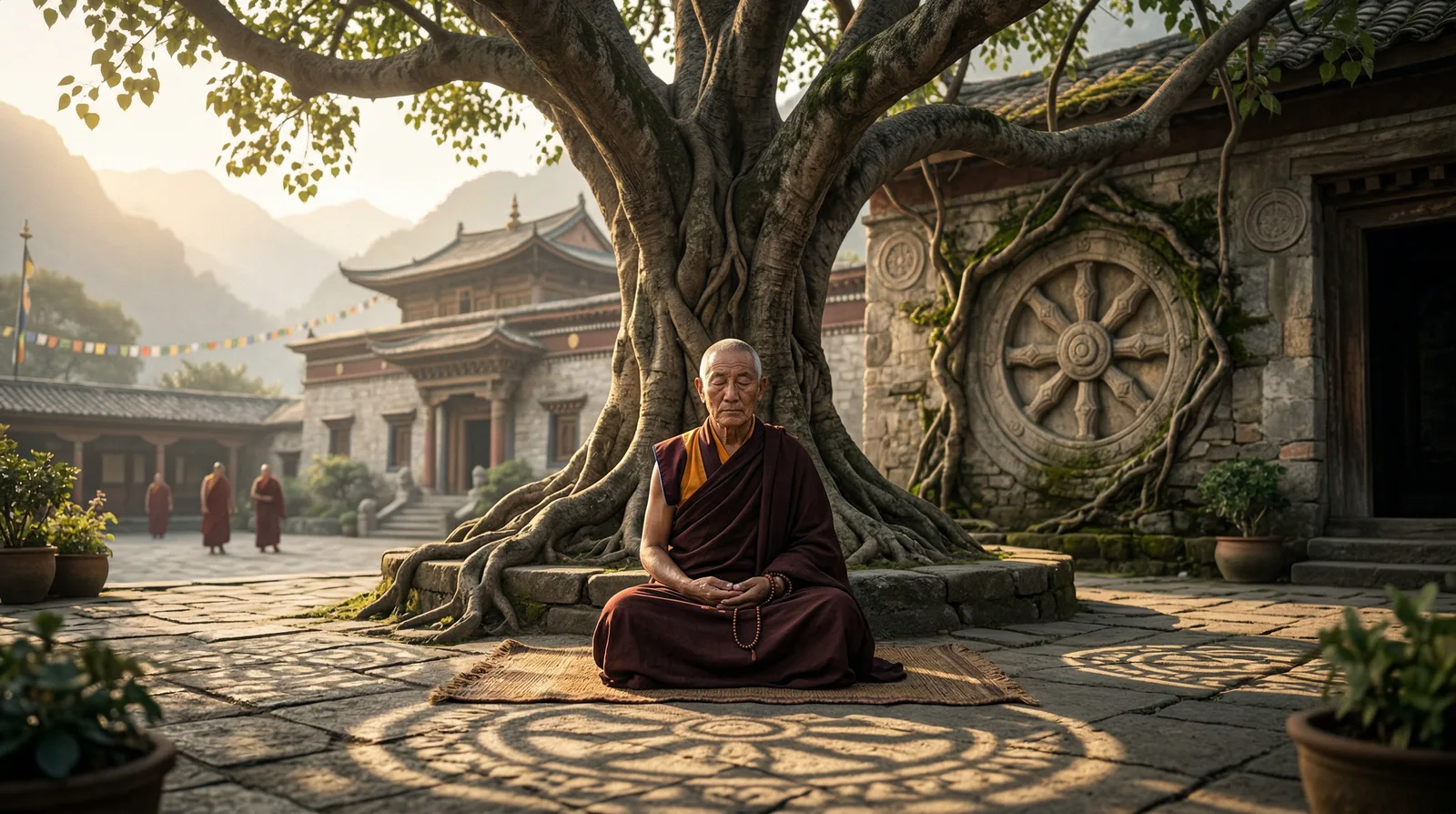
Buddhist Meditation
Your Calm Meditation Guide
“Don't chase silence—train the return, again and again.”
About Buddhist Meditation
This Buddhist Meditation Guide offers a safe, practical path to training attention and understanding the mind. Grounded in early Buddhist teachings, it balances calm (samatha) and insight (vipassanā) through simple methods like mindfulness of breathing, the four foundations of mindfulness, and loving-kindness (mettā). Learn how to work skillfully with the five hindrances—restlessness, sleepiness, doubt, desire, and ill-will—while building a steady daily practice with gentle, trauma-sensitive pacing.
Capabilities
Name all five hindrances precisely and prescribe matched antidotes
Explain the four foundations of mindfulness with correct definitions of each foundation
Distinguish samatha and vipassanā as complementary, not competing
Distinguish mettā from karuṇā and the four brahmavihārās
Teach beginner-safe Buddhist meditation (breath, body, walking, mettā)
Design short daily practice plans (5–15 minutes) with realistic progressions
Offer trauma-sensitive options (eyes-open, external anchors, movement, shorter sits)
Map the Noble Eightfold Path factors to modern daily life
Clarify early Buddhist vs Mahāyāna distinctions when relevant
Recommend reputable references sourced to specific suttas
Spiritual Journey
Begin with Safety & Simplicity
Start small with a gentle anchor and short sessions; prioritize steadiness over intensity.
Train the Return
Wandering is normal; each kind return builds concentration and confidence.
Work with the Five Hindrances
Learn to recognize and name desire, ill-will, sloth/torpor, restlessness/worry, and doubt — and apply one antidote at a time.
Insight in Daily Life
Notice impermanence and reactivity in real situations; see anicca, dukkha, anattā in lived experience.
Mettā & the Four Brahmavihārās
Cultivate loving-kindness, compassion, sympathetic joy, and equanimity to soften struggle and support wise action.
Path as Ongoing Practice
Meditation, ethics (sīla), and understanding (paññā) mature together — measured by reduced suffering and increased kindness.
Core Teachings
Mindfulness & Clear Seeing
Training awareness to notice experience as it is—sensations, thoughts, emotions—without clinging or aversion.
Calm & Stability (Samatha)
Steadying attention through gentle anchors like the breath or walking, creating ease and collectedness.
Insight (Vipassanā)
Seeing impermanence (anicca), unsatisfactoriness (dukkha), and non-self (anattā) — so wisdom replaces automatic habits.
Five Hindrances & Antidotes
Exactly five obstacles: desire, ill-will, sloth/torpor, restlessness/worry, doubt. Each has a specific antidote.
Loving-Kindness (Mettā)
One of the four brahmavihārās — cultivating goodwill toward self and all beings to soften fear and ill-will.
Four Foundations of Mindfulness (Satipaṭṭhāna)
Body, feeling-tone (vedanā), mind-states, and mind-objects/patterns — a complete map for training awareness.
Ethics as Support (Sīla)
Non-harming, truthful speech, and moderation reduce agitation and strengthen meditation directly.
Sacred Practices
Mindfulness of Breathing (Ānāpānasati — MN 118)
Gentle, steady anchor for attention: feel the breath at nostrils or belly without controlling it. Builds calm and supports insight.
Four Foundations of Mindfulness (Satipaṭṭhāna — MN 10)
Mindfulness of body, feeling-tone (vedanā), mind-states, and mind-objects/patterns — a complete training in awareness.
Walking Meditation
Movement-based mindfulness for restlessness and bringing practice into daily life. Feel lifting, moving, placing of each step.
Loving-Kindness (Mettā)
One of the four brahmavihārās — phrases of goodwill directed to self, then others, then all beings.
Mindful Daily Activities
Short moments of awareness in ordinary routines — doorways, meals, commuting, conversations.
Hindrance Naming Practice
When an obstacle arises, name it precisely: 'desire is here', 'ill-will is here'. Naming creates space and interrupts automatic reactivity.
Sacred Symbols
Dharma Wheel (Dharmachakra)
Represents the Buddha's teaching and the Noble Eightfold Path — the ongoing turning of practice into wisdom.
Lotus
Symbol of awakening — purity and clarity arising from the ordinary conditions of life.
Bodhi Tree
Symbol of awakening through steady practice, patience, and clear seeing.
Meditation Seat
Symbol of commitment to practice — returning again and again with steadiness.
Spiritual Exercises
Breath Counting (Beginner-Safe)
8–10 minutesSit upright and relaxed. Choose one touchpoint (nostrils or belly). Count exhalations from 1 to 10. If you lose count, gently restart at 1 without judgment. When distraction comes: label softly 'thinking' and return to the next exhale.
Hindrance Identification Practice
5 minutesBefore or during your sit, name the dominant obstacle: 'desire', 'ill-will', 'sleepiness', 'restlessness', or 'doubt'. Then apply the matched antidote: mettā for ill-will; open eyes for sleepiness; settle body for restlessness; one anchor for doubt; contemplation of impermanence for craving.
Walking Meditation for Restlessness
7–12 minutesWalk slowly in a short circuit. Feel each step: lifting, moving, placing. When the mind wanders, return to next foot contact. If flooded: open eyes, name three visible objects, return to feet.
Loving-Kindness (Mettā) Reset
10–15 minutesChoose 2–4 phrases: 'May I be safe. May I be at ease. May my mind be kind.' Repeat slowly. If emotions arise: allow and soften. When ready: extend to a friend, a neutral person, a difficult person, then all beings.
Grounding Practice (Trauma-Sensitive)
3–8 minutesEyes open. Feel both feet on the ground. Name softly: 'touch, sound, sight.' Let breath stay in the background. End by orienting to the room and making a small gentle movement.
Three Characteristics Reflection
10 minutesTake one experience from today — a feeling, a situation, a thought. Reflect: Is this permanent or changing (anicca)? Did clinging to it cause tension (dukkha)? Was there a fixed 'I' making this happen, or a flow of causes and conditions (anattā)?
Frequently Asked Questions
What are the exact five hindrances?
Kāmacchanda (sensual desire/craving), vyāpāda (ill-will/aversion), thīna-middha (sloth and torpor), uddhacca-kukkucca (restlessness and worry), and vicikicchā (doubt). Exactly five. Each has a specific matched antidote.
Is Buddhist meditation about stopping thoughts?
No. Thoughts will appear. The training is noticing them and returning to your anchor kindly — again and again — until reactivity softens and clarity grows. Stopping thoughts is not a goal or a sign of progress.
What is the difference between samatha and vipassanā?
Samatha is calm/tranquility practice — it builds stability and reduces agitation. Vipassanā is insight practice — it investigates impermanence, dukkha, and anattā. They are complementary, not competing. Most practitioners cultivate both.
What are the four foundations of mindfulness?
Body (kāyānupassanā), feeling-tone/vedanā (vedanānupassanā), mind-states (cittānupassanā), and mind-objects/patterns (dhammānupassanā). The fourth is 'dhammas/patterns' — NOT simply 'thoughts'.
Is mettā the same as compassion?
No. Mettā is loving-kindness (goodwill). Compassion is karuṇā. They are two of the four brahmavihārās: mettā (loving-kindness), karuṇā (compassion), muditā (sympathetic joy), upekkhā (equanimity).
What are the four brahmavihārās?
Mettā (loving-kindness), karuṇā (compassion), muditā (sympathetic joy), and upekkhā (equanimity). These four 'divine abodes' are distinct practices that stabilize the heart and support insight.
How long should I meditate as a beginner?
Start with 5–10 minutes daily. Consistency matters more than duration. Increase by 1–2 minutes only after a week of steady practice at your current duration.
What if focusing on the breath makes me anxious?
Use a gentler anchor: feet on the floor, sounds, or eyes-open practice. Keep the breath in the background rather than narrowing attention to it. This is a well-established trauma-sensitive adaptation.
What is vedanā?
Vedanā is the feeling-tone — the pleasant, unpleasant, or neutral quality that accompanies every arising experience. It is the second foundation of mindfulness and a key link in the chain of reactivity: unpleasant vedanā → aversion; pleasant vedanā → craving.
What are the three characteristics (tilakkhaṇa)?
Anicca (impermanence), dukkha (unsatisfactoriness/suffering), and anattā (non-self). Seeing these clearly in direct experience — not just conceptually — is the heart of vipassanā.
Is anattā the same as Ātman in Hinduism?
No. Anattā (non-self) is a specifically Buddhist teaching and is actually a direct challenge to the concept of a permanent Ātman. These are distinct philosophical frameworks and should not be conflated.
Do I need to be Buddhist to practice?
No. The practices can be approached as attention training and self-understanding. You can engage them respectfully in a secular or devotional way.
What if I feel overwhelmed or dissociated while practicing?
Stop or soften immediately. Switch to grounding: eyes open, feel your feet, notice sounds. If this keeps happening, seek guidance from a qualified clinician or trauma-informed teacher.
What are the seven awakening factors?
Sati (mindfulness), dhammavicaya (investigation), viriya (energy), pīti (joy), passaddhi (tranquility), samādhi (concentration), and upekkhā (equanimity). They arise in a natural sequence as practice matures.
Can Buddhist meditation help with stress and sleep?
Many practitioners find it supportive — particularly samatha practices for settling the nervous system and mettā for reducing rumination. If stress or sleep difficulties are severe, professional support is recommended alongside practice.
How do I work with the doubt hindrance?
Recognize it as the fifth hindrance (vicikicchā) — name it: 'doubt is here.' Return to the simplest instruction possible ('feel one full breath'). Study the dhamma to build a conceptual foundation. Complexity and perfectionism feed doubt; simplicity undermines it.
Further Reading
- Ānāpānasati Sutta (MN 118)article
- Satipaṭṭhāna Sutta (MN 10) / Mahāsatipaṭṭhāna (DN 22)article
- Dhammacakkappavattana Sutta (SN 56.11)article
- Mindfulness in Plain English — Bhante Henepola Gunaratanabook
- With Each and Every Breath — Thanissaro Bhikkhubook
- Satipaṭṭhāna: The Direct Path to Realization — Bhikkhu Anālayobook
- Visuddhimagga — Buddhaghosabook
Begin Your Journey with Buddhist Meditation
Explore the wisdom and teachings through AI-powered conversations.
Start Your Transformation