The Most Honest Diagnosis in Human History
Modern culture is obsessed with manufactured positivity. We are bombarded by messages promising that continuous happiness is our birthright—if only we buy the right products, secure the right job, or adopt the right lifestyle. Yet, despite unprecedented technological convenience, rates of chronic anxiety, loneliness, and existential dissatisfaction continue to soar.
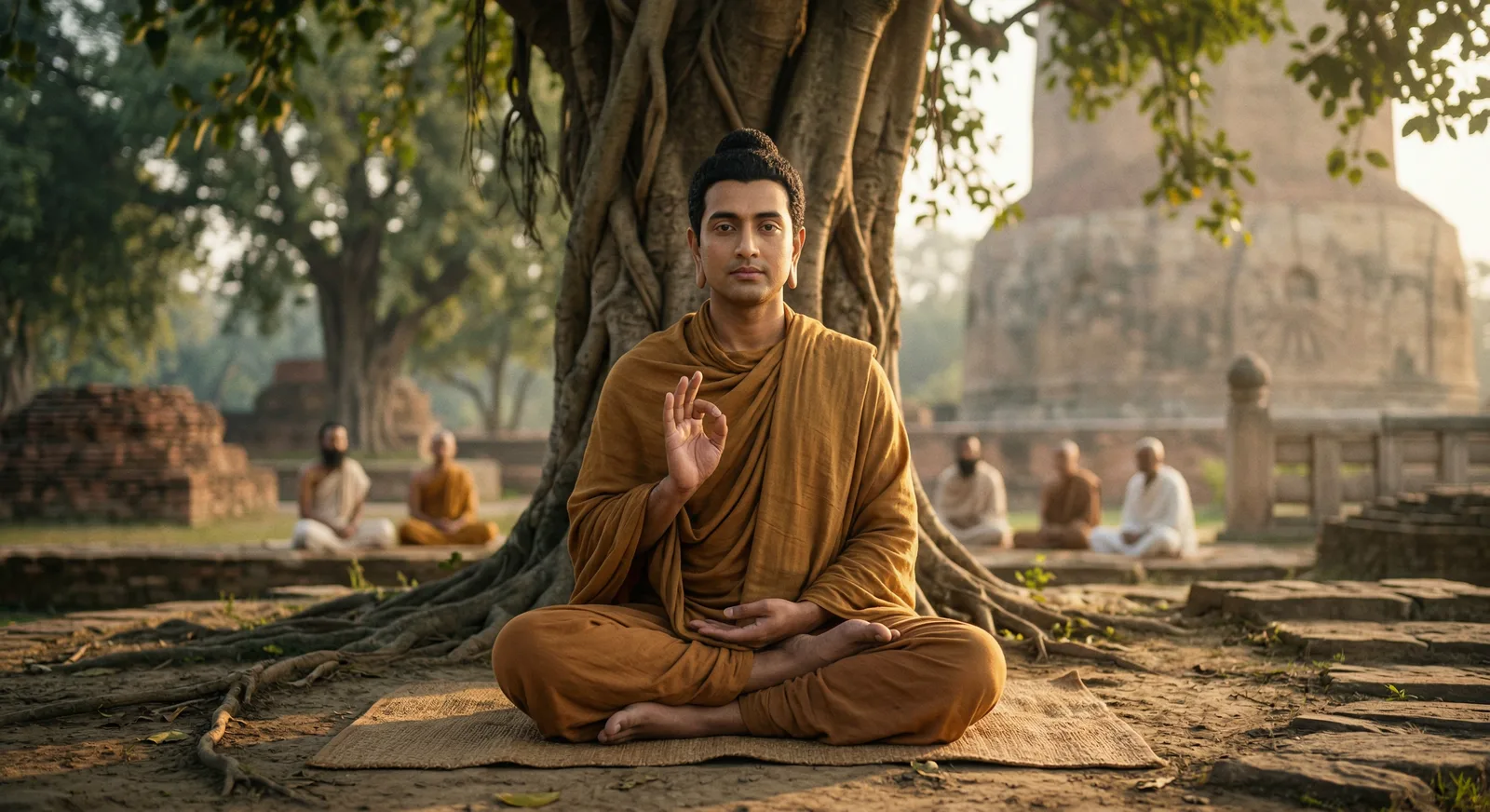
2,500 years ago in Deer Park at Sarnath, Siddhartha Gautama (the Buddha) delivered a radically honest assessment of human life.
In his very first sermon—the Dhammacakkappavattana Sutta—he did not offer theological dogmas or demand blind belief. Instead, he presented a precise medical diagnosis of the human mind known as the Four Noble Truths.
                   ┌─────────────────────────────────────────┐
                   │          THE FOUR NOBLE TRUTHS          │
                   │          (The Medical Model)            │
                   └────────────────────┬────────────────────┘
                                        │
        ┌───────────────────────────────┼───────────────────────────────┐
        │                               │                               │
┌───────▼────────┐               ┌───────▼────────┐               ┌───────▼────────┐
│1. DUKKHA       │               │2. SAMUDAYA     │               │3. NIRODHA      │
│(The Symptom:   │               │(The Cause:     │               │(The Cure:      │
│ Suffering)     │               │ Craving/Tanha) │               │ Cessation)     │
└────────────────┘               └────────────────┘               └───────┬────────┘
                                                                          │
                                                                  ┌───────▼────────┐
                                                                  │4. MAGGA        │
                                                                  │(The Treatment: │
                                                                  │ Eightfold Path)│
                                                                  └────────────────┘
Key Takeaways from the Four Noble Truths
- The Reality of Friction (Dukkha): Pain is inevitable, but emotional suffering is created by our psychological resistance to impermanence.
- Craving is the Root (Tanha): Demanding that temporary conditions remain permanent traps us on a "hedonic treadmill."
- Ethics Precedes Meditation: The Eightfold Path begins with ethical living (Sila) and right intent, establishing the foundation for mental calm.
1. The First Noble Truth: Dukkha (Understanding Unsatisfactoriness)
The first truth declares: Life involves Dukkha (दुक्ख).
While often translated simply as "suffering," Dukkha more accurately describes the inherent unsatisfactoriness, friction, or instability of conditioned experience.
Buddhist psychology divides Dukkha into Three Layers:
| Layer of Dukkha | Meaning | Example |
|---|---|---|
| 1. Dukkha-Dukkha | Physical & Emotional Pain | Disease, injury, grief, physical pain, heartbreak. |
| 2. Viparinama-Dukkha | Suffering from Change | Anxiety caused by knowing pleasant moments will end. |
| 3. Sankhara-Dukkha | Existential Conditioned Friction | The background tension of holding together a fragile ego-identity. |
The Buddha did not ask us to despair over Dukkha, but to comprehend it. When you accept that impermanent things cannot deliver permanent fulfillment, disappointment loses its sting.
2. The Second Noble Truth: Samudaya (The Cause of Suffering)
The second truth identifies the root cause of Dukkha: Samudaya (origin), driven by Tanha (ਤ੍ਰਿਸ਼ਨਾ / तृष्णा—thirst or craving).
Tanha manifests in three directions:
- Kama-Tanha: Craving for sensory pleasures and material comforts.
- Bhava-Tanha: Craving for becoming, status, immortality, or permanent achievement.
- Vibhava-Tanha: Craving for avoidance, annihilation, or escaping uncomfortable reality.
                            THE THREE POISONS (KLESHAS)
                                        │
                 ┌──────────────────────┼──────────────────────┐
                 │                      │                      │
        ┌────────▼────────┐    ┌────────▼────────┐    ┌────────▼────────┐
        │     RAGA        │    │    DVESHA       │    │     MOHA        │
        │ (Greed/Clinging)│    │(Aversion/Hatred)│    │(Delusion/Ego)   │
        └─────────────────┘    └─────────────────┘    └─────────────────┘
When we encounter pleasant experiences, we cling (Raga); when we encounter unpleasant experiences, we push away (Dvesha); both are driven by the false belief that we are separate, permanent egos (Moha).
3. The Third Noble Truth: Nirodha (The Reality of Cure)
The third truth brings sublime hope: Nirodha (cessation).
It asserts that suffering can completely end. When the fires of greed, hatred, and delusion are extinguished, the mind enters Nirvana (Pali: Nibbana)—a state of unbroken peace, clarity, and unconditioned freedom.
Nirvana is not a distant sky-heaven reached after death; it is the immediate peace experienced when you release your grip on craving right now in this breath.
4. The Fourth Noble Truth: Magga (The Noble Eightfold Path)
The fourth truth presents the complete treatment plan: Magga (the Path). The Noble Eightfold Path is divided into three practical training divisions (Tisaikkha):
                        THE NOBLE EIGHTFOLD PATH
                                   │
      ┌────────────────────────────┼────────────────────────────┐
      │                            │                            │
┌─────▼─────┐                ┌─────▼─────┐                ┌─────▼─────┐
│  ETHICS   │                │MEDITATION │                │  WISDOM   │
│  (Sila)   │                │ (Samadhi) │                │  (Panna)  │
├───────────┤                ├───────────┤                ├───────────┤
│3. Speech  │                │6. Effort  │                │1. View    │
│4. Action  │                │7. Mindfulness             │2. Intent  │
│5. Livelihood               │8. Concentration           │           │
└───────────┘                └───────────┘                └───────────┘
- Right View (Samma Ditthi): Understanding the 4 Truths and impermanence (Anicca).
- Right Intention (Samma Sankappa): Committing to non-ill-will, harmlessness, and renunciation of greed.
- Right Speech (Samma Vaca): Abstaining from lying, harsh words, gossip, and divisive talk.
- Right Action (Samma Kammanta): Living non-violently (Ahimsa), refraining from stealing and misconduct.
- Right Livelihood (Samma Ajiva): Earning a living without harming living beings or trading weapons/toxins.
- Right Effort (Samma Vayama): Preventing unwholesome states of mind and cultivating wholesome qualities.
- Right Mindfulness (Samma Sati): Developing present-moment awareness of body, feelings, and mind.
- Right Concentration (Samma Samadhi): Deep meditative absorption (Jhana).
3 Practical Exercises for Daily Freedom
You can begin integrating the Four Noble Truths into your routine today:
1. The "Identify the Poison" Trigger Audit
Whenever you experience acute frustration, impatience, or anger during your day:
- Pause and ask: "Which of the 3 poisons is active right now?"
- Is it Raga (clinging to a desire)? Is it Dvesha (resisting reality)? Or Moha (taking this personally)?
- Naming the poison immediately reduces its emotional control over you.
2. The 3-Minute Craving Pause
When you feel a sudden compulsion (checking your phone impulsively, impulse buying, emotional eating):
- Set a timer for 3 minutes before taking action.
- Watch the physical sensation of craving (Tanha) rise like a wave in your body. Notice how it peaks and naturally subsides without you giving in.
3. Daily "Right Speech" Check-In
Before making calls, entering meetings, or posting online:
- Apply the 3 gates of Buddhist speech: Is it truthful? Is it affectionate/kind? Is it beneficial?
- Experience how ethical speech (Sila) protects your mind from remorse and anxiety.
Interlinking & Deepening Your Journey
Explore how Buddhist teachings connect across our library:
- Practicing the 7th limb of the path: Mindfulness & Buddhist Presence
- Developing heart compassion: Loving-Kindness & Buddhist Metta
- Non-attachment and anxiety relief: The Bhagavad Gita's Guide to Anxiety
- Connecting with guides: Meet the Gurus
Conclusion: Walking the Path to Peace
The Buddha did not ask us to believe in a distant promise; he invited us to "Ehipassiko"—come and see for yourself.
By understanding suffering, releasing craving, and walking the Eightfold Path, you cultivate a peace that no storm can destroy.
Ready to deepen your Buddhist meditation practice? Start My Transformation and explore AI guidance trained on authentic Buddhist scriptures and world traditions.