Why We Are Never Truly Here
You are reading these words right now—but where is your mind?
Perhaps a portion of your awareness is rehearsing a past conversation, anticipating an unread email, worrying about finances, or judging your daily productivity. The un-trained human mind spends over 47% of its waking hours wandering into the past or future.
We live in an age of hyper-digital distraction, endless notifications, and chronic multitasking. The present moment—the only place where life actually occurs—is the place we visit least.
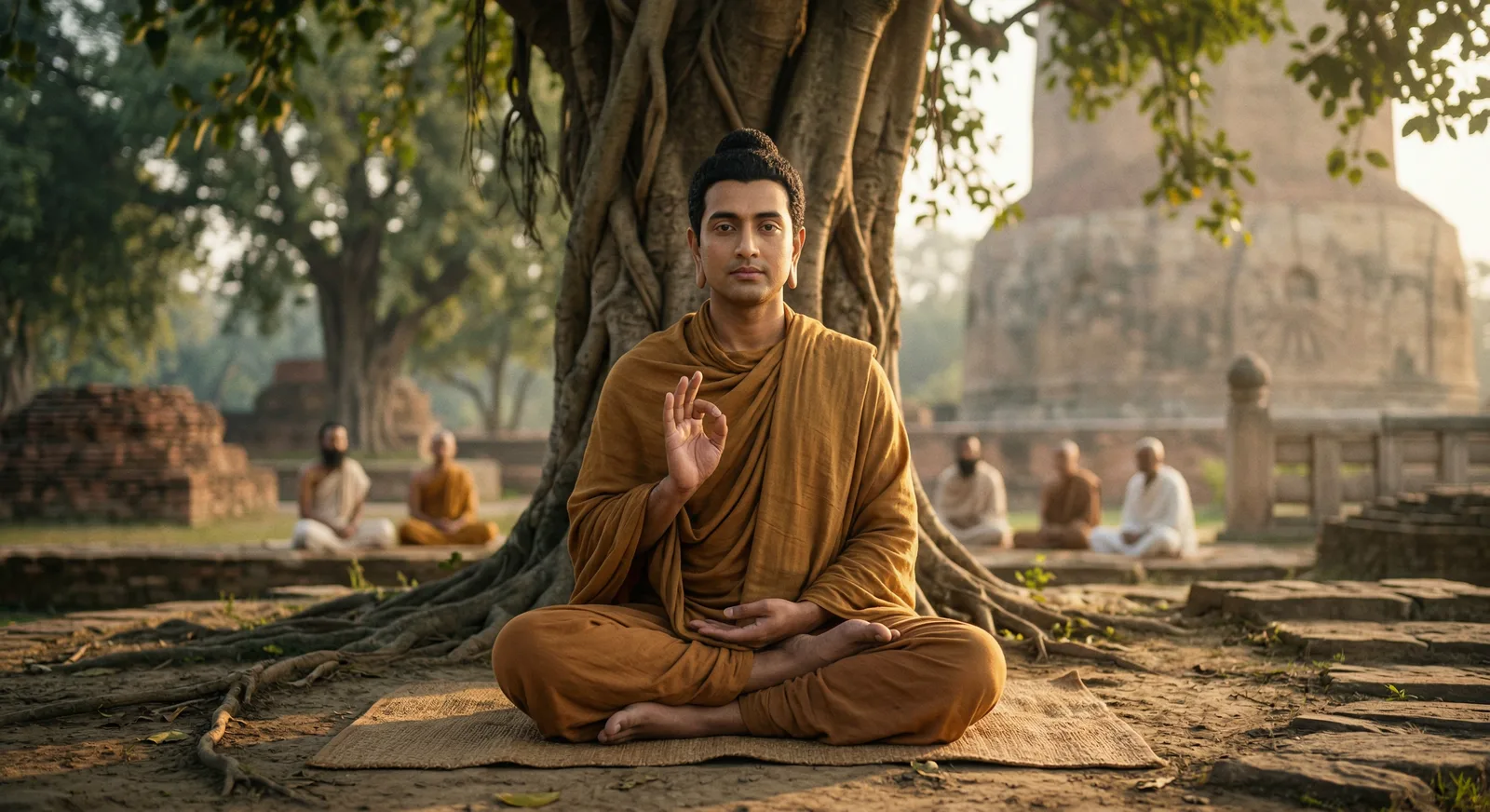
2,500 years ago, the Buddha diagnosed this chronic mental absence and provided a master key to human liberation: Sati (Mindfulness).
Sati is not merely a relaxation exercise; it is a systematic, empirically verified science of presence documented in the foundational Satipatthana Sutta and Anapanasati Sutta.
                  ┌─────────────────────────────────────────┐
                  │    THE 4 FOUNDATIONS OF MINDFULNESS     │
                  │          (Satipatthana Sutta)           │
                  └────────────────────┬────────────────────┘
                                       │
       ┌───────────────────────────────┼───────────────────────────────┐
       │                               │                               │
┌──────▼────────┐               ┌──────▼────────┐               ┌──────▼────────┐
│1. BODY & BREATH│              │2. FEELINGS    │               │3. MIND STATES │
│ (Kayanupassana)│              │(Vedananupassa)│               │(Chittanupassa)│
└───────────────┘               └───────────────┘               └───────┬───────┘
                                                                        │
                                                                ┌───────▼───────┐
                                                                │4. PHENOMENA   │
                                                                │(Dhammanupassana
                                                                └───────────────┘
Key Takeaways from Buddhist Mindfulness
- The 4 Foundations: True mindfulness encompasses body (Kaya), feeling tones (Vedana), mind states (Citta), and mental phenomena (Dhamma).
- Anapanasati Breathwork: The breath serves as an ever-present, built-in anchor connecting physical body with mental stillness.
- Brain Neuroplasticity: Neuroscience confirms that mindfulness shrinks the brain's fear center (amygdala) and quietens overthinking networks (Default Mode Network).
1. Sacred Scripture: Satipatthana & Anapanasati Suttas
The classical blueprint of Buddhist mindfulness is articulated in two primary texts:
Satipatthana Sutta (Majjhima Nikaya 10): The Four Foundations
The Buddha declares at the outset of the Satipatthana Sutta:
"This is the direct path for the purification of beings, for the overcoming of sorrow and lamentation, for the ending of pain and grief, for the attaining of the true path, for the realization of Nibbana—namely, the Four Foundations of Mindfulness."
                             THE 4 FOUNDATIONS
                                     │
  1. BODY (Kaya)         ──► Breathing, posture, physical body sensations.
  2. FEELINGS (Vedana)   ──► Pleasant, unpleasant, or neutral feeling tones.
  3. MIND (Citta)        ──► Noticing if the mind is distracted, calm, angry, or peaceful.
  4. PHENOMENA (Dhamma)  ──► Observing impermanence (Anicca) and non-self (Anatta).
Anapanasati Sutta (Majjhima Nikaya 118): Breath Mindfulness
In the Anapanasati Sutta, the Buddha details 16 sequential steps of breath awareness:
- "Breathing in long, he understands: 'I breathe in long.' Breathing out long, he understands: 'I breathe out long.'"
- "Calming bodily formations, he breathes in. Calming bodily formations, he breathes out."
The breath is uniquely effective because it operates at the intersection of conscious control and automatic nervous system function. By anchoring attention on the breath, you instantly quiet the sympathetic "fight-or-flight" response.
2. Thich Nhat Hanh: The Miracle of Everyday Mindfulness
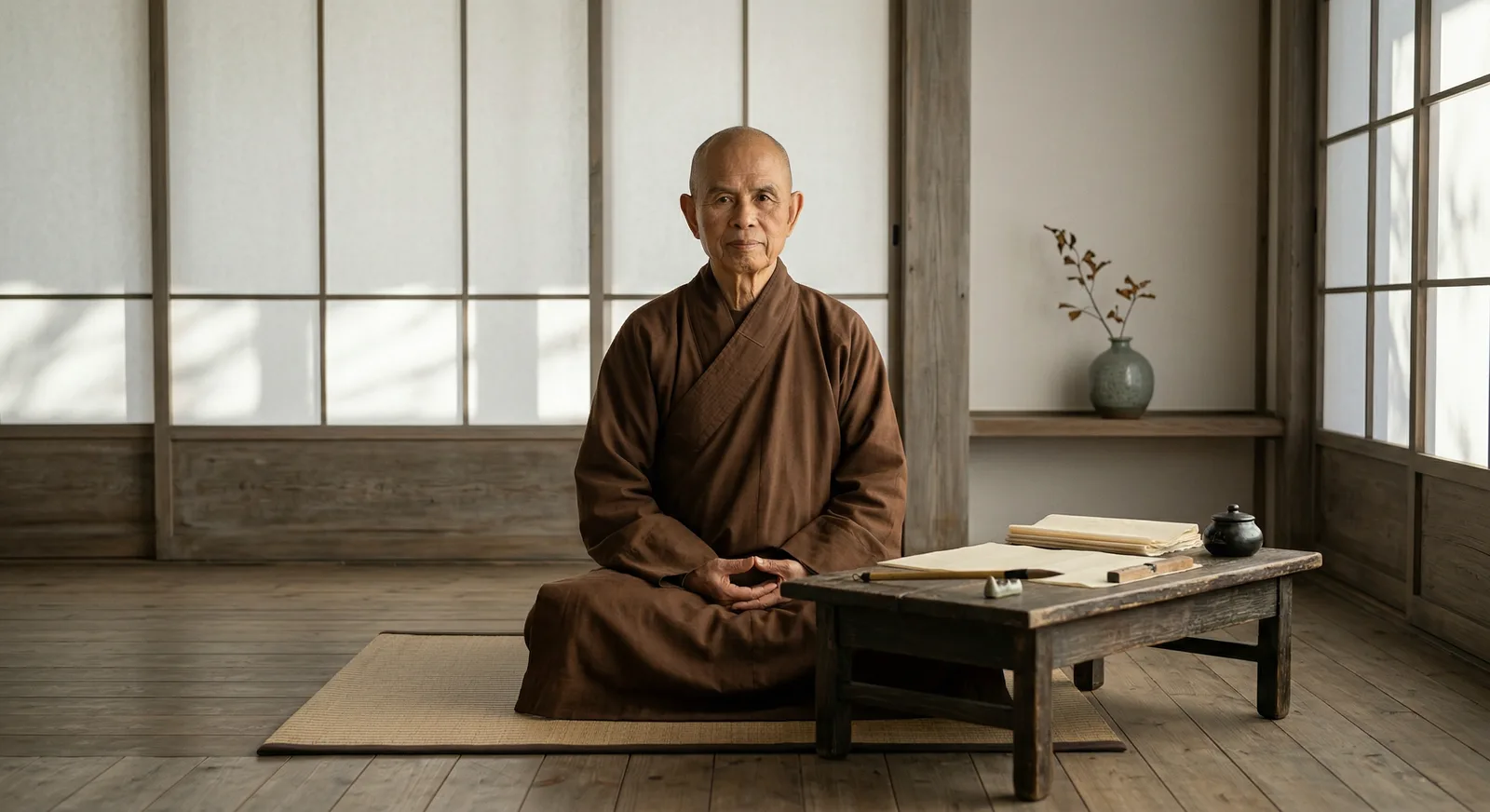
In the 20th century, Vietnamese Zen Master Thich Nhat Hanh revolutionized global mindfulness by showing how any ordinary activity can become a door to enlightenment.
In The Miracle of Mindfulness, he wrote:
"While washing the dishes, one should only be washing the dishes. Which means that while washing the dishes one should be completely aware of the fact that one is washing the dishes... If while washing dishes, we think only of the cup of tea that awaits us, then we are not living the time we are washing the dishes."
  UN-MINDFUL STATE: Washing dishes ──► Thinking about emails ──► Missed Present Moment
  MINDFUL STATE:   Washing dishes ──► Feeling water & foam   ──► Direct Awakening
When you bring 100% presence to walking, drinking tea, or listening to a loved one, daily life becomes continuous meditation.
3. What Neuroscience Discovered About Mindfulness
Modern neuroimaging has validated what the Buddha taught 25 centuries ago:
                            NEUROSCIENCE OF MINDFULNESS
                                         │
        ┌────────────────────────────────┼────────────────────────────────┐
        │                                │                                │
┌───────▼────────┐               ┌───────▼────────┐               ┌───────▼────────┐
│PREFRONTAL CORTEX│              │   AMYGDALA     │               │  DEFAULT MODE  │
│Increased gray   │              │Shrinks size &  │               │   NETWORK      │
│matter (Focus &  │              │reactivity (Less│               │Deactivates     │
│Decision-Making) │              │Fear/Anxiety)   │               │(Less Rumination│
└────────────────┘               └────────────────┘               └────────────────┘
- Harvard 8-Week Study (MBSR): MRI scans showed that 8 weeks of daily mindfulness increased gray matter density in the hippocampus (learning/memory) and prefrontal cortex.
- Amygdala Shrinkage: The brain's threat center (amygdala) physically shrinks in volume, reducing automatic panic and emotional over-reactivity.
- Deactivating the Default Mode Network (DMN): Mindfulness switches off the DMN—the brain network responsible for mind-wandering, imposter syndrome, and endless self-referential worrying.
3 Practical Exercises for Daily Mindfulness
You can build a daily Sati practice through these 3 protocols:
1. The 10-Minute Anapanasati Morning Routine
Sit comfortably with an upright spine. Close your eyes.
- Focus your attention at the nostrils or chest where you feel the breath most distinctly.
- Count 10 breaths (Inhale 1, Exhale 1; Inhale 2, Exhale 2...).
- When your mind wanders into thoughts, gently notice: "Thinking, thinking," and return without judgment to breath 1. Continue for 10 minutes.
2. Thich Nhat Hanh's "Mindful Transition" Habit
Choose one daily transition marker (e.g., opening your laptop, starting your car, picking up your phone):
- Before proceeding, take 3 conscious, slow breaths.
- Smile gently and state internally: "Breathing in, I calm body and mind. Breathing out, I smile. Dwelling in the present moment, I know this is the only moment."
3. The 3-Point "Body & Feeling Tone" Scan (Vedananupassana)
Twice a day, pause for 60 seconds:
- Scan your body for physical tension (tight jaw, hunched shoulders).
- Notice the current feeling tone (Vedana): Is your current moment feeling pleasant, unpleasant, or neutral?
- Observe the feeling tone without trying to push it away or grab it, watching it dissolve naturally.
Interlinking & Universal Wisdom
Discover how mindfulness connects across world traditions:
- Mindfulness as part of the path: Four Noble Truths & Freedom
- Heart-mindfulness and loving-kindness: Loving-Kindness & Buddhist Metta
- Vedic meditation comparison: Vedic Meditation
- Flow state in action: Wu Wei & The Tao
- Connecting with guides: Meet the Gurus
Conclusion: Returning Home to the Present
Mindfulness is not a complex skill reserved for monks in remote retreats; it is the natural capacity of your own awareness. Every breath is an invitation to step out of past regrets and future anxiety into the stillness of now.
As Thich Nhat Hanh taught: "Peace is every step. The shining red sun is my heart."
Ready to deepen your mindfulness journey? Start My Transformation and explore AI guidance trained on authentic Buddhist scriptures and world traditions.