The Love You Have Never Given Yourself
Most people are far harsher with themselves than they would ever be with a stranger.
We berate ourselves for minor mistakes, carry lingering shame over past failures, and enforce impossible standards of perfection. When things go wrong, our default inner voice is often an aggressive, punishing critic.
This self-directed cruelty is not strength—it is one of the deepest sources of emotional suffering in modern life.
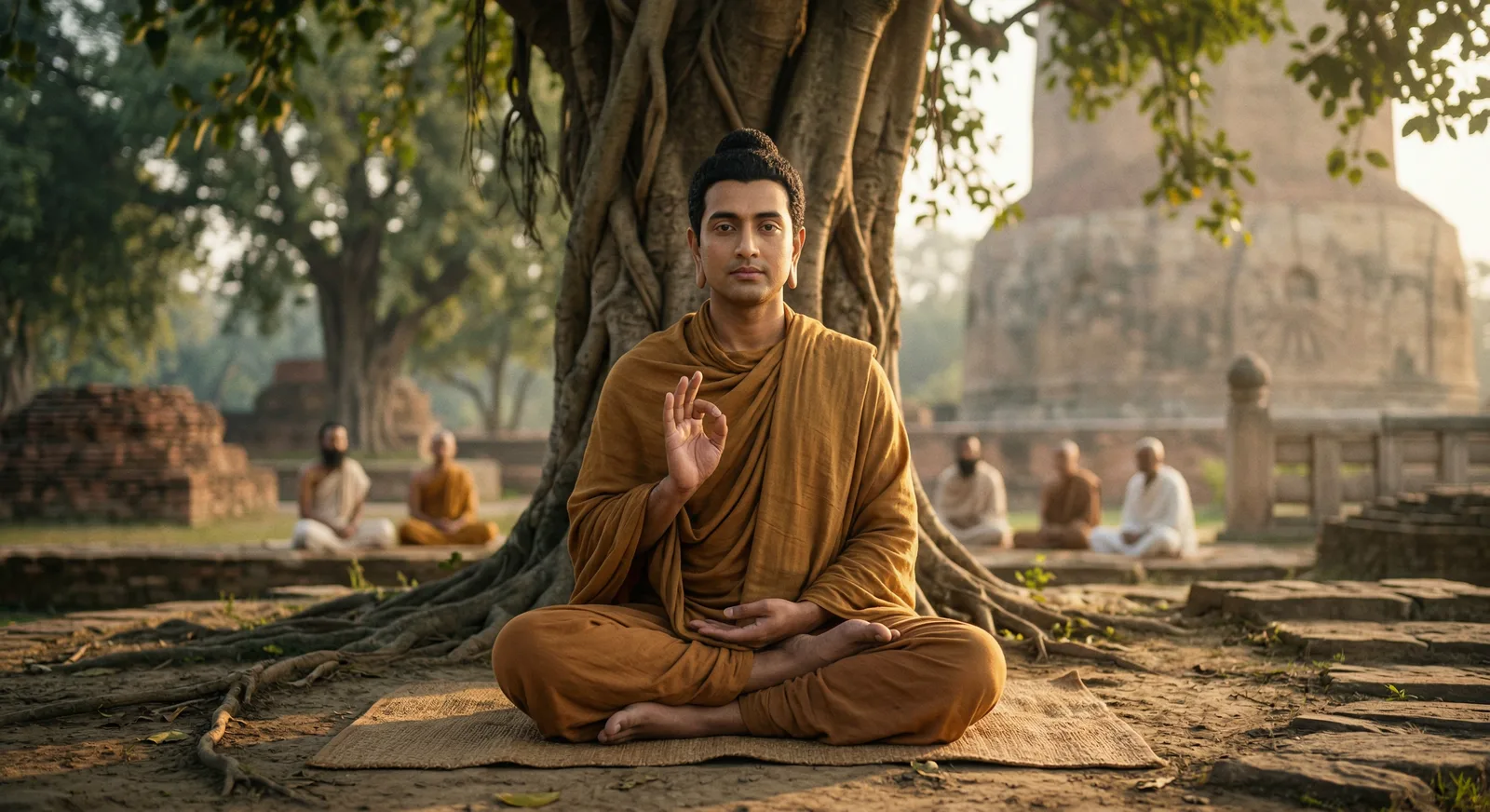
2,500 years ago, the Buddha presented a radical cure for this self-inflicted wounds known as Metta (loving-kindness meditation).
Metta is not superficial sentimentality or narcissism; it is a systematic, highly effective technology for cultivating a boundless heart (Immeasurable Mind) that heals relationships, dissolves anxiety, and restores deep peace.
                  ┌─────────────────────────────────────────┐
                  │          THE 4 BRAHMAVIHARAS            │
                  │            (Divine Abodes)              │
                  └────────────────────┬────────────────────┘
                                       │
       ┌───────────────────────────────┼───────────────────────────────┐
       │                               │                               │
┌──────▼────────┐               ┌──────▼────────┐               ┌──────▼────────┐
│   METTA       │               │   KARUNA      │               │   MUDITA      │
│(Loving-Kindness               │ (Compassion for              │ (Sympathetic  │
│  for All)     │               │   Suffering)  │               │     Joy)      │
└───────────────┘               └───────────────┘               └───────┬───────┘
                                                                        │
                                                                ┌───────▼───────┐
                                                                │   UPEKKHA     │
                                                                │  (Equanimity  │
                                                                │  & Peace)     │
                                                                └───────────────┘
Key Takeaways from Metta Meditation
- The 4 Divine Abodes: Metta (goodwill), Karuna (compassion), Mudita (shared joy), and Upekkha (equanimity) form the ultimate emotional medicine.
- Boundless Protection: The Karaniya Metta Sutta commands us to guard love for all beings as a mother guards her only child.
- Neuroscience of Compassion: Metta stimulates the vagus nerve, increases empathy cortex volume, and dissolves unconscious social prejudice.
1. Sacred Scripture: Karaniya Metta Sutta & Visuddhimagga
Metta is rooted in core Theravada and Mahayana texts:
Karaniya Metta Sutta (Sutta Nipata 1.8)
The Buddha delivered the Karaniya Metta Sutta to monks who were troubled by fear in a forest retreat:
"Mātā yathā niyaṁ puttaṁ āyusā ekaputtamanurakkhe |
Evampi sabbabhūtesu mānasam bhāvaye aparimāṇaṁ ||"Translation: "Just as a mother would protect her only child with her life, so cultivate a boundless heart towards all living beings."
The Buddha declared that a person dwelling in Metta realizes the highest spiritual sanctuary in this world.
                      THE 5 STAGES OF METTA MEDITATION
                                     │
  1. MYSELF           ──► "May I be happy, healthy, safe, and at ease."
  2. BELOVED / FRIEND ──► "May you be happy, healthy, safe, and at ease."
  3. NEUTRAL PERSON   ──► "May you be happy, healthy, safe, and at ease."
  4. DIFFICULT PERSON ──► "May you be free from pain and find peace."
  5. ALL BEINGS       ──► "May all beings everywhere be liberated."
Visuddhimagga: The Four Divine Abodes
In Chapter IX of the Visuddhimagga (Path of Purification), Acharya Buddhaghosa explains how the 4 Brahmaviharas balance one another:
- Metta counters ill-will and anger (Dvesha).
- Karuna counters cruelty and indifference.
- Mudita counters envy and jealousy.
- Upekkha counters attachment and emotional volatility.
2. The 11 Benefits of Metta (Anguttara Nikaya 11.16)
In the Anguttara Nikaya (11.16), the Buddha listed 11 specific, practical benefits experienced by regular Metta practitioners:
- You sleep peacefully.
- You wake up with joy.
- You do not suffer bad dreams.
- You are loved by human beings.
- You are loved by non-human beings.
- Celestial/natural forces protect you.
- Toxins and anger do not harm your spirit.
- Your mind concentrates quickly.
- Your facial expression becomes serene.
- You die with a clear, unconfused mind.
- You awaken in high spiritual realms.
3. What Modern Science Discovered About Metta
In landmark studies at Harvard, Stanford, and the University of Wisconsin-Madison:
- Neuroplasticity: Neuroscientists like Dr. Richard Davidson found that Metta meditation dramatically increases gamma brainwaves associated with high-level awareness and positive emotion.
- Vagus Nerve Activation: Practicing Metta stimulates the vagus nerve, increasing Heart Rate Variability (HRV) and lowering inflammation.
- Dissolving Bias: Research shows 7 weeks of Metta practice reduces implicit racial and social bias far more effectively than standard cognitive training.
3 Practical Exercises for Daily Heart Opening
You can build a daily Metta practice through these 3 protocols:
1. The 10-Minute 5-Stage Metta Meditation
Sit comfortably, close your eyes, and silently recite these 4 classic phrases, holding each stage for 2 minutes:
"May [Name] be safe from harm.
May [Name] be healthy and strong.
May [Name] live with ease and joy.
May [Name] be truly free."
Move systematically: Self → Benefactor → Neutral Person → Difficult Person → All Beings.
2. The "Micro-Metta" Commute & Walking Habit
While walking in a city, riding public transit, or waiting in line:
- Look quietly at strangers passing by.
- Silently send them a quick phrase: "May you be safe. May you have peace today."
- Watch how your social anxiety and feelings of separation dissolve instantly.
3. The "Self-Compassion Reset" for Mistakes
Whenever you make a mistake, face criticism, or feel a surge of shame:
- Place your right hand over your heart.
- Take a deep breath and state silently: "This is a moment of pain. Pain is a natural part of life. May I be gentle with myself in this moment."
Interlinking & Universal Wisdom
Discover how Metta connects across world traditions:
- Ending suffering through wisdom: Four Noble Truths & Freedom
- Mindfulness presence integration: Mindfulness & Buddhist Presence
- Loving enemies in Christian tradition: Sermon on the Mount
- Interacting with wisdom guides: Meet the Gurus
Conclusion: Living with an Open Heart
Metta is not a fragile emotion that depends on how others treat you; it is an unshakeable inner power. When you train your heart in loving-kindness, fear melts away and every encounter becomes an opportunity for connection.
Ready to deepen your compassion meditation? Start My Transformation and explore AI guidance trained on sacred world traditions.