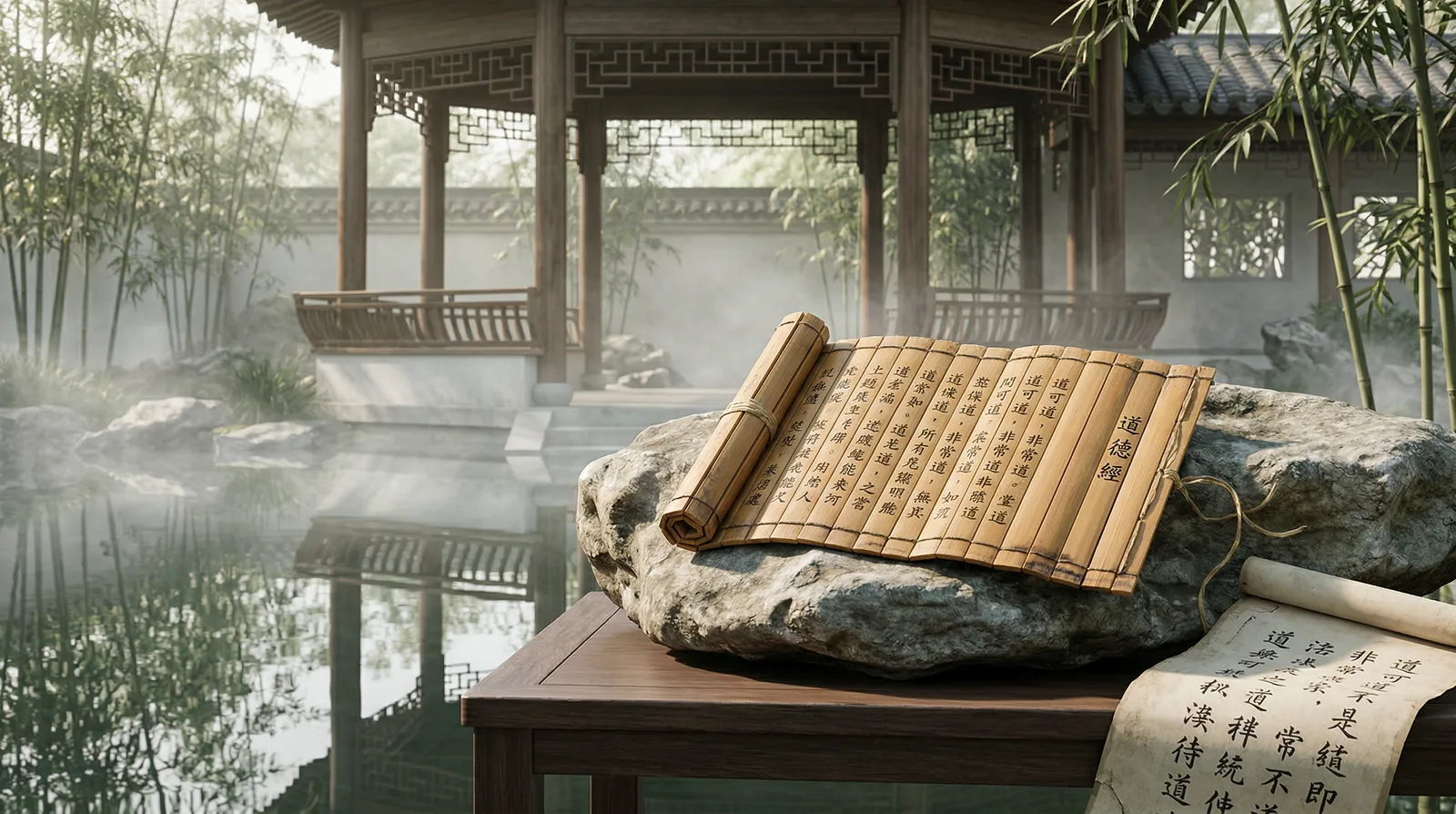
The Hustle Crisis and Its Ancient Solution
We live in a culture that worships constant productivity. Busyness is worn as a status symbol, sleep is treated as an inconvenience, and "hustle" is preached as a secular religion. Yet, despite working longer hours and staying constantly connected, rates of burnout, chronic exhaustion, anxiety, and depression have reached epidemic levels.
We know instinctively that something is wrong with how we are living. But modern society offers only one answer: try harder, work faster, download another productivity app.
Over 2,600 years ago in ancient China, the seers of Taoism diagnosed this precise illness.
In the foundational classic Tao Te Ching, Lao Tzu offered a revolutionary alternative: Wu Wei (無爲)—the art of effortless action.
                  ┌─────────────────────────────────────────┐
                  │             THE TAOIST WAY              │
                  └────────────────────┬────────────────────┘
                                       │
       ┌───────────────────────────────┼───────────────────────────────┐
       │                               │                               │
┌──────▼────────┐               ┌──────▼────────┐               ┌──────▼────────┐
│  1. THE TAO   │               │  2. WU WEI    │               │  3. PU        │
│(Natural Stream│               │(Effortless    │               │(Uncarved Block│
│ of Reality)   │               │    Action)    │               │ / Simplicity) │
└───────────────┘               └───────────────┘               └───────────────┘
Key Takeaways from Wu Wei & Taoism
- Alignment over Forcing: Success comes not from aggressive struggle, but from discovering the natural path of least resistance (Wu Wei).
- The Power of Water: True strength is soft, flexible, and adaptive, yielding to obstacles while effortlessly wearing them down over time.
- The Uncarved Block (Pu): Returning to your authentic nature by dropping unnecessary social conditioning, overthinking, and artificial desires.
1. Sacred Text: Lao Tzu & The Tao Te Ching
The Tao Te Ching (The Classic of the Way and Virtue) opens with a celebrated paradox in Chapter 1:
"The Tao that can be spoken is not the eternal Tao.
The name that can be named is not the eternal name."
Lao Tzu reminds us that ultimate reality cannot be captured in rigid words or intellectual definitions; it must be directly experienced through presence.
                    TWO WAYS OF LIVING IN THE WORLD
                                   │
                 ┌─────────────────┴─────────────────┐
                 │                                   │
      ┌──────────▼──────────┐             ┌──────────▼──────────┐
      │    THE EGO WAY      │             │    THE TAO WAY      │
      │ Pushing, hacking,   │             │ Flowing, yielding,  │
      │ outcome-obsession,  │             │ timeless efficiency,│
      │ burnout & stress.   │             │ effortless grace.   │
      └─────────────────────┘             └─────────────────────┘
Water as the Supreme Teacher (Chapter 8)
In Chapter 8, Lao Tzu presents water (Shui) as the supreme model of Wu Wei:
"The highest goodness is like water.
Water benefits all things and does not compete with them.
It settles in places that people dislike.
Therefore it is near the Tao."
Water does not fight a rock in a stream; it flows smoothly around it. Yet over time, gentle water wears down the hardest granite mountain.
In Chapter 43, Lao Tzu adds: "The softest thing in the world overcomes the hardest thing in the world. That which has no substance enters where there is no space."
The Art of Unlearning (Chapter 48)
Modern education focuses on accumulating information. Taoism focuses on unlearning mental clutter. Chapter 48 states:
"In the pursuit of learning, every day something is acquired.
In the pursuit of the Tao, every day something is dropped.
Less and less is done until non-action (Wu Wei) is achieved.
When nothing is done, nothing is left undone."
2. Zhuangzi & The Master Cook Ding
The second great master of Taoism, Zhuangzi (Chuang Tzu), illustrated Wu Wei through everyday craftsmanship. In Chapter 3 (The Secret of Caring for Life), he tells the story of Cook Ding carving an ox for Lord Wenhui.
Ding's cleaver moved through the carcass with perfect musical rhythm, separating joints without the sound of hacking:
Lord Wenhui exclaimed: "Wonderful! How can your skill reach such heights?"
Cook Ding put down his knife and replied: "What I care about is the Tao, which goes beyond skill. When I first began cutting up oxen, I saw only the ox. After three years, I no longer saw the whole ox. Now, I meet it with my spirit and not with my eyes... I follow the natural openings and guide the knife through the natural spaces. I never touch a ligament or tendon, let alone a main bone!"
   NOVICE COOK ──► Hacks through bone ──► Knife breaks in months (Stress & Friction)
   MASTER COOK ──► Glides through natural spaces ──► Knife stays sharp for 19 years (Wu Wei)
This story illustrates the Taoist ideal of Flow State: when you stop forcing your agenda and attune to the natural spaces in a problem, hard work becomes effortless movement.
3. Pu: Reclaiming the Uncarved Block
Taoism calls our original, uncorrupted nature Pu (樸—The Uncarved Block).
Before a block of wood is carved into a chair or desk, it possesses unlimited potential. As society conditions us with expectations, anxieties, and perfectionism, we become heavily "carved," losing our innate spontaneity.
Practicing Wu Wei means returning to Pu—dropping artificial perfectionism and acting from simple, honest presence.
3 Practical Exercises for Daily Wu Wei
You can apply Taoist principles to bring ease into a high-stress schedule:
1. The Morning "Non-Striving" 5-Minute Pause
Before checking your phone, email, or daily to-do list:
- Sit quietly near an open window or outdoors. Watch the sky, trees, or your natural breath.
- Notice how nature does not hurry, panic, or force.
- Repeat Lao Tzu's reminder: "Nature does not hurry, yet everything is accomplished." Let this quiet posture set the tone for your morning.
2. The "Water vs. Rock" Conflict Audit
During your workday, whenever you feel intense friction—a project stalled, an argument stuck, a system failing:
- Stop pushing harder against the wall. Step back and ask: "Am I trying to smash through a rock? What is the 'water path' around this obstacle?"
- Seek a flexible compromise or pause the conversation until tension settles.
3. The 10-Minute "Digital Unlearning" Reset
Once a day, practice Chapter 48's instruction of "dropping":
- Close all browser tabs, step away from screens, and go for a 10-minute walk without headphones.
- Allow your mind to drop plans, worries, and content consumption, resting in simple sensory awareness.
Interlinking & Comparative Wisdom
Discover how Taoist Wu Wei connects across world wisdom traditions:
- Action without outcome attachment: Karma Yoga: Selfless Action
- Buddhist breath presence and flow: Mindfulness & Buddhist Presence
- Calming the restless mind: Vedic Meditation
- Connecting with wisdom guides: Meet the Gurus
Conclusion: Yielding to Win
Wu Wei is not passivity or surrender to failure; it is the ultimate mastery of living. When you stop fighting the current of reality, you harness the immense power of the ocean itself.
As Lao Tzu promised, when you get out of your own way, nothing remains undone.
Ready to bring effortless ease into your life? Start My Transformation and explore AI guidance trained on ancient Taoist wisdom and world traditions.