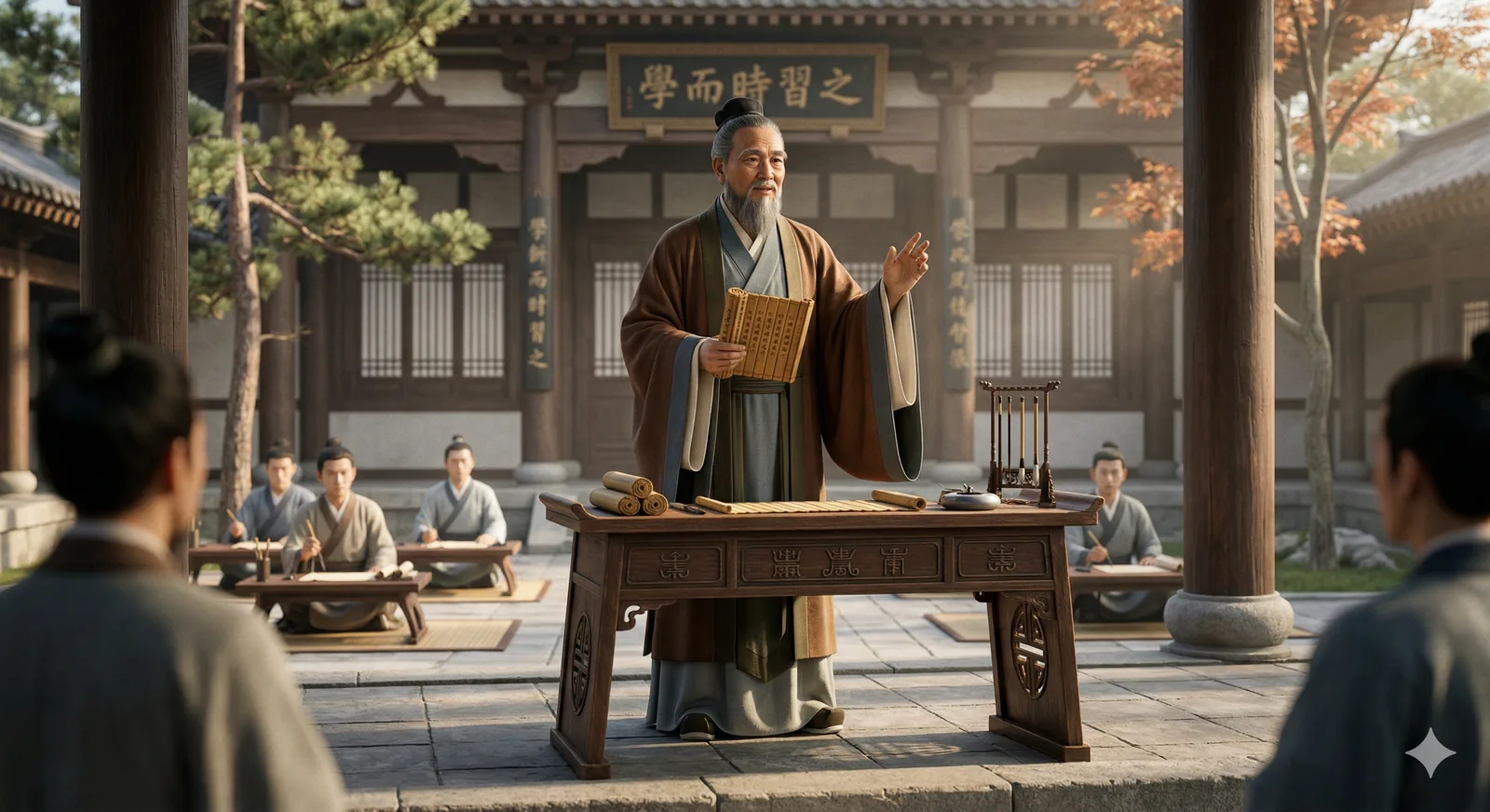
The Modern Isolation Crisis
We live in an age with unprecedented technological connectivity, yet humans have never felt more isolated. Marriage and relationship dissolution rates remain high, friendships frequently become transactional or superficial, and generational divides cause deep family friction.
Modern Western culture often promotes hyper-individualism—teaching that maturity means absolute independence from family and community.
2,500 years ago in China, Confucius (551–479 BCE) diagnosed this precise social fragmentation.
In the Analects (Lunyu), Confucius taught that a human being cannot achieve wholeness in isolation. You do not discover yourself by retreating into a cave; you discover yourself in the mirror of your relationships.
                  ┌─────────────────────────────────────────┐
                  │          CONFUCIAN RELATIONAL ETHICS    │
                  └────────────────────┬────────────────────┘
                                       │
       ┌───────────────────────────────┼───────────────────────────────┐
       │                               │                               │
┌──────▼────────┐               ┌──────▼────────┐               ┌──────▼────────┐
│  1. REN       │               │  2. LI        │               │  3. XIAO      │
│ (Benevolence/ │               │ (Ritual       │               │(Filial Piety/ │
│ Humaneness)   │               │ Propriety)    │               │ Family Respect│
└───────────────┘               └───────────────┘               └───────────────┘
Key Takeaways from Confucian Ethics
- Character is Relational: Virtue is cultivated not through private contemplation, but through how you treat your parents, spouse, siblings, colleagues, and friends.
- The Silver Rule: Reciprocity (Shu) is the foundational key to human empathy: "Do not impose on others what you yourself do not desire."
- The Power of Li (Ritual): Everyday social rituals—eating family dinners, expressing gratitude, greeting people with presence—are the scaffolding that holds love together.
1. The 5 Cardinal Relationships (Wulun)
Confucius mapped human society through Five Cardinal Relationships (Wulun), insisting that harmony depends on mutual, reciprocal respect:
                           THE 5 RELATIONSHIPS
                                    │
     ┌─────────────────┬────────────┼────────────┬─────────────────┐
     │                 │            │            │                 │
┌────▼──────┐    ┌─────▼─────┐ ┌────▼─────┐ ┌────▼──────┐    ┌─────▼─────┐
│  Parent & │    │ Husband & │ │ Elder &  │ │  Friend & │    │  Leader & │
│   Child   │    │   Wife    │ │ Younger  │ │   Friend  │    │  Teammate │
│ (Gratitude│    │ (Devotion)│ │ Sibling  │ │  (Trust)  │    │ (Loyalty) │
└───────────┘    └───────────┘ └───────────┘ └───────────┘    └───────────┘
- Parent and Child (Xiao): The root relationship. Parents nurture with love; children respond with respect, care, and gratitude.
- Husband and Wife (Fu-Fu): Built on mutual devotion, division of responsibility, and shared character growth.
- Elder and Younger Sibling (Ti): Elder siblings guide with gentleness; younger siblings respond with respect.
- Friend and Friend (Peng-You): The only equal horizontal relationship, governed entirely by Xin (trust and integrity).
- Leader and Teammate (Jun-Chen): Leaders govern with care; teammates respond with loyalty and honest feedback.
Notice that in every pair, obligations are reciprocal. A leader who acts tyrranically loses moral authority; a parent who neglects a child breaks the covenant of Ren.
2. Sacred Texts: The Analects & The Great Learning
Confucian relational wisdom is detailed across classic texts:
The Analects (Lunyu): Ren and The Silver Rule
In Analects 15:24, a disciple asked Confucius if a single word could guide an entire lifetime:
"Zi Gong asked: 'Is there one word that can serve as a guide for one's entire life?'
The Master said: 'Is not Reciprocity (Shu) such a word? What you do not wish done to yourself, do not impose on others.'"
In Analects 12:7, Confucius highlighted the absolute importance of trust (Xin) in human organizations:
"If a nation loses its food or army, it can still survive. But without trust (Xin), the people cannot stand."
The Great Learning (Daxue): The Concentric Circles of Harmony
The Great Learning presents the famous ripple effect of character cultivation:
Self-Cultivation ──► Family Harmony ──► Community Order ──► World Peace
World peace does not begin with political treaties; it begins with how you speak to your family at the breakfast table tomorrow morning.
3. Ren, Li, and Xiao: The Virtues in Action
Ren (仁—Benevolence and Humaneness)
Ren is written with the Chinese characters for "person" (人) and "two" (二). It literally means how two people exist together in harmony. It is active, practical compassion.
Li (禮—Ritual Propriety and Etiquette)
Modern society often views etiquette as superficial. Confucius saw Li as essential emotional hygiene.
When a family sits down to a phone-free dinner, when you make eye contact during a greeting, or when you write a handwritten thank-you note, you are practicing Li. These small sacred habits preserve human dignity.
Xiao (孝—Filial Piety)
In Analects 2:5, Confucius emphasizes that caring for aging parents is not merely providing food and shelter—pets receive food too. Filial piety requires reverence and warm presence (Jing).
3 Practical Exercises for Modern Relationships
You can apply Confucian ethics to transform your daily interactions:
1. The Phone-Free "Li" Dinner Protocol
Establish one meal every day—with family, housemates, or friends—where all smartphones are placed in another room.
- Use this time for undivided presence, eye contact, and genuine conversation.
- Treat the meal as a sacred ritual (Li) for building relationship warmth.
2. The Silver Rule (Shu) Communication Filter
Before sending an angry text, criticizing a partner, or making a harsh comment:
- Pause and apply Analects 15:24: "If I were receiving this message in their emotional state, how would I feel?"
- Reframe your words to communicate with honesty (Yi) paired with kindness (Ren).
3. The "Xin" (Integrity) Promise Guarantee
For the next 7 days, commit to 100% word-keeping accuracy:
- If you commit to calling someone at 3:00 PM, sending a file, or taking out the trash, do it precisely when promised.
- If a delay is unavoidable, communicate immediately. Notice how flawless integrity (Xin) rebuilds deep trust in your relationships.
Interlinking & Comparative Wisdom
Explore how Confucian ethics connect across world traditions:
- Duty and relational order: Understanding Your True Purpose (Dharma)
- Community repair and stewardship: Tikkun Olam: Jewish Healing of the World
- Prophetic ethics and love: Sermon on the Mount
- Interacting with wisdom guides: Meet the Gurus
Conclusion: Becoming a Junzi
Confucius did not call on us to be perfect saints. He invited us to become Junzi—noble-hearted individuals who wake up every day dedicated to learning, cultivating character, and bringing dignity to every human interaction.
When you practice Ren, Li, and Xiao, your home and workplace become havens of peace.
Ready to deepen your relationship wisdom? Start My Transformation and explore AI guidance trained on ancient Confucian teachings and world traditions.