A Tradition You May Already Know Without Realising It
You may have practised yoga without knowing its spiritual roots. You may have heard someone speak of karma after a difficult decision. You may have lit a candle during Diwali, watched the colours of Holi fill a street, listened to a mantra during meditation, or seen an image of Shiva, Krishna, Ganesha or the Divine Mother.
But what connects all these things?
What is the common thread between a yogi meditating in the Himalayas, a family performing morning puja in Mumbai, a devotee singing Krishna's name in London, a philosopher studying the Upanishads, and a business owner trying to practise honesty and compassion in everyday work?
That thread is Hinduism — known by many of its followers as Sanatan Dharma, the Eternal Way.
Hinduism is among the world's oldest continuously practised spiritual traditions. Yet it is also one of the most misunderstood. It has no single founder, no single compulsory creed, no one institution controlling its beliefs, and no single book that defines the entire tradition.
It can be philosophical and devotional, disciplined and celebratory, personal and communal. It may be expressed through silent meditation, temple worship, selfless service, sacred study, music, pilgrimage, family life or the honest performance of one's responsibilities.
This diversity can make Hinduism difficult to summarise. It can also make it extraordinarily relevant to a modern world in which different people need different paths.
At its heart, Hinduism asks a set of timeless questions:
Who am I beneath my name, profession and personality?
What is the purpose of my life?
Why do human beings suffer?
How should I act when every choice has consequences?
Is there something sacred within me and within the world?
What, if anything, survives death?
Hinduism does not insist that these questions have only one simple answer. Instead, it offers a vast spiritual civilisation through which each seeker can investigate them.
Hinduism and Sanatan Dharma: Are They the Same?
The word Hinduism is an umbrella term for the religious, philosophical and cultural traditions that developed over thousands of years across the Indian subcontinent.
The word Hindu is historically connected with the Sanskrit word Sindhu, the name of the Indus River. It was originally used geographically for the peoples living beyond that river. The religious meaning developed gradually as outsiders and later Indians themselves used the term to describe the region's diverse spiritual traditions.
Many practitioners prefer the older expression Sanatan Dharma.
- Sanatan means eternal, timeless or enduring.
- Dharma can mean truth, right conduct, moral order, responsibility or the principle that sustains life.
Sanatan Dharma may therefore be understood as the Eternal Way, the timeless order of existence, or the path of living in harmony with truth.
This does not mean that every Hindu practice has existed unchanged forever. Hinduism has continually developed through debate, devotion, philosophy, regional traditions, reform movements and encounters with other cultures.
What is considered eternal is not every social custom. It is the deeper search for truth: the nature of consciousness, the relationship between the individual and the divine, the moral consequences of action, and the possibility of spiritual freedom.
To explore this idea more deeply, read Sanatan Dharma: The Eternal Truth the World Needs Now.
Hinduism Has No Single Founder — and That Is Important
Christianity is connected with Jesus Christ. Buddhism begins with the historical Buddha. Islam is rooted in the revelations received by Prophet Muhammad.
Hinduism has no equivalent single founder.
Its teachings emerged through generations of rishis — sages and seers who investigated reality through contemplation, reason, disciplined living and profound states of meditation. The Sanskrit word rishi does not simply mean someone who invented a theory. It refers to one who "saw" or directly realised a spiritual truth.
The Vedas were therefore traditionally described as shruti — "that which is heard" — rather than the personal invention of one author.
This founderless structure shaped Hinduism in a distinctive way. No single human personality became the only doorway to truth. No one historical event became the sole source of revelation. Spiritual knowledge could continue to be explored, interpreted and lived through different periods and cultures.
That is why Hinduism contains vigorous disagreements without necessarily collapsing into different religions.
Some Hindu schools teach that the individual Self and ultimate reality are ultimately one. Others teach that the soul remains eternally distinct from God. Some worship Vishnu as Supreme. Others approach Shiva, Shakti, Krishna, Rama, Ganesha or another form of the divine. Some emphasise devotion. Others emphasise knowledge, meditation, service or ritual.
The diversity is real. But so is the shared spiritual vocabulary connecting these traditions.
Is Hinduism a Religion or a Way of Life?
It is both.
Hinduism is clearly a religion. It includes temples, sacred texts, priests, festivals, prayers, rituals, pilgrimages, ethical teachings and conceptions of the divine.
But calling it only a religion can make it sound narrower than it is.
Sanatan Dharma also addresses:
- How to educate a child
- How to earn and use wealth responsibly
- How to build healthy relationships
- How to manage desire
- How to care for parents and elders
- How to act in public life
- How to face ageing and death
- How to control the mind
- How to live in harmony with nature
- How to discover what is ultimately real
It is not limited to what happens inside a temple. The workplace, kitchen, marketplace, family home and human mind can all become places of spiritual practice.
Hinduism does not divide life neatly into "sacred" and "ordinary." It asks whether ordinary life can be lived sacredly.
One Divine Reality, Many Sacred Forms
Perhaps the most common question about Hinduism is:
Does Hinduism believe in one God or many gods?
The most honest answer is that Hindu traditions describe the divine in several ways.
At the highest philosophical level, many Hindu schools speak of Brahman — the infinite, unbounded reality underlying all existence. Brahman is not simply one being among other beings. Brahman is the source, ground and inner reality of everything that exists.
The Rig Veda expresses one of Hinduism's most enduring insights:
Ekam sat vipra bahudha vadanti — The Real is one; sages speak of it in many ways. — Rig Veda 1.164.46
The many gods and goddesses of Hinduism can be understood as different manifestations, powers, personalities or approaches to the one divine reality.
A person seeking wisdom and auspicious beginnings may worship Ganesha. Someone drawn to preservation, compassion and divine order may worship Vishnu or one of Vishnu's avatars, such as Rama or Krishna. A contemplative seeker may be drawn toward Shiva. A devotee who experiences the divine as the source of life, protection and power may worship Devi — the Divine Mother — as Durga, Lakshmi, Saraswati, Kali or another form.
These are not interchangeable decorative symbols. Each deity has distinct stories, qualities, teachings, rituals and relationships with devotees. Yet worshipping one form does not always require denying every other form.
Hinduism allows a person to develop an intimate relationship with an Ishta Devata — a chosen or beloved form of the divine — while respecting that others may approach the infinite differently.
The same sunlight can enter a house through many windows. The windows are not identical, but the light illuminating them is not divided.
What Are Brahman and Atman?
Two of the most important concepts in Hindu philosophy are Brahman and Atman.
Brahman: The Ultimate Reality
Brahman is the infinite reality from which existence arises, within which it exists, and into which it ultimately returns.
Brahman may be understood as:
- Beyond name and form
- Present within all name and form
- Infinite consciousness
- The ground of existence
- The source of divine intelligence
- Both immanent in the universe and beyond it
Different schools interpret Brahman differently. Some understand Brahman as impersonal absolute reality. Others understand the Supreme as fully personal, possessing infinite love, knowledge and power.
Hinduism contains both approaches.
Atman: The Deepest Self
Atman is the spiritual Self — the deepest reality of a living being.
Atman is not the ego, personality, social identity or stream of changing thoughts. It is that which is aware of all these experiences.
Your body has changed since childhood. Your beliefs have changed. Your relationships, ambitions, fears and roles may all have changed. Yet something within you recognises these changes.
Hindu philosophy asks: What is that witnessing presence?
Different Vedanta schools answer the relationship between Atman and Brahman differently:
- Advaita Vedanta teaches that Atman and Brahman are ultimately non-different.
- Vishishtadvaita Vedanta teaches unity while preserving real distinction within the divine whole.
- Dvaita Vedanta teaches that the individual soul and Supreme Being remain eternally distinct.
These differences matter. Hinduism should not be reduced to the claim that all its traditions teach exactly the same philosophy.
What they share is the conviction that you are more than your temporary body, possessions, fears and social labels.
For a deeper exploration, read Who Am I? Vedanta and the Question That Changes Everything.
The Six Ideas at the Heart of Hindu Thought
Hinduism is too diverse to be contained in six definitions. But the following ideas provide a foundation for understanding much of the tradition.
1. Dharma: Living in Alignment With Truth
Dharma is sometimes translated as duty, religion, righteousness or moral law. None of these words fully captures it.
Dharma is the principle that sustains harmony. It includes universal virtues such as truthfulness, compassion, self-restraint, generosity and non-violence. It also includes the responsibilities arising from your particular stage of life, abilities, relationships and circumstances.
A parent's dharma includes caring for a child. A teacher's dharma includes guiding students honestly. A leader's dharma includes protecting those affected by their decisions. A person's individual calling is sometimes described as svadharma.
Dharma is not merely doing what society expects. Social expectations can be unjust. Dharma requires discernment.
The real question is:
What action protects truth, reduces unnecessary suffering and allows me to fulfil my responsibility without betraying my conscience?
In modern life, dharma can guide career decisions, parenting, business ethics, relationships and the use of technology.
Read more in Dharma: Discovering Your True Purpose in the 21st Century.
2. Karma: Every Action Shapes the Person You Become
The Sanskrit word karma means action.
Karma is not a supernatural system in which the universe immediately rewards every good person and punishes every wrongdoer. Nor does it mean that every tragedy is deserved.
Karma teaches that actions have consequences — externally in the world and internally within the person performing them.
Every repeated action becomes a tendency. Every tendency influences character. Character shapes future choices. Choices help create the direction of a life.
When you repeatedly respond with anger, anger becomes easier. When you repeatedly practise generosity, generosity becomes more natural. When you tell small lies for convenience, dishonesty gradually becomes part of your inner world.
Karma therefore offers both accountability and hope.
Your past influences you, but it does not remove your capacity to choose wisely now.
The present moment is where previous causes meet new awareness.
3. Samsara: The Cycle of Birth, Death and Rebirth
Samsara is the continuing cycle of birth, death and rebirth.
According to many Hindu traditions, the physical body dies, but the individual soul or stream of embodied existence continues. Karma, desire, attachment and spiritual understanding influence future experience.
Rebirth is not presented merely as an endless opportunity to return and enjoy the world. Samsara is also a condition of limitation in which beings repeatedly experience change, attachment, separation and death.
The purpose of spiritual life is therefore not simply to secure a more comfortable future birth. It is to awaken deeply enough to become free from the ignorance and attachment that sustain the cycle.
4. Moksha: Freedom From Spiritual Ignorance
Moksha means liberation.
It is freedom from ignorance, egoic bondage and the cycle of samsara.
Different traditions describe moksha differently:
- Realising the unity of Atman and Brahman
- Entering eternal loving relationship with God
- Reaching the divine abode
- Becoming free from attachment and karmic bondage
- Resting in one's true spiritual nature
Moksha is sometimes imagined as something that occurs only after death. Yet liberation also has a living dimension.
Whenever you are no longer controlled by resentment, fear, greed or compulsive comparison, a small space of freedom appears. Whenever you act from wisdom instead of ego, you move toward liberation.
Moksha is the final freedom, but its qualities can begin shaping life now.
5. Ahimsa: Refusing to Cause Unnecessary Harm
Ahimsa means non-harming or non-violence.
It applies not only to physical actions but also to speech, intention, consumption and the ways human beings treat animals and the natural world.
Ahimsa does not always mean passivity. The Bhagavad Gita takes place on a battlefield precisely because moral life is not always simple. There may be situations in which protecting others requires firm action.
The deeper discipline is to remove hatred, cruelty, selfishness and unnecessary harm from action.
Before speaking, posting or reacting, ahimsa asks:
Is what I am about to do true? Is it necessary? Can it be done without humiliation or hatred?
That question may be more urgently needed in the age of social media than ever before.
6. Seva: Making Service a Spiritual Practice
Seva is selfless service.
It transforms helping another person from an occasional charitable activity into a way of seeing.
When you serve someone without treating them as inferior, you recognise the divine presence within them. Feeding a hungry person, caring for an elderly relative, mentoring a struggling colleague, protecting an animal or quietly helping a neighbour can all become forms of worship.
Seva shifts the question from:
"What will I receive?"
to:
"What can move through me for the good of another?"
This is the heart of Karma Yoga: acting fully while becoming less imprisoned by recognition, reward and control.
What Are the Main Hindu Scriptures?
Hinduism does not have one book equivalent to a single universal Bible or Quran.
It has an enormous sacred library developed across different periods, languages, regions and traditions.
The Vedas
The four Vedas are:
- Rig Veda
- Sama Veda
- Yajur Veda
- Atharva Veda
They contain hymns, prayers, ritual instructions, reflections and philosophical teachings. They are traditionally regarded as shruti — revealed or "heard" wisdom.
The Upanishads
The Upanishads form the philosophical culmination of the Vedic tradition. They investigate consciousness, the Self, ultimate reality, death, liberation and the relationship between Atman and Brahman.
Their method is often intimate: a student approaches a teacher with a question, and the conversation becomes an exploration of reality itself.
The Upanishads repeatedly invite the seeker to turn inward — not to escape the world, but to discover the consciousness through which the world is known.
Read The Upanishads on Fear, Death and What Lies Beyond.
The Bhagavad Gita
The Bhagavad Gita is part of the Mahabharata.
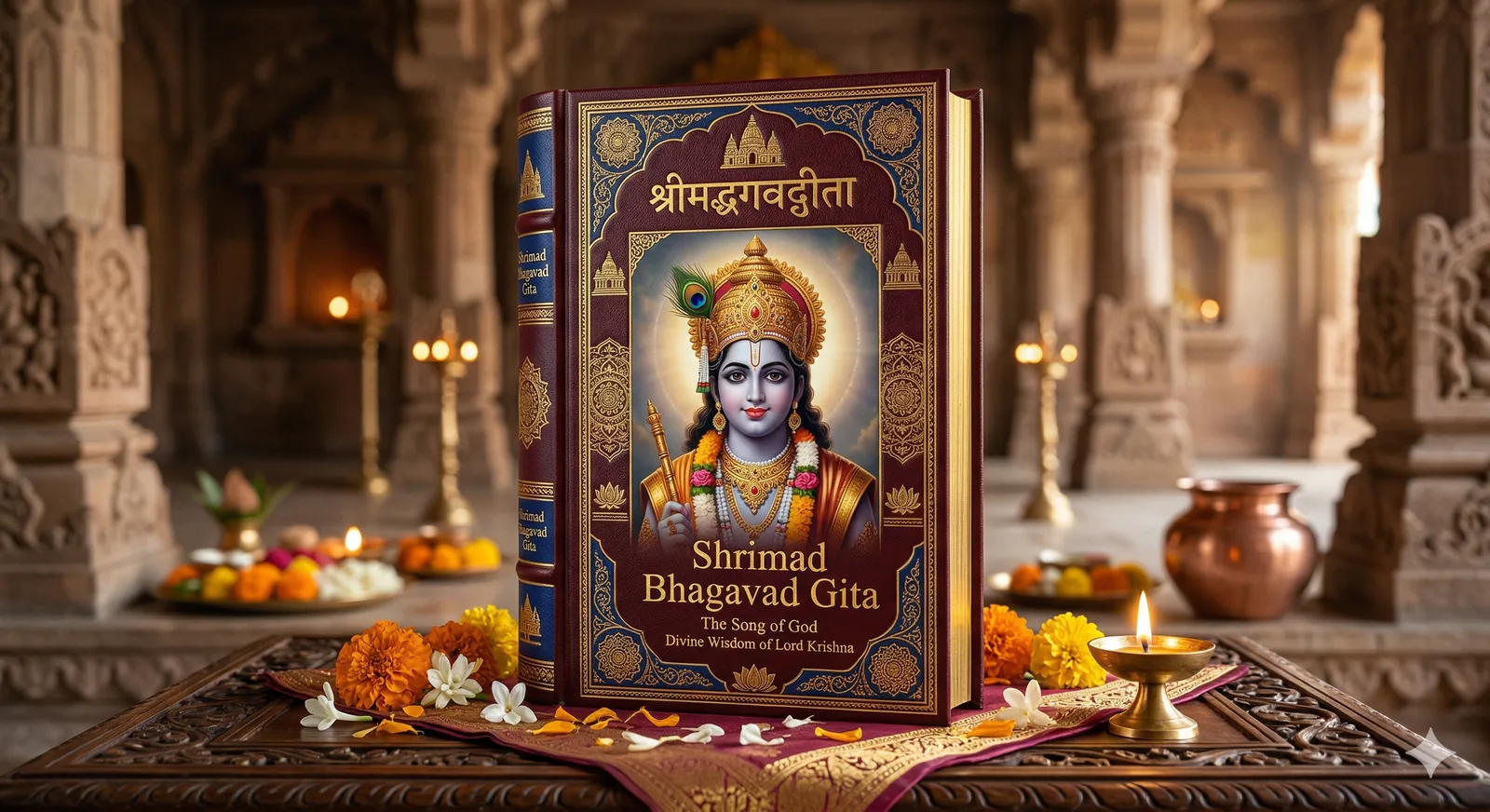
It records a conversation between the warrior Arjuna and Krishna immediately before a catastrophic battle. Arjuna is paralysed by grief and moral confusion. Krishna responds with teachings on the Self, duty, devotion, disciplined action, meditation, knowledge and surrender.
Its setting makes the Gita especially relevant today. Spiritual wisdom is not delivered after Arjuna's problems have disappeared. It is delivered in the middle of crisis.
Read The Bhagavad Gita's Guide to Anxiety and Stress in Modern Life.
The Ramayana and Mahabharata
The Ramayana tells the story of Rama, Sita, Lakshmana, Hanuman and the struggle against Ravana. It explores duty, loyalty, courage, leadership, devotion, temptation, sacrifice and the complexity of moral action.
The Mahabharata is a vast epic centred on conflict within a royal family. It refuses to present human beings as simply good or evil. Its characters are noble and flawed, loving and destructive, wise and confused — often at the same time.
These epics remain alive through festivals, theatre, dance, television, storytelling, family traditions and everyday moral discussion.
The Puranas
The Puranas contain sacred narratives, cosmology, genealogies, pilgrimage traditions and teachings centred on deities such as Vishnu, Shiva and Devi.
Many of the stories and divine forms most people associate with popular Hinduism are preserved and developed in these texts.
Agamas and Tantras
The Agamas and Tantras include teachings on temple construction, ritual, mantra, meditation, yoga, sacred images and methods of worship.
They have profoundly shaped Hindu temple traditions and the devotional lives of Shaiva, Vaishnava and Shakta communities.
The Major Traditions Within Hinduism
Hinduism contains many sampradayas — teaching lineages and communities. Four broad devotional traditions are commonly discussed.
Vaishnavism
Vaishnavas worship Vishnu or one of Vishnu's forms and avatars, especially Krishna and Rama, as Supreme.
Vaishnava traditions often emphasise devotion, divine grace, sacred names, service and loving relationship with God.
Shaivism
Shaivas worship Shiva as Supreme.
Shaiva traditions range from temple-based devotion to sophisticated systems of yoga, ritual and non-dual philosophy. Shiva may be approached as the great yogi, the cosmic dancer, the destroyer of ignorance, the lord of transformation or ultimate consciousness.
Shaktism
Shaktas worship Shakti, divine power, as the Supreme Goddess.
She may be approached as Durga, Kali, Lakshmi, Saraswati, Lalita, Parvati or countless regional forms. Shaktism affirms that ultimate reality is not only described through masculine language. The divine may be Mother, power, wisdom, abundance, protection and the living energy of existence.
Smartism
Smarta traditions honour several major deities as valid manifestations of one ultimate reality, often including Shiva, Vishnu, Devi, Ganesha, Surya and Skanda.
Smartism is frequently associated with Advaita Vedanta, although Hindu identities and practices do not always fit perfectly into simple categories.
The Spiritual Paths of Hinduism
Hinduism recognises that human beings have different temperaments.
One person approaches truth through love. Another through intellectual inquiry. Another through meditation. Another through service.
Rather than forcing everyone into the same method, Hindu traditions offer multiple yogas — disciplined paths of transformation.
Bhakti Yoga: The Path of Devotion
Bhakti Yoga transforms emotion into love of the divine.
Its practices include prayer, chanting, singing, remembrance, ritual worship and surrender. The devotee may relate to God as parent, child, friend, beloved, teacher or master.
Bhakti can be especially powerful during grief, loneliness and helplessness because it does not require you to pretend that you are emotionally invulnerable.
Read Bhakti Yoga: How Devotion Heals Loneliness and Opens the Heart.
Karma Yoga: The Path of Selfless Action
Karma Yoga transforms work into spiritual practice.
You continue acting, building, parenting, leading and serving, but gradually release the ego's obsessive demand to control every result.
The Bhagavad Gita does not teach carelessness. It teaches full effort without allowing success or failure to define the Self.
Jnana Yoga: The Path of Knowledge
Jnana Yoga uses study, reflection, discernment and self-inquiry to investigate what is real.
The seeker learns to distinguish the permanent from the impermanent, the Self from the personality, and truth from assumption.
Its central question is not "What should I believe?" but "Who is the one experiencing this life?"
Raja Yoga and Dhyana: The Path of Meditation
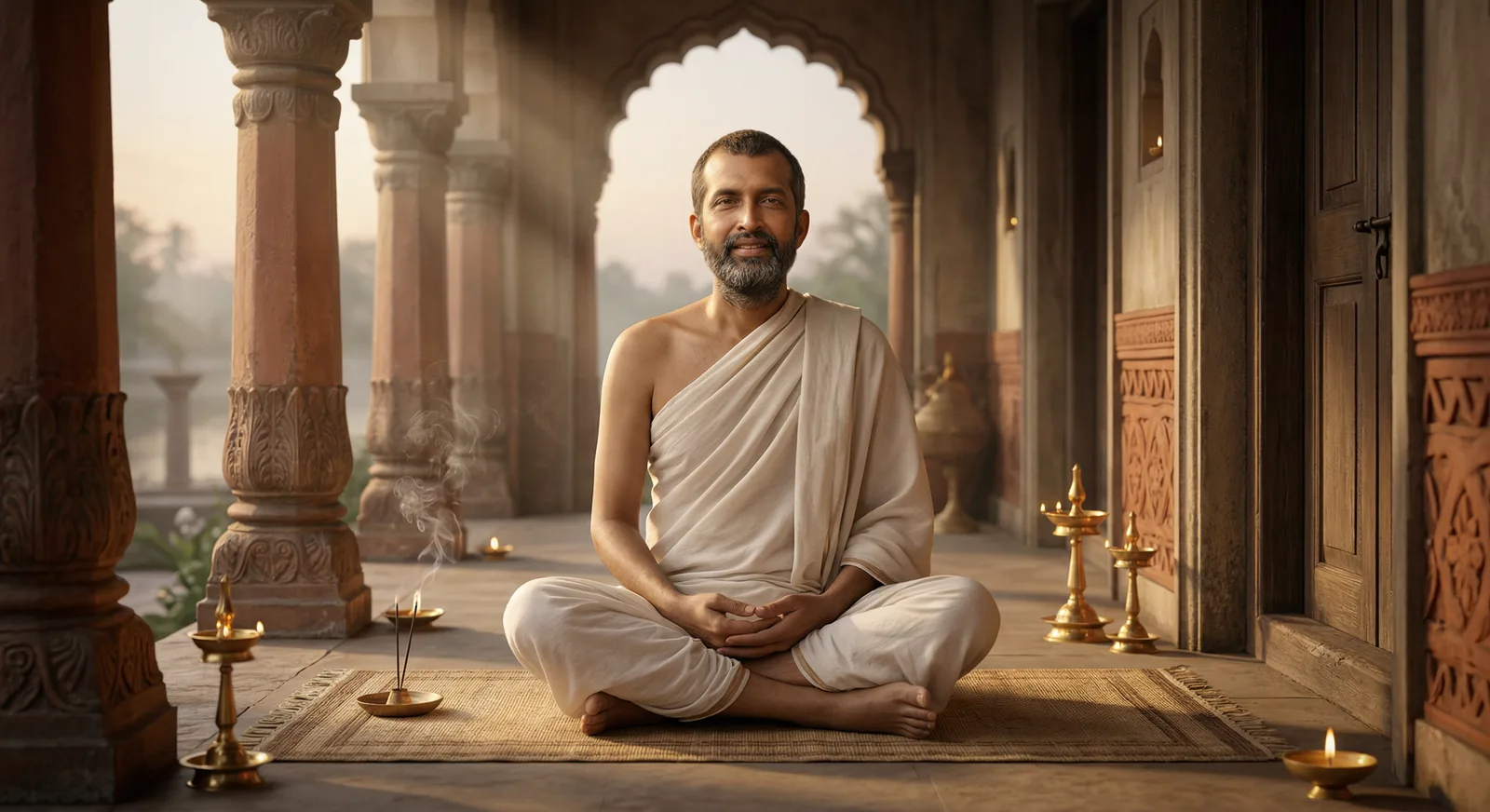
The meditative path trains attention, body, breath, senses and mind.
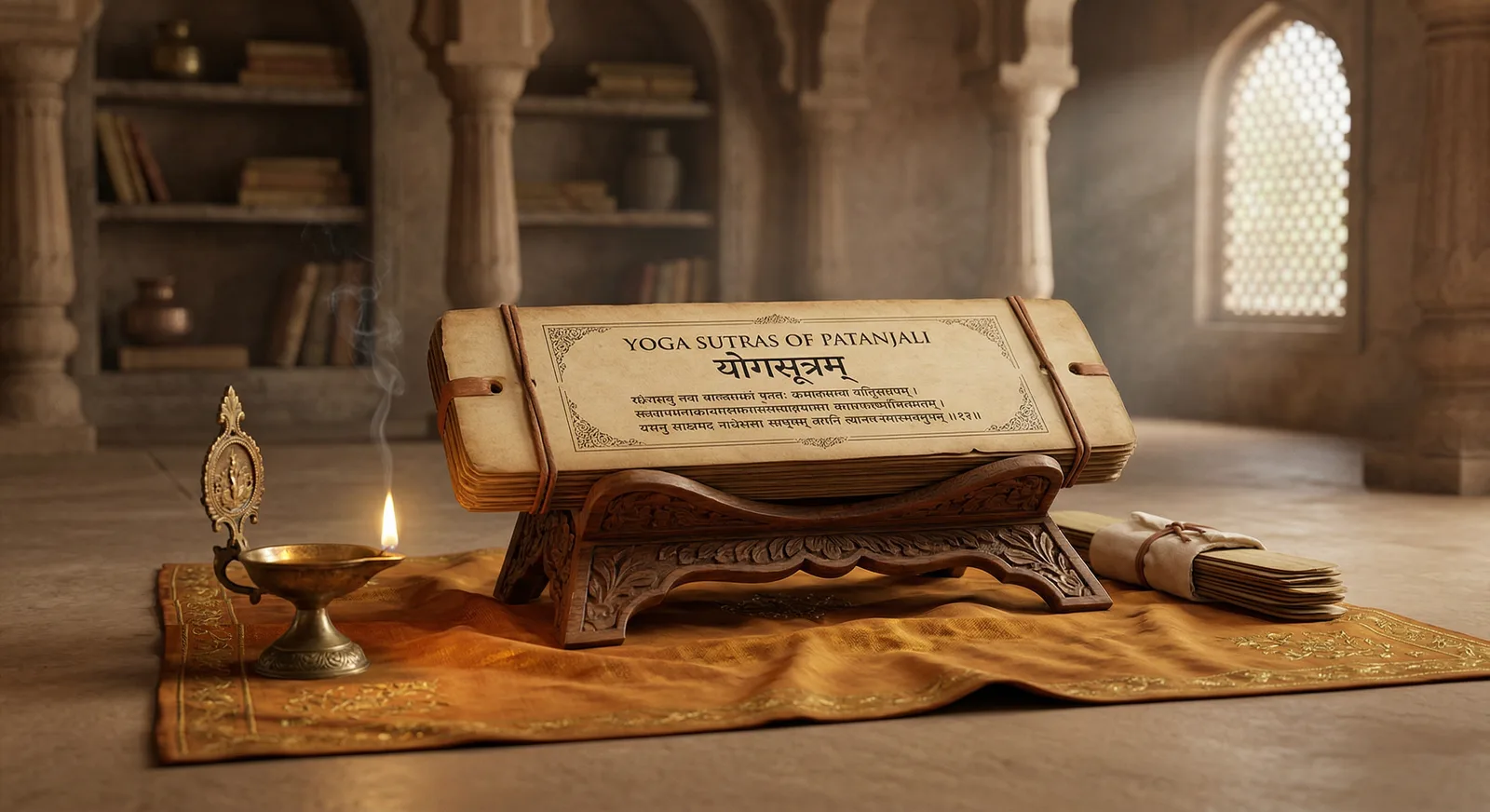
Patanjali's Yoga Sutras describe an eightfold discipline including ethical conduct, personal observances, posture, breath regulation, withdrawal of the senses, concentration, meditation and absorption.
Yoga in this context is much more than physical flexibility. It is the disciplined integration of human life.
Explore The Ancient Science of Yoga and Meditation: The Vedic Science of Knowing Yourself.
These paths are not always separate. A person may meditate in the morning, serve during the day, study scripture in the evening and sing devotional prayers at night.
The goal is not to collect spiritual activities. It is to transform the person performing them.
The Four Aims of a Human Life
Hinduism does not generally teach that ordinary life is inherently sinful or that every spiritual person must abandon family, prosperity and enjoyment.
Instead, it describes four broad human aims, known as the Purusharthas.
Dharma: Ethical and Meaningful Living
Dharma provides the moral foundation. Without dharma, the other goals can become destructive.
Artha: Security, Skill and Prosperity
Artha includes material stability, livelihood, resources, competence and responsible prosperity.
Wealth itself is not automatically condemned. The deeper question is how it is earned, how it is used, and whether the pursuit of it damages other people or your own integrity.
Kama: Love, Beauty and Enjoyment
Kama includes affection, pleasure, art, beauty, emotional fulfilment and healthy enjoyment.
Hinduism recognises that human beings are not machines. Joy and relationship are legitimate dimensions of life when guided by wisdom and responsibility.
Moksha: Spiritual Liberation
Moksha is the highest freedom — awakening beyond egoic bondage and the repeated cycle of suffering.
The four aims offer a balanced vision:
Build a life. Love deeply. Contribute responsibly. But do not mistake temporary achievement for your eternal identity.
What Does Hindu Practice Look Like?
There is no single daily routine followed by every Hindu.
Practices vary by region, family, deity, lineage, stage of life and personal temperament.
Common practices include:
- Puja: offering light, incense, water, flowers, food or prayer to a deity
- Darshan: seeing and being seen by the sacred presence
- Mantra: repeating sacred sounds, names or verses
- Japa: meditative repetition, often using prayer beads
- Dhyana: meditation
- Yoga: disciplined integration of body, mind and consciousness
- Aarti: offering light while singing prayers
- Seva: selfless service
- Satsang: gathering in the company of truth, teachers or fellow seekers
- Svadhyaya: study of scripture and the Self
- Vrata: a sacred observance, vow or fast
- Yatra: pilgrimage
- Festival worship: communal celebration of sacred events and divine forms
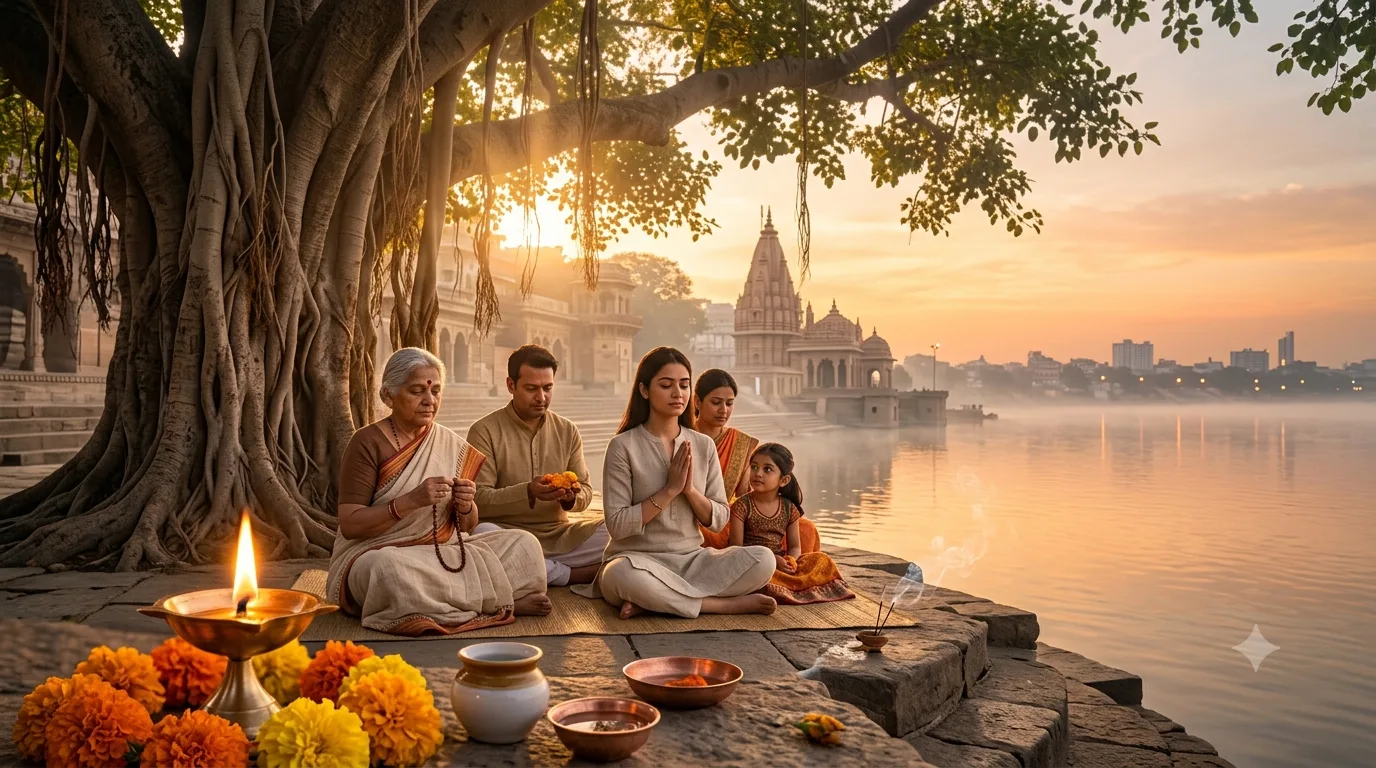
A home practice may be as simple as lighting a diya, offering gratitude and sitting silently for five minutes.
The external action matters, but so does the inner state.
A flower offered while the mind is filled with arrogance is not automatically more spiritual than a quiet act of kindness performed without recognition.
Ritual is meant to educate attention, gratitude and devotion — not replace them.
Why Are Sacred Images Used in Hindu Worship?
Hindus are sometimes accused of "worshipping idols."
This description misunderstands the purpose of a murti, a sacred form through which the divine is approached.
Human beings already use visible forms to relate to invisible realities. A national flag is cloth, but it carries meaning beyond the cloth. A photograph is paper or pixels, yet it can awaken love for the person represented.
A murti is not treated merely as a decorative statue. Through traditional ritual and devotion, it becomes a focal point for encountering divine presence.
The infinite has no compulsory shape. But the human mind often needs relationship, beauty, symbol and form.
Hinduism therefore allows worship of the divine:
- With form
- Without form
- As personal
- As impersonal
- Within the heart
- Throughout nature
- Through a sacred image
- Beyond every image
The form is not meant to imprison the infinite. It gives the human heart somewhere to begin.
How Hinduism Can Help With Modern Life
Hinduism was not created as a lifestyle trend. Its teachings emerged in cultures very different from today's digital world.
Yet the human problems it addresses remain strikingly familiar.
When Your Identity Depends on Achievement
Modern society repeatedly tells you that you are your job title, income, appearance, productivity and public reputation.
Hindu teachings on Atman challenge this directly.
You have responsibilities and roles, but you are not reducible to them. Losing a job may change your circumstances without destroying your deepest identity. Ageing may change the body without eliminating the awareness through which change is experienced.
This insight does not remove pain. It prevents temporary loss from becoming complete spiritual collapse.
When Work Becomes Burnout
Modern work culture often turns ambition into permanent anxiety. You are expected to optimise every hour, build a personal brand, outperform others and remain available at all times.
Karma Yoga offers another way.
Work wholeheartedly. Prepare carefully. Act ethically. Accept feedback. But do not hand your inner worth to an outcome you cannot completely control.
The result of action depends on many forces: your effort, other people's choices, timing, circumstance and events no one could predict.
You control your sincerity more than you control the world.
When Your Attention Is Being Stolen
Phones, notifications, advertising and algorithms compete continuously for human attention.
Yoga and meditation begin with a revolutionary claim: attention can be trained.
You do not need to obey every thought, impulse or notification. You can pause. You can observe. You can choose where awareness rests.
A person who cannot direct attention will eventually have their life directed by whoever can capture it.
When Relationships Become Transactions
Many relationships suffer from invisible scorekeeping:
"I did this, so you should do that."
"I gave you attention, so you owe me validation."
"You did not respond the way I expected, so my love becomes punishment."
Bhakti and Karma Yoga teach love with less possession and service with less calculation.
This does not mean tolerating abuse or abandoning boundaries. It means learning the difference between love and control.
When Success Still Feels Empty
The Purusharthas explain why external success can coexist with internal emptiness.
Artha — prosperity — matters. Kama — joy and relationship — matters. But without dharma, success loses integrity. Without moksha, the mind keeps expecting temporary achievements to provide permanent fulfilment.
The next promotion, purchase or milestone may improve life. It cannot answer the question of who you are.
When Society Becomes Divided
Hinduism's recognition of many approaches to the sacred offers a powerful model for pluralism.
Pluralism does not require pretending that every belief is identical. Nor does it require abandoning conviction.
It means holding your path deeply without assuming that the infinite belongs exclusively to you.
The Rig Vedic insight that truth may be expressed in many ways can help communities disagree without dehumanising one another.
When the Future Feels Uncertain
Hinduism does not promise a life without change. It teaches how to remain inwardly grounded while change occurs.
Bodies age. Economies shift. Relationships evolve. Technologies transform society. Success appears and disappears. Every generation confronts a future it cannot fully predict.
Dharma asks what is right now.
Karma Yoga asks you to act without controlling everything.
Meditation teaches you to return to awareness.
Bhakti teaches trust.
Vedanta asks what remains unchanged beneath the movement of life.
These are not escape routes from the future. They are ways of entering it without being ruled entirely by fear.
Hinduism Is a Practice of Transformation, Not a Label
It is possible to know the names of every deity, recite sacred verses and attend every festival without becoming more patient, truthful or compassionate.
It is also possible to begin with one sincere practice and allow it to transform an entire life.
The purpose of Hindu spirituality is not simply to accumulate beliefs. It is to reduce ignorance, selfishness, cruelty and attachment while awakening wisdom, devotion, courage and freedom.
A useful test of spiritual progress is not:
"How religious do I appear?"
It is:
- Am I becoming less controlled by anger?
- Am I more truthful when lying would be convenient?
- Can I remain compassionate without becoming weak?
- Can I succeed without becoming arrogant?
- Can I fail without losing myself?
- Can I disagree without hatred?
- Can I enjoy life without being enslaved by it?
- Can I see something sacred in another living being?
The temple is important. Scripture is important. Ritual is important.
But the human character they produce is also important.
A Seven-Day Introduction to Living Sanatan Dharma
You do not need to change your entire life overnight. Begin with one week of conscious practice.
Day 1: Observe Without Judging
Sit quietly for five minutes.
Notice thoughts, sensations and emotions as they arise. Do not try to stop them. Ask:
Who is aware of this thought?
This is a simple beginning to the inquiry into Atman.
Day 2: Practise Ahimsa in Speech
Before speaking or posting online, pause and ask:
Is it true? Is it necessary? Can it be said without cruelty?
Notice how often the ego wants victory more than understanding.
Day 3: Turn Work Into Karma Yoga
Choose one task you normally resist.
Perform it carefully, without complaining and without seeking recognition. Offer the action as service to your family, community, humanity or the divine.
Day 4: Remember What You Already Have
Write down five things for which you are genuinely grateful.
Gratitude does not deny suffering. It prevents suffering from becoming the only reality you can see.
Day 5: Perform One Anonymous Act of Seva
Help someone without announcing it.
Do not post it. Do not expect repayment. Allow the action to remain quietly sacred.
Day 6: Create Ten Minutes of Digital Silence
Put every screen away.
Sit, walk, pray, breathe or look at the sky without consuming information. Notice the discomfort that appears when stimulation stops.
That discomfort is not failure. It reveals how deeply the mind has been conditioned.
Day 7: Reflect on Your Dharma
Ask yourself:
- What responsibility am I currently avoiding?
- Where am I acting against my conscience?
- What ability do I possess that could help another person?
- What kind of human being am I becoming through my daily choices?
Choose one honest action for the coming week.
Sanatan Dharma becomes real when reflection turns into conduct.
Common Misunderstandings About Hinduism
"All Hindus Believe Exactly the Same Thing"
They do not.
Hindu traditions disagree about God, the soul, liberation, scripture, ritual and philosophy. Diversity is not an accidental side effect. It is one of Hinduism's defining characteristics.
"Hinduism Is Simply Polytheism"
This is incomplete.
Hinduism includes devotion to many divine forms, belief in one Supreme Being, non-dual understandings of ultimate reality, and traditions that combine these perspectives in different ways.
"Karma Means Everything That Happens Is Your Fault"
No.
Karma is not a justification for blaming people who suffer. Human experience is shaped by individual choices, other people's actions, social systems, natural forces and causes beyond ordinary understanding.
The practical purpose of karma is responsibility, not cruelty.
"Hinduism Teaches Fatalism"
Karma does not mean that change is impossible.
The fact that previous actions influence the present makes present action more important, not less. Every conscious decision can strengthen or redirect the tendencies shaping your future.
"Every Hindu Must Be Vegetarian"
Many Hindus practise vegetarianism because of ahimsa, devotion, family tradition or regional culture. Others do not.
Dietary practices vary widely. There is no single menu followed by all Hindus.
"Yoga Is Only Physical Exercise"
Physical postures are one dimension of yoga.
Classical yoga also includes ethics, self-discipline, breath, control of attention, meditation and spiritual absorption.
"Caste and Hinduism Are Exactly the Same Thing"
Caste is a complex historical and social reality that has become intertwined with Hindu societies and has caused profound discrimination and suffering.
Concepts such as varna and thousands of birth-based jatis developed and changed across history. They should not be simplistically treated as the whole of Hinduism, nor should caste injustice be denied.
Many Hindu saints, teachers and reformers have challenged birth-based spiritual superiority and affirmed the divine dignity of all people.
A serious presentation of Hinduism must acknowledge both its liberating spiritual teachings and the human institutions that have sometimes contradicted them.
The Question Hinduism Leaves With You
Hinduism does not begin by demanding that you accept one sentence about God.
It begins by asking you to pay attention.
Pay attention to your actions because they shape your character.
Pay attention to desire because it can serve life or enslave it.
Pay attention to the mind because repeated thoughts become the atmosphere in which you live.
Pay attention to other beings because the sacred is not confined to your private experience.
Pay attention to the awareness within you because it may be deeper than the identity you have spent your life defending.
You may enter Hinduism through Krishna's love, Shiva's stillness, Devi's power, Rama's integrity, Hanuman's devotion, Ganesha's wisdom, Patanjali's discipline, the Upanishads' inquiry or the Bhagavad Gita's call to courageous action.
The doorway may differ.
The invitation is the same:
Live truthfully. Act consciously. Love deeply. Seek sincerely. Discover who you are beneath everything that changes.
Sanatan Dharma has survived not because it offers one rigid answer to every person, but because it keeps humanity's deepest questions alive.
And perhaps the most important of those questions is not simply:
"What is Hinduism?"
It is:
"What would happen if I began living as though every action mattered, every being carried sacred value, and the truth I am seeking was also waiting within me?"