Key Takeaways
- The Core Number: The famous phrase "33 crore gods" originates from the 33 Vedic Devas (Trayastrimsat Koti), where koti translates to both "ten million" (crore) and "type" or "category."
- Scriptural Dialogue: The Brihadaranyaka Upanishad demonstrates that divine reality can be viewed at multiple levels—from 3,303 manifest forces down to the One underlying Divine Reality (Brahman).
- The 33 Devas Breakdown: Consists of 8 Vasus (elemental forces), 11 Rudras (vital sensory/life forces), 12 Adityas (luminous monthly aspects of time), Indra (leadership/thunder), and Prajapati (creative power).
- Unity in Diversity: Hinduism isn't strictly polytheistic or monotheistic; it is a rich non-dual (Advaita) and panentheistic tradition where One Infinite Reality expresses itself through infinite sacred forms.
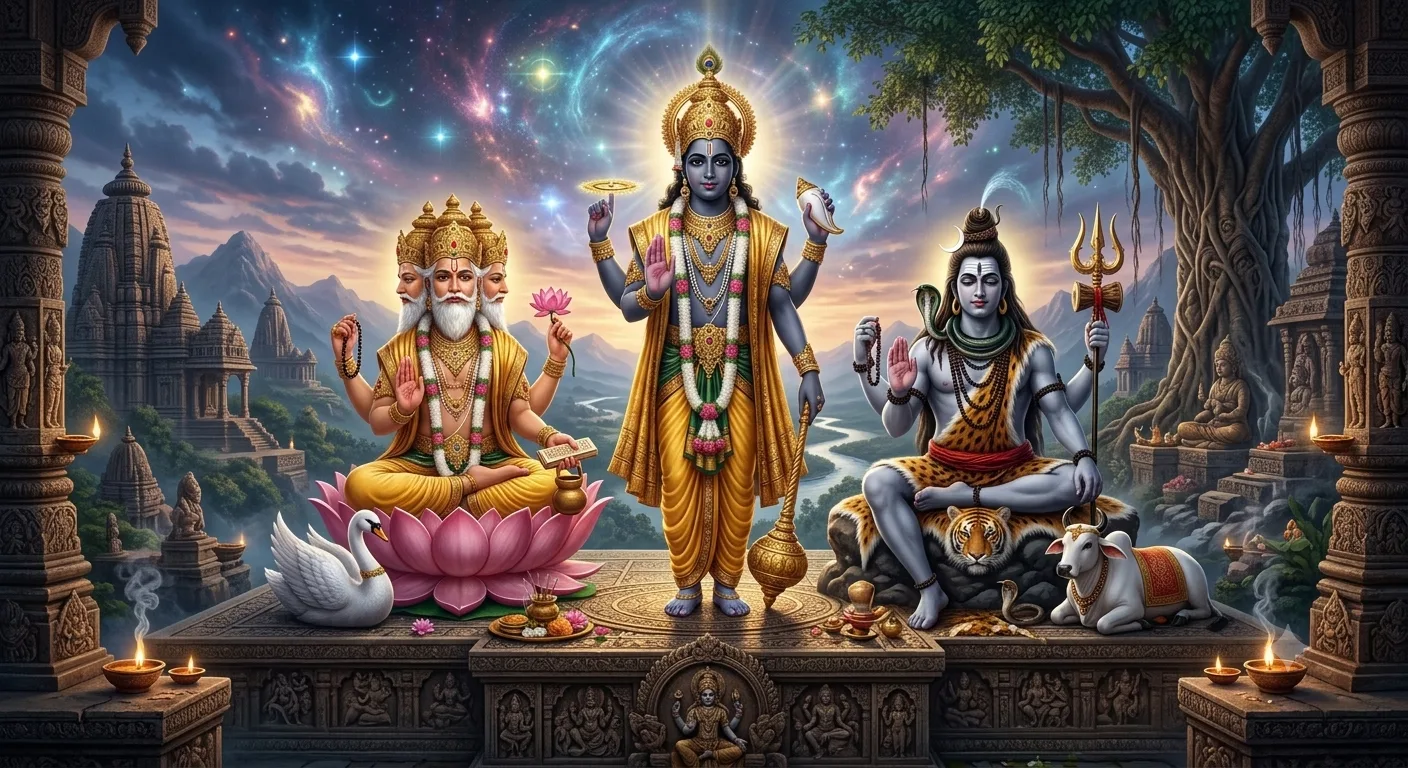
The Question Almost Every Hindu Is Eventually Asked
A Hindu child may hear it at school. A university student may be asked it by a curious friend. A Hindu living outside India may encounter it during a conversation about religion. Online, the question is sometimes asked respectfully and sometimes used to mock a tradition that appears difficult to understand:
"Do Hindus really worship 33 crore gods?"
When confronted with this question, Hindus often respond in one of three ways:
- "No. Hinduism has 33 types of gods, not 33 crore gods."
- "There is only one God appearing in many forms."
- "Hinduism accepts many gods. Why should that be a problem?"
Each response contains part of the truth, but none of them explains the complete picture on its own.
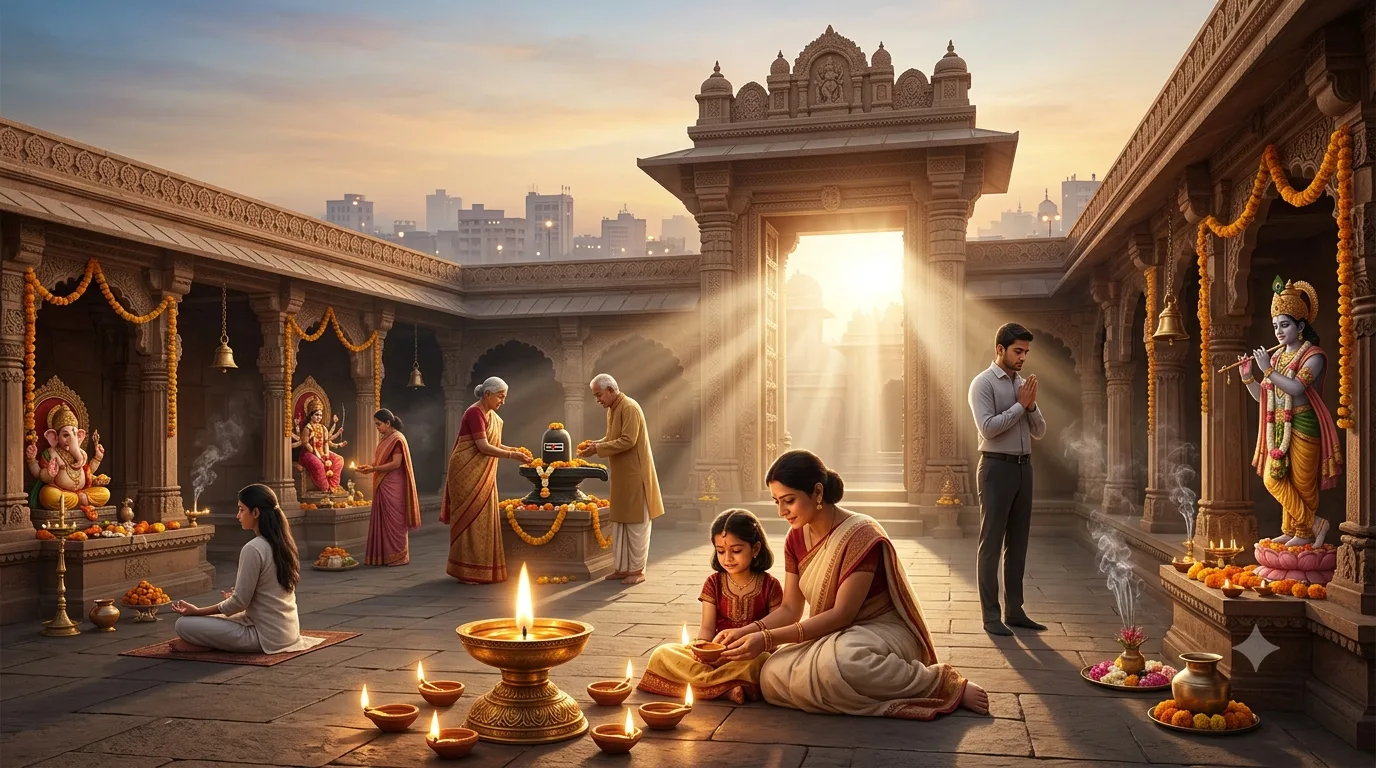
Hinduism does not have a single central authority that requires every follower to accept one identical definition of God. Its traditions encompass devotion to one Supreme Personal Being, worship of many sacred forms, reverence for divine powers within nature, and non-dual philosophies describing all existence as grounded in one ultimate reality.
The famous number is therefore not simply a matter of religious arithmetic. The deeper question is: How can the One be present within the many without being divided by the many?
That question takes us into the very heart of Sanatan Dharma.
The Direct Answer
Hindus do not maintain a literal directory of 330 million separately named deities whom every devotee is required to memorize or worship.
Ancient Hindu texts speak of:
- Thirty-three principal Vedic devas
- Larger symbolic numbers representing their infinite manifestations
- Countless regional, lineage, and personal divine forms
- One Supreme Lord (Ishvara)
- One ultimate, formless reality called Brahman
                    ┌─────────────────────────────┐
                    │           BRAHMAN           │
                    │  (Ultimate Non-Dual Source) │
                    └──────────────┬──────────────┘
                                   │
                    ┌──────────────┴──────────────┐
                    │           ISHVARA           │
                    │   (Supreme Personal God)    │
                    └──────────────┬──────────────┘
                                   │
        ┌──────────────────────────┼─────────────────────────────┐
        │                          │                             │
┌───────┴────────┐          ┌──────┴─────────┐          ┌────────┴───────┐
│  33 VEDIC DEVAS│          │  ISHTA DEVATAS │          │  KULA DEVATAS  │
│ (Cosmic Forces)│          │ (Personal Form)│          │(Family Lineage)│
└────────────────┘          └────────────────┘          └────────────────┘
Different Hindu traditions explain the relationship between these levels in unique ways:
- A Vaishnava may worship Vishnu, Narayana, Rama, or Krishna as the Supreme Lord.
- A Shaiva may worship Shiva as the Supreme Reality.
- A Shakta may worship Devi, the Divine Mother, as the source of all gods and universes.
- A follower of Advaita Vedanta describes every name and form as an appearance within the non-dual reality of Brahman.
- A Smarta worships five or six principal deities as equally valid pathways to the same ultimate truth.
These approaches are not identical, but what connects them is the understanding that divine reality cannot be measured merely by counting physical images.
What Does "33 Crore Gods" Mean?
In the traditional Indian numbering system:
- One Crore = 10,000,000 (Ten Million)
- Thirty-Three Crore = 330,000,000 (330 Million)
The Sanskrit expression connected with this discussion is trayastrimsat koti (33 koti).
The word koti in classical Sanskrit has two distinct meanings:
- Ten Million (Crore): Used in numerical calculation.
- Type, Class, or Category (Prakara): Used in classification and grammar.
A popular modern explanation argues that koti in this context exclusively means "categories," rendering the phrase as "33 categories of divine beings." While this explanation highlights the structural grouping of Vedic devas, ancient scriptures deliberately play with both the finite count and the infinite nature of divine energy.
A balanced scriptural view recognizes that:
- Early Vedic scriptures explicitly outline 33 principal devas.
- Scripture also describes these 33 devas radiating into thousands, millions, and infinite manifestations.
- Hindu theology does not require proving a physical count of 330 million individual entities; it celebrates the infinite ways the Divine touches creation.
An Ancient Question: "How Many Gods Are There?"
The most illuminating explanation of this concept comes from a famous dialogue preserved in the Brihadaranyaka Upanishad (3.9.1). The scholar Vidagdha Shakalya presses the sage Yajnavalkya with a series of direct questions.
Shakalya: "How many gods are there, Yajnavalkya?"
Yajnavalkya: "Three thousand and three, and three hundred and three."Shakalya: "Yes, but how many gods are there really, Yajnavalkya?"
Yajnavalkya: "Thirty-three."Shakalya: "Yes, but how many gods are there really?"
Yajnavalkya: "Six."Shakalya: "Yes, but how many...?"
Yajnavalkya: "Three... Two... One and a half... One."
When Shakalya asks what the large numbers represent, Yajnavalkya explains that the thousands are merely the glories and manifestations (Nivids) of the core thirty-three powers.
This dialogue illustrates that divine reality can be understood at multiple depths:
- At the cosmic level: Divine expressions are infinite and uncountable.
- At the functional level: Divine powers operate through 33 primary cosmic forces.
- At the ultimate level: All powers collapse into the One Prana (Life-Force) / Brahman.
The Thirty-Three Vedic Devas
The 33 devas belong to the ancient Vedic mapping of cosmic order. They are categorized into four distinct groups:
| Group | Count | Cosmic Association |
|---|---|---|
| Vasus | 8 | Elemental conditions of physical existence |
| Rudras | 11 | Vital forces, sensory organs, and transformation |
| Adityas | 12 | Solar aspects of time and moral order |
| Indra & Prajapati | 2 | Cosmic leadership and creative energy |
| Total | 33 | The Primary Vedic Devas |
1. The Eight Vasus (Elemental Powers)
The Vasus represent the fundamental material environments through which life is experienced:
- Agni (Fire / Energy)
- Prithvi (Earth / Solidity)
- Vayu (Wind / Air)
- Antariksha (Atmosphere / Space)
- Aditya (Sun / Light)
- Dyaus (Sky / Heaven)
- Chandramas (Moon / Rhythm)
- Nakshatra (Stars / Cosmic Order)
To the Vedic mind, nature was not inanimate matter. Fire provided transformation, Earth gave stability, Vayu carried breath, and the stars provided direction. Seeing the environment as sacred instills deep cosmic gratitude and ecological responsibility.
2. The Eleven Rudras (Vital Powers)
In the Brihadaranyaka Upanishad, Yajnavalkya explains the 11 Rudras as the ten vital sensory-motor faculties (Indriyas) plus the mind (Manas):
- 5 Perceptual Faculties: Hearing, Touch, Sight, Taste, Smell
- 5 Action Faculties: Speech, Grasping, Movement, Elimination, Reproduction
- 1 Central Faculty: The Mind
When these vital powers depart from a body at death, those left behind weep (rud = to cry). Hence, they are named Rudras. Later Puranic traditions personify them into cosmic forces of transformation, preserving lists such as Manyu, Manu, Mahinasa, Mahan, Shiva, Ritadhvaja, Ugrareta, Bhava, Kala, Vamadeva, and Dhritavrata.
Rudra represents the power that breaks rigid, outdated structures so that new life can emerge.
3. The Twelve Adityas (Solar Movements of Time)
The Adityas are luminous aspects of divine light linked to the 12 months of the year. As time moves forward, each month brings specific conditions, blessings, and lessons:
- Vivasvan (Radiant Energy)
- Aryama (Nobility & Honor)
- Pusha (Nourishment & Journeys)
- Tvashta (Craftsmanship & Form)
- Savita (Life-Giving Impulse)
- Bhaga (Prosperity & Share)
- Dhata (Support & Foundation)
- Vidhata (Order & Distribution)
- Varuna (Cosmic Truth & Waters)
- Mitra (Friendship & Harmony)
- Shatru / Amsa (Power & Portion)
- Urukrama / Vishnu (Cosmic Expansion)
The Adityas remind us that time is constantly moving. Every month carries opportunity—urging us to act with awareness and live in alignment with Dharma.
4. Indra and Prajapati
- Indra: Represents cosmic strength, atmosphere, leadership, and the power that overcomes stagnation.
- Prajapati: Represents the generative power of creation, sustaining the continuation of living beings.
What Is a Deva?
Translating the Sanskrit word Deva (or feminine Devi) simply as "God" creates theological confusion.
The root div means "to shine" or "to radiate." A Deva is literally a "Shining One."
┌────────────────────────────────────────────────────────────────────────────────────────────────────────────────┐
│                      WESTERN "GOD"                                                                             │
│   • Singular, transcendent Creator existing outside and above creation.                                        │
│                                                                                                                │
└────────────────────────────────────────────────────────────────────────────────────────────────────────────────┘
vs
┌────────────────────────────────────────────────────────────────────────────────────────────────────────────────┐
│                      VEDIC "DEVA"                                                                              │
│   • Luminous force, divine intelligence, or cosmic being operating within or as part of creation.              │
│                                                                                                                │
└────────────────────────────────────────────────────────────────────────────────────────────────────────────────┘
In Hindu thought, Devas can refer to high celestial beings governing natural laws, or they can represent functional manifestations of the one Supreme Reality (Ishvara).
Brahman: The Reality Beyond Numbers
The ultimate foundation of Hindu theology is Brahman—the infinite, uncaused, non-dual reality underlying all existence.
Brahman is not an old man sitting in the clouds, nor is it merely one deity competing with others. Brahman is the very ground of existence, consciousness, and bliss (Sat-Chit-Ananda).
                        ┌───────────────────────────┐
                        │          BRAHMAN          │
                        └─────────────┬─────────────┘
                                      │
              ┌───────────────────────┴───────────────────────┐
              ▼                                               ▼
┌───────────────────────────┐                   ┌───────────────────────────┐
│      NIRGUNA BRAHMAN      │                   │      SAGUNA BRAHMAN       │
│  • Without attributes     │                   │  • With divine attributes │
│  • Beyond form & speech   │                   │  • Personified as Ishvara │
│  • Approached via Jnana   │                   │  • Approached via Bhakti  │
└───────────────────────────┘                   └───────────────────────────┘
- Nirguna Brahman: The Absolute beyond attributes, limits, gender, or physical form.
- Saguna Brahman (Ishvara): The Absolute experienced through loving attributes—as Creator, Preserver, and Transformer.
Distinguishing Brahman, Brahma, and Ishvara
Because these three terms sound similar, they are frequently confused in cross-cultural discussions:
| Term | Meaning & Context |
|---|---|
| Brahman | The ultimate, infinite, non-dual Reality underlying all existence. |
| Brahma | The personal deity associated with cosmic creation (part of the Trimurti with Vishnu and Shiva). |
| Ishvara | The Supreme Being/Lord possessing full divine personality and attributes. |
One Reality, Many Sacred Names
The Rig Veda contains one of humanity's oldest statements of spiritual pluralism:
"Ekam sat vipra bahudha vadanti"
"Truth is One; the wise call It by many names."
— Rig Veda (1.164.46)
This verse explains why Hindus do not view different divine forms as hostile rivals. Just as water can be called water, agua, pani, or jal without changing its chemical nature, the Supreme Reality is addressed through various sacred forms:
- Ganesha: Wisdom, clarity, and removing obstacles.
- Saraswati: Knowledge, art, speech, and creativity.
- Lakshmi: Spiritual and material abundance, harmony.
- Durga / Kali: Protective courage, strength, and inner transformation.
- Shiva: Stillness, meditation, and dissolution of ignorance.
- Vishnu / Krishna / Rama: Preservation of cosmic order, righteousness, and divine love.
- Hanuman: Pure devotion, selfless service, and strength.
Ishta Devata: Your Personal Doorway to the Infinite
Because human beings possess different temperaments, Hindu tradition encourages selecting an Ishta Devata—a personal, cherished form of the Divine.
                    ┌──────────────────────────────┐
                    │    INFINITY OF BRAHMAN       │
                    └──────────────────────────────┘
                                  │
          ┌───────────────────────┼───────────────────────┐
          ▼                       ▼                       ▼
┌─────────────────┐     ┌───────────────────┐     ┌─────────────────┐
│  KRISHNA BHAKTA │     │  SHAIVA SADHAKA   │     │   SHAKTA BHAKTA │
│ (Path of Love)  │     │(Path of Stillness)│     │(Path of Mother) │
└─────────────────┘     └───────────────────┘     └─────────────────┘
Having an Ishta Devata gives devotional practice focused depth. Rather than jumping shallowly between dozens of practices, a devotee builds a deep, transformative relationship with one form, recognizing that this form opens the door to the Infinite.
Lineage and Local Traditions
In addition to one's Ishta Devata, Hindu practice honors context through:
- Kula Devata: The deity associated with a family lineage.
- Grama Devata: The guardian deity of a specific village or region.
- Sampradaya: The spiritual lineage and traditions passed down by gurus.
Is Hinduism Monotheistic or Polytheistic?
Western theological terms rarely fit Hinduism perfectly. Depending on the philosophical school, Hinduism incorporates several frameworks:
┌─────────────────┬───────────────────────────────────────────────────────────┐
│ Framework       │ How It Applies to Hindu Thought                           │
├─────────────────┼───────────────────────────────────────────────────────────┤
│ Monotheism      │ Devotion to One Supreme Lord (e.g., Ishvara, Vishnu,      │
│                 │ Shiva, or Devi) who governs all creation.                 │
├─────────────────┼───────────────────────────────────────────────────────────┤
│ Non-Dualism     │ Advaita Vedanta teaching that Creator, Creation, and Self │
│ (Advaita)       │ are ultimately one non-dual Brahman.                      │
├─────────────────┼───────────────────────────────────────────────────────────┤
│ Panentheism     │ The belief that the Universe exists within God, but God   │
│                 │ also transcends the universe.                             │
├─────────────────┼───────────────────────────────────────────────────────────┤
│ Henotheism      │ Worshipping one primary deity as Supreme while respecting │
│                 │ the validity of other forms.                              │
└─────────────────┴───────────────────────────────────────────────────────────┘
| Approach | Meaning | Practice | Example |
|---|---|---|---|
| Monotheism | One singular, transcendent Creator governing the universe as the ultimate reality. | Worship focused on a single Supreme Lord. | Devotion to Lord Vishnu as the Supreme Being. |
| Non-Dualism (Advaita) | One all-pervading, non-dual reality (Brahman) in which all forms, including the self, are ultimately expressions. | Realizing unity through meditation and self-inquiry. | Advaita Vedanta: "Tat Tvam Asi" (Thou art That). |
| Panentheism | The universe exists within God, but God also transcends the universe. | Reverence for the personal and transcendent reality. | Experiencing God as both Creator and the transcendent Spirit. |
| Henotheism | Worshiping one primary deity as Supreme while respecting the validity of other forms as manifestations of the Divine. | Expressing devotion to the Ishta Devata while honoring others. | Shaivism: Shiva as Supreme, while honoring Vishnu and Devi. |
Why Worship Physical Images (Murtis)?
If Brahman is formless and infinite, why do Hindus worship consecrated statues (Murtis) in temples?
A Murti is not viewed as a physical object to be worshipped as stone or metal; it is a consecrated focal point (Prana Pratishtha).
Human beings rely on form, sound, and symbol to comprehend abstract truths:
- A national flag represents a homeland.
- A photograph brings affection for a loved relative to mind.
- A Murti serves as a spiritual lens focusing human consciousness on divine qualities.
The image does not limit God; it gives the human mind a doorway to experience the Divine.
What This Teaching Offers Modern Life
Understanding the mystery of "33 crore gods" offers powerful insights for living in an interconnected world:
- Unity Without Uniformity: Pluralism shows that people do not need to look, think, or pray identically to share fundamental harmony.
- Commitment Without Contempt: A devotee can love Krishna deeply without needing to disparage Shiva, Buddha, or Jesus.
- Tailored Spiritual Practice: Different temperaments require different pathways—some need quiet meditation (Jnana), others active service (Karma), and others emotional devotion (Bhakti).
- Time and Transformation: The cycles of the Adityas and Rudras offer a practical daily lesson: do not waste precious time, embrace necessary transformation, and live purposefully in alignment with dharma.