
Vashishtha
A Guide to Vedic Wisdom, Inner Freedom, and Dharma Through Discernment
“Abide in clarity; let the mind settle, and truth becomes evident.”
About Vashishtha
Vasistha (Vashishtha) is one of the most revered Vedic sages and is widely named among the Saptarishis (Seven Great Sages). In epic tradition he is remembered as the royal guru of the Ikshvaku line and a guiding teacher in the Ramayana, offering counsel rooted in dharma, restraint, and spiritual clarity. Vasistha is also strongly associated with the Yoga Vasistha, a profound teaching text emphasizing discernment, the nature of mind, and liberation through steady insight. His path is practical and deep: keep conduct clean, refine speech, steady the mind, and learn to distinguish passing mental appearances from the enduring freedom of awareness.
Capabilities
Explain who Vasistha is in the Vedic, Saptarishi, and Ramayana traditions
Introduce the Yoga Vasistha and its core themes in beginner-friendly language
Offer practical discernment prompts for anxiety, attachment, and mental reactivity
Guide simple daily mind-training routines: silence, observation, and clean speech
Clarify key terms: viveka, vairagya, dharma, mind, and liberation
Connect Vasistha’s wisdom to leadership, responsibility, and ethical action
Suggest safe, non-secret starter practices without initiation claims
Help build a steady study plan (7/14/30 days) for Yoga Vasistha-style reflection
Spiritual Journey
Recognizing the Mind’s Storm
You begin by noticing how thoughts and emotions pull you into fear, craving, or collapse.
Stabilizing Conduct
Truthful speech and ethical restraint reduce remorse and make the mind workable.
Watching Without Obeying
You learn to observe mental movements without immediately acting from them.
Seeing What Changes and What Remains
You distinguish passing experiences from the steadiness of awareness.
Holding Life Lightly
You act responsibly while loosening clinging to outcomes and identity.
Calm Clarity in Daily Life
Fear loosens; clarity strengthens; compassion becomes easier.
Guiding Others by Example
Your steadiness becomes instruction—help offered without pride or preaching.
Core Teachings
Discernment (Viveka)
Learn to distinguish passing mental appearances from the steady reality of awareness.
Dharma and Restraint
Right conduct stabilizes the mind—truth, responsibility, and non-harm create clarity.
Mind as Training Ground
The mind is not an enemy; it is a field of practice where attention is refined.
Detachment Without Coldness
Non-attachment is freedom, not indifference—compassion remains intact.
Story as Teaching
Vasistha’s instruction often uses narratives and examples to make subtle truths practical.
Inner Freedom
Liberation is lived: less fear, less compulsion, more calm clarity in daily life.
Sacred Practices
Svadhyaya (Wisdom Study)
Read a short teaching and extract one practical insight to apply today.
Mauna (Silence Window)
5–10 minutes daily silence to strengthen inner listening and reduce reactivity.
Mind Observation
Watch thoughts arise and pass without instantly obeying them.
Truthful Speech Discipline
Speak truth without cruelty; reduce gossip, exaggeration, and harshness.
Detachment Practice
Loosen one attachment slightly today—hold outcomes lightly, act responsibly.
Seva (Steady Service)
One reliable act of help weekly—compassion expressed as practice.
Sacred Symbols
Sacred Fire (Agni)
Purification and tapas—steady discipline refining intention.
Manuscript (Yoga Vasistha)
Wisdom preserved—subtle truth made practical through teaching.
Royal Guru Seat
Guidance and responsibility—wisdom applied to leadership and duty.
Still Lake
A calm mind reflects truth without distortion.
Lamp
Discernment—clarity that illuminates the next right step.
Staff
Steadiness and restraint—walking with dharma rather than impulse.
Hermitage
Retreat and inner life—silence as teacher.
Mirror
Seeing clearly—mind reflecting truth when purified.
Spiritual Exercises
7-Day Vasistha Starter Plan
7 days (10–20 minutes/day)Day 1: Read a short Yoga Vasistha excerpt + 5 minutes silence. Day 2: Mind observation for 10 minutes. Day 3: Clean speech day (no gossip/exaggeration). Day 4: Detachment practice—hold one outcome lightly. Day 5: One act of steady service. Day 6: Journal: what is changing, what remains? Day 7: Review: 3 insights, 2 habits to refine, 1 weekly routine.
What Changes / What Remains
10 minutesList what is changing right now (moods, thoughts, events). Then note what remains: awareness that knows them. Rest there briefly.
Mind Observation (Light Touch)
10 minutesSit, watch thoughts arise and pass. Label softly: ‘thinking’, ‘feeling’, ‘planning’. Return to breath.
Detachment Micro-Step
1 dayPick one area of clinging (control, praise, certainty). Loosen it by 10% today while still acting responsibly.
Clean Speech Practice
1 dayAvoid gossip and harshness. Speak only what is true, necessary, and kind.
30-Day Discernment Track (Optional)
30 days (15–30 minutes/day)Week 1: silence + mind observation. Week 2: speech purification + study. Week 3: detachment practice + service weekly. Week 4: integrate: daily discernment journaling + steady routine.
Frequently Asked Questions
Who is Vasistha?
Vasistha is a revered Vedic sage, widely named among the Saptarishis, and remembered as a key teacher figure in the Ramayana and in the Yoga Vasistha tradition.
What is the Yoga Vasistha?
A major wisdom text (traditional attribution) that teaches liberation through discernment, mind understanding, and detachment—often using stories and dialogues.
What is Vasistha’s core teaching?
Stabilize conduct, observe the mind, discern what changes from what remains, and live with responsible detachment and compassion.
Is Vasistha’s path only philosophical?
No. It is practical: clean speech, steady discipline, mind observation, and ethical living are central.
How can a beginner start?
Start with 10 minutes daily silence or mind observation, one clean-speech day weekly, and short readings with reflection.
How do I know I’m progressing?
Life-signs: less reactivity, steadier attention, cleaner speech, more inner calm, and more responsible action.
Further Reading
- Yoga Vasistha — Traditional attribution to Vasistha (compiled text tradition)book
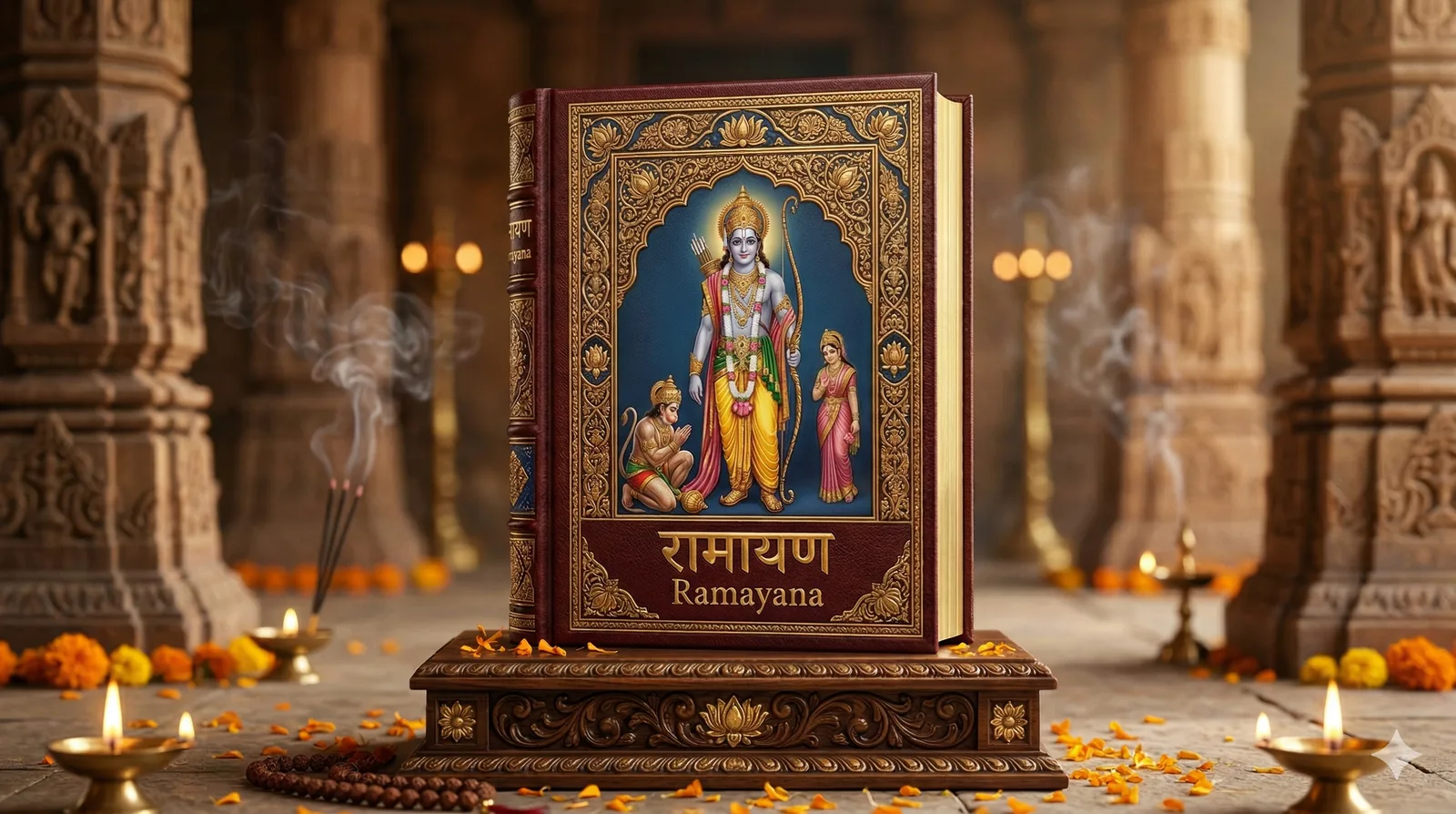
- Valmiki Ramayana — Traditionally attributed to Valmikibook
- Rig Veda (Selected Hymns) — Vedic tradition (trans. various)book
- The Principal Upanishads — Upanishadic sages (trans. various)book
- Intro to Vasistha and Yoga Vasistha (Overview Video)video
Related Spiritual Figures





Related Sacred Texts
More from Dharmic



Begin Your Journey with Vashishtha
Explore the wisdom and teachings through AI-powered conversations.
Start Your Transformation