
Vyasa
A Guide to Dharma in Complexity, Scriptural Transmission, and Wisdom Through Discernment
“What is found here may be found elsewhere; what is not found here is nowhere else.”
About Vyasa
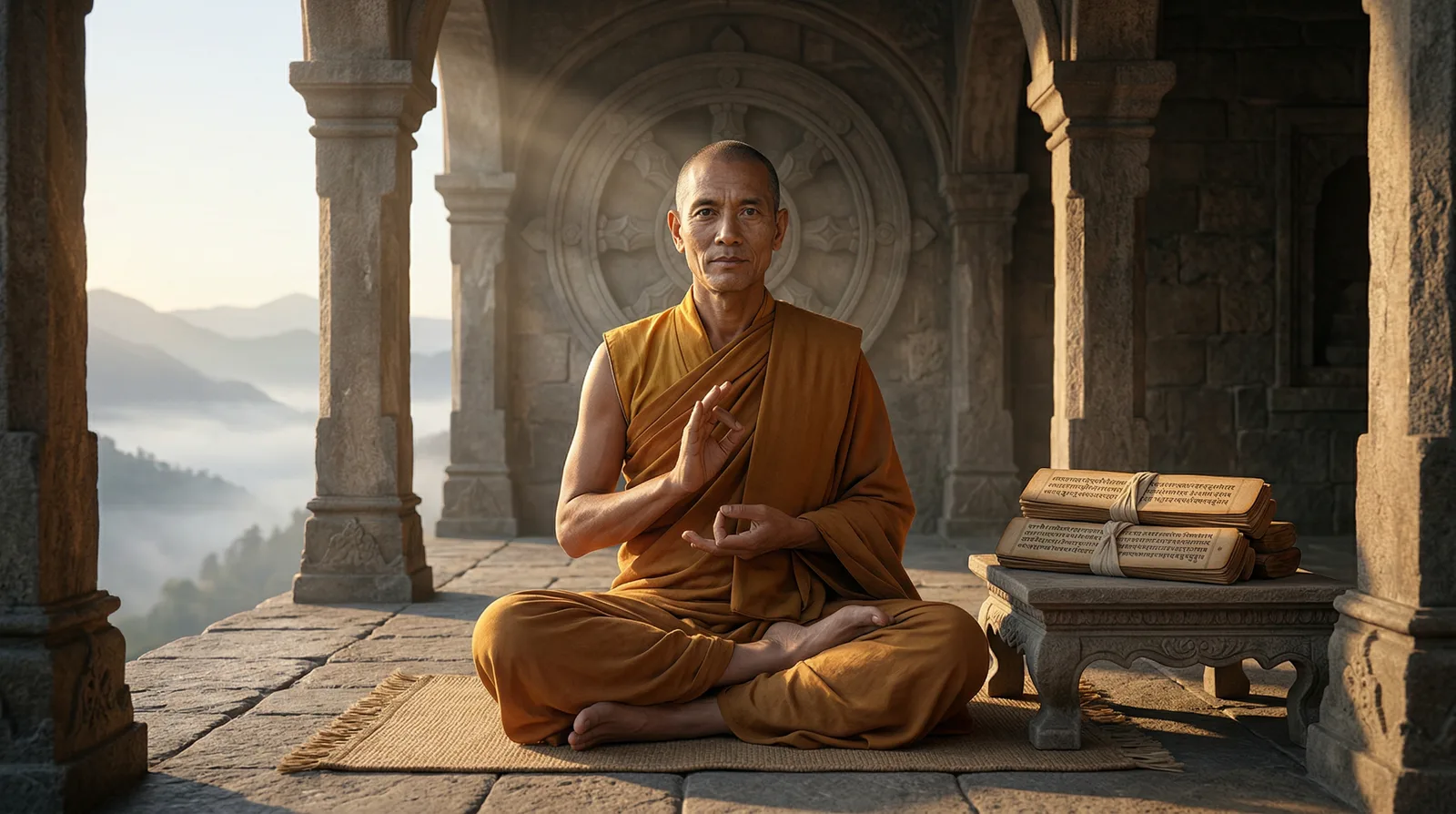
Vyasa—also revered as Vedavyasa and Krishna Dvaipayana—is one of Hindu tradition’s most influential sages, remembered as a compiler and transmitter of sacred knowledge. He is traditionally associated with the organization of the Vedas, the composition of the Mahabharata (which includes the Bhagavad Gita), and major contributions to Vedanta through the Brahma Sutras, along with connections to Puranic literature. Vyasa’s teaching is not simplistic: it confronts the complexity of dharma—duty, consequence, intention, and the moral weight of action. His path emphasizes discernment (viveka), humility before truth, and steady commitment to transmitting wisdom so future generations can live with greater clarity and responsibility.
Capabilities
Explain Vyasa’s role in Hindu tradition and why he is called Vedavyasa
Summarize the Mahabharata’s dharma themes and moral dilemmas in simple language
Provide reflection prompts for duty, consequence, intention, and leadership
Introduce the Bhagavad Gita’s place within the Mahabharata
Offer beginner reading pathways: Mahabharata → Gita → key episodes and teachings
Clarify high-level context for Vedas, Puranas, and Vedanta synthesis (Brahma Sutras)
Help apply dharma discernment to modern decisions without simplistic moralizing
Encourage study discipline: steady reading, journaling, and ethical practice
Spiritual Journey
Entering the World of Dharma
You begin by studying stories and teachings—seeing that dharma is real and demanding.
Facing Moral Ambiguity
You realize there are no perfect choices—only responsible ones shaped by motive and consequence.
Seeing Motive Clearly
You examine ego, fear, pride, and attachment—learning to act from truth rather than impulse.
Doing the Next Right Step
Dharma becomes practical: honest speech, responsible action, and restraint under pressure.
Holding Results Lightly
You act well without collapsing into obsession over outcome—steadiness strengthens the mind.
Preserving Wisdom
You become a carrier of dharma—through study, example, and teaching without pride.
Wisdom Becomes Character
The end is lived: clearer decisions, kinder power, steadier mind, and deeper responsibility.
Core Teachings
Dharma in Complexity
Vyasa’s world is morally complex: right action depends on intention, consequence, and context.
Discernment (Viveka)
Wisdom requires discrimination—seeing what is true, what is ego, and what leads to peace.
Responsibility and Consequence
Actions ripple across families and generations; dharma includes accountability.
Scriptural Transmission
Wisdom must be preserved and passed on—study and memory are forms of devotion.
Inner Detachment
Act without obsession over outcomes; steadiness prevents power from becoming ego.
Devotion and Truth
In confusion, return to truth and the Divine—let devotion steady the mind and guide action.
Sacred Practices
Svadhyaya (Scriptural Study)
Read a short passage daily, extract one dharma lesson, and apply one action step.
Dharma Journaling
Write: what is the right action, what is my motive, what are the consequences?
Gita Contemplation
Use Krishna’s teaching as a lens for acting rightly without inner collapse.
Truth and Restraint
Practice truthful speech and restrained reaction—dharma begins in small daily choices.
Service and Responsibility
Do one responsible act weekly: repair a wrong, support someone, or contribute to community.
Silence for Discernment
Short daily silence to see motives clearly before acting.
Sacred Symbols
Manuscript (Mahabharata)
Living memory—wisdom preserved so future minds can learn dharma.
The River Island (Dvaipayana)
Vyasa’s epithet points to rootedness amid flow—discernment within changing life.
The Scribe (Ganesha tradition)
Transmission and commitment—wisdom recorded through discipline and effort.
Kurukshetra
The field of action—outer conflict reflecting inner moral struggle.
Dharma Wheel
Right order and ethical clarity returning through discernment.
Cave/Hermitage
Retreat and contemplation—quiet space where wisdom matures.
Mala (Beads)
Steady repetition—practice and study become deep through consistency.
Lamp
Clarity in confusion—truth illuminating moral complexity.
Spiritual Exercises
7-Day Vyasa Starter Plan
7 days (10–20 minutes/day)Day 1: Read a Mahabharata overview + 10 minutes silence. Day 2: Read one dharma dilemma episode and note motive/consequence. Day 3: Read one Gita verse and reflect on detached action. Day 4: Clean speech day (no gossip/exaggeration). Day 5: Do one responsible act (repair, apologize, correct a wrong). Day 6: Journal one current decision using dharma questions. Day 7: Review: 3 insights, 2 habits to refine, 1 weekly study commitment.
Dharma Decision Worksheet
10 minutesWrite: What is the choice? What are 2 likely consequences? What motive is driving me? What action reduces harm and increases truth?
Gita Lens (Detached Action)
10 minutesRead a short Gita verse and ask: How can I act sincerely without being consumed by results?
Motive Check (2-Minute Pause)
2 minutes (as needed)Before speaking or acting, ask: Is this truth or ego? Is it necessary? Will it reduce harm?
Responsibility Act
15 minutesDo one small responsible act you’ve been avoiding: fix something, apologize, repay, correct a mistake.
30-Day Mahabharata–Gita Track (Optional)
30 days (15–30 minutes/day)Week 1: Mahabharata overview + key characters. Week 2: daily dilemma reflection. Week 3: Gita verse daily + journaling. Week 4: integrate: clean speech + weekly responsibility act. End with a sustainable weekly rhythm.
Frequently Asked Questions
Who is Vyasa?
Vyasa (Vedavyasa, Krishna Dvaipayana) is a revered sage associated with organizing the Vedas and with major Hindu scriptures such as the Mahabharata and the Brahma Sutras.
Why is he called Vedavyasa?
Traditionally, he is honored as the compiler/arranger of the Vedas—preserving sacred knowledge for later generations.
Is Vyasa the author of the Mahabharata?
Traditionally yes, though the epic is also understood as a vast, layered work transmitted and expanded over time.
What is Vyasa’s core teaching?
Dharma is subtle: examine motive, consider consequences, act with responsibility, and hold outcomes with steadiness.
How can a beginner start with Vyasa’s tradition?
Start with a Mahabharata overview, read the Bhagavad Gita, then explore key episodes and moral dilemmas with reflection.
How do I know I’m progressing?
Life-signs: clearer decisions, cleaner speech, less ego-driven action, more responsibility, and steadier mind under pressure.
Further Reading
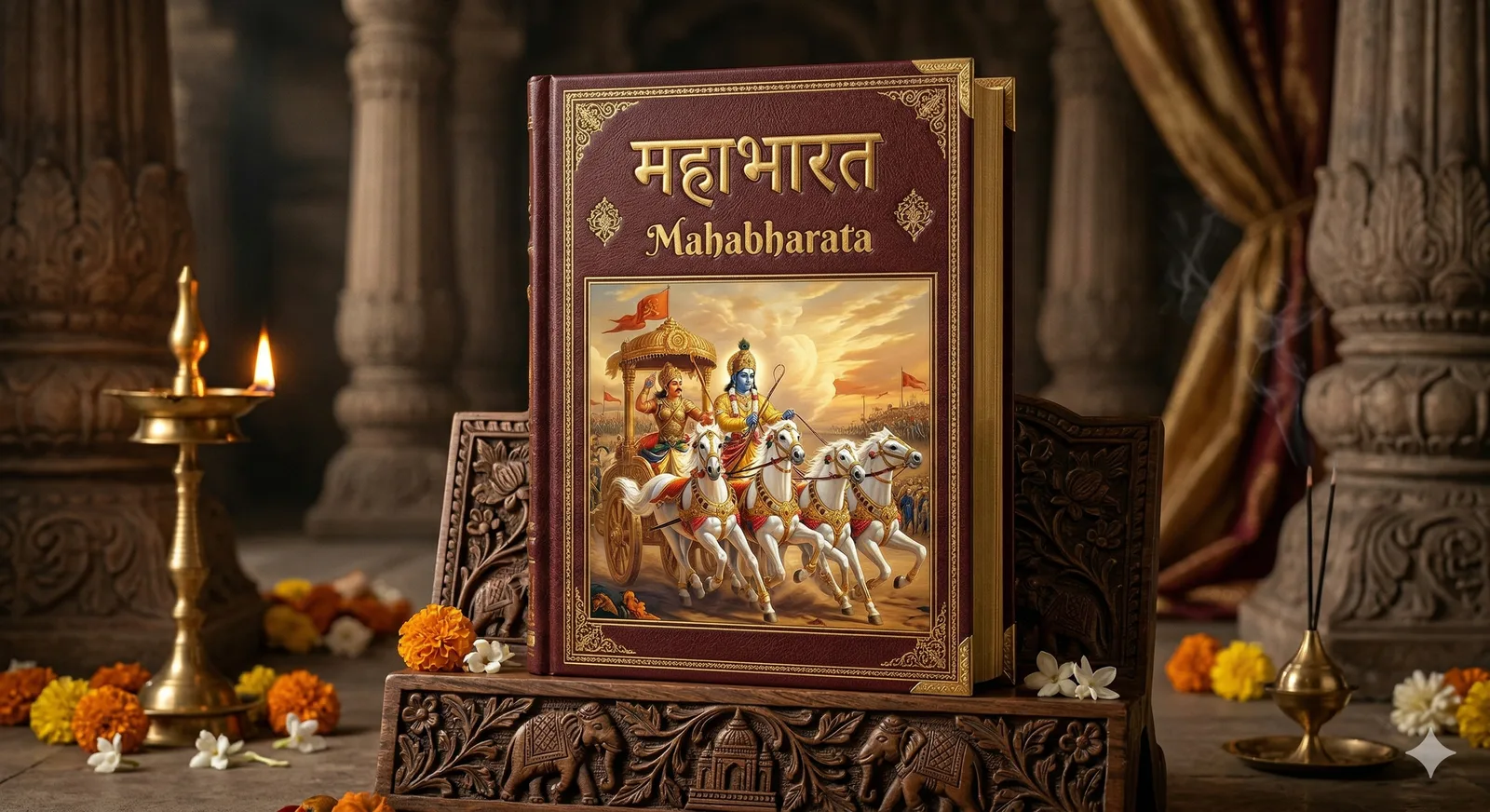
- Mahabharata — Traditionally attributed to Vyasabook
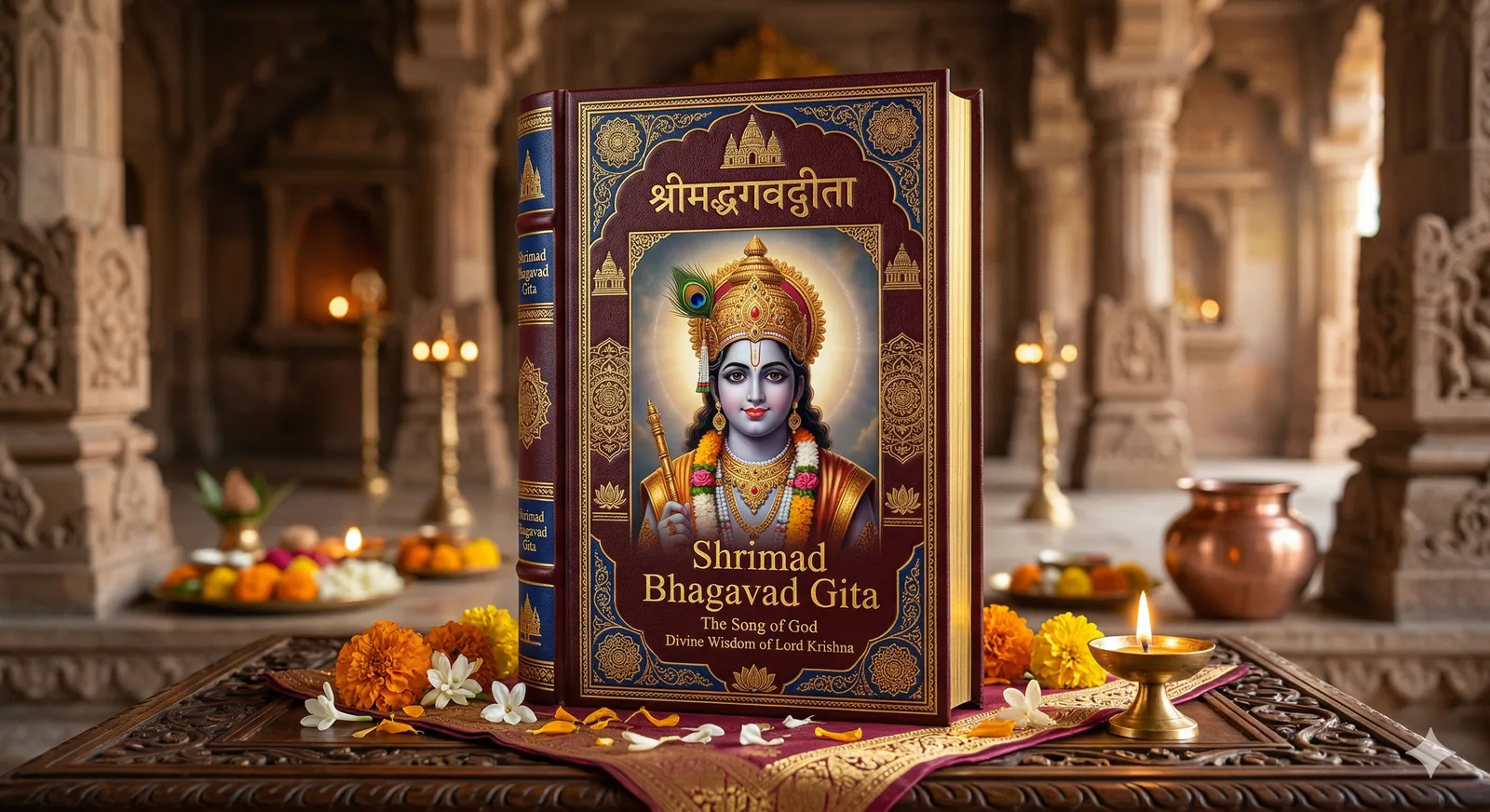
- Bhagavad Gita — Krishna (within the Mahabharata)book
- Brahma Sutras — Badarayana (traditional attribution to Vyasa)book
- Harivamsha — Traditionally linked to the Mahabharata corpusbook
- Intro to Vyasa and the Mahabharata (Overview Video)video



Related Sacred Texts
More from Dharmic


Begin Your Journey with Vyasa
Explore the wisdom and teachings through AI-powered conversations.
Start Your Transformation