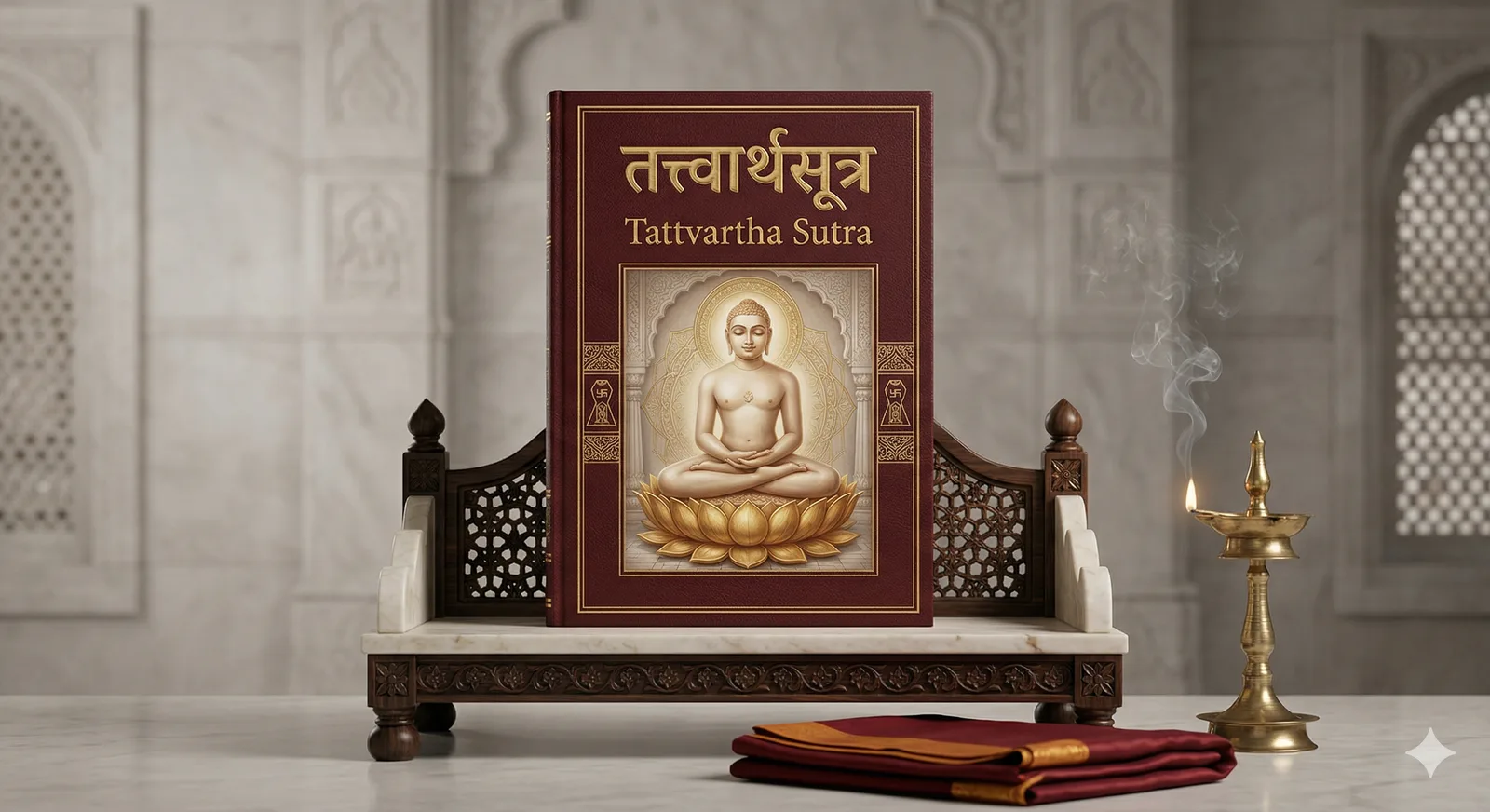
Tattvartha Sutra
The Jain Guide to Reality, Karma, and Liberation Through Right Faith, Knowledge, and Conduct
“Samyagdarśana-jñāna-cāritrāṇi mokṣamārgaḥ — Right faith, knowledge, and conduct are the path to liberation.”
About Tattvartha Sutra
The Tattvartha Sutra (also known as the Tattvartha Adhigama Sutra) is one of the most important systematic summaries of Jain philosophy. Traditionally attributed to Umasvati/Umasvami, it is revered across major Jain sects for presenting the core structure of Jain doctrine in concise sutra form. It lays out the ‘tattvas’ (fundamental realities) such as jiva and ajiva, karma, bondage, influx, stoppage, shedding, and liberation, and it clarifies the Three Jewels—right faith (samyak darshana), right knowledge (samyak jnana), and right conduct (samyak charitra). The text offers a clear map of how karmic bondage forms and how disciplined ethical living, restraint, and insight lead toward moksha.
Capabilities
Explain the Tattvartha Sutra’s purpose as a systematic Jain doctrine guide
Introduce the Three Jewels and the tattvas in simple, beginner-friendly language
Clarify key ideas: jiva/ajiva, asrava, bandha, samvara, nirjara, moksha
Offer practical ways to apply doctrine: vow focus, speech discipline, simplification
Provide beginner reading paths with recommended companion commentaries
Connect karma theory to daily habits without superstition or fearmongering
Handle sect perspectives respectfully (text is widely respected across Jain traditions)
Support reflection prompts for anger, pride, greed, attachment, and responsibility
Spiritual Journey
Seeing Bondage
You begin by recognizing how passions and careless habits create karmic weight and suffering.
Choosing the Path
Right faith grows: trust in the possibility of liberation and the value of restraint.
Understanding Reality
You learn the tattvas and karma mechanics—clarity replaces confusion.
Living the Vows
Ethics becomes daily practice—speech, consumption, and behavior refined.
Stopping New Influx
You interrupt anger, pride, greed, and attachment before they become action.
Shedding the Old
Through discipline and inner austerity, reactivity weakens and freedom expands.
Toward Moksha
The direction becomes clear: less harm, less attachment, more equanimity—karmic coverings thin.
Core Teachings
The Three Jewels
Right faith, right knowledge, and right conduct are the structured path to moksha.
Tattvas (Fundamental Realities)
A clear map of reality: soul and non-soul, karma, bondage, influx, stoppage, shedding, liberation.
Karma Mechanics
Explains how karma binds through passions and actions, and how it can be stopped and shed through discipline.
Ahimsa and Vows
Ethical restraint is not optional—it is the practical foundation for stopping karmic influx.
Self-Discipline (Tapas)
Austerity and inner restraint weaken passions and support karmic shedding.
Liberation (Moksha)
Freedom is the natural state of the soul when karmic coverings are removed.
Sacred Practices
Three Jewels Daily Check
Ask daily: Is my faith sincere? Is my understanding clear? Is my conduct aligned with vows?
Vow Focus (One Vrata)
Choose one vow emphasis (ahimsa speech, truth, simplicity) and keep it carefully.
Samvara Practice (Stopping Influx)
Identify one passion (anger, pride, greed) and interrupt its expression today.
Nirjara Practice (Shedding)
Practice restraint or austerity (small, safe) to weaken attachment and reactivity.
Svadhyaya (Study)
Read a sutra and extract one practical action for the day.
Pratikraman-Style Reflection
Review harms, repair, and renew vows—honesty as purification.
Sacred Symbols
Three Jewels
Right faith, right knowledge, right conduct—three supports of liberation.
Tattva Map
A structured model of bondage and freedom—clarity that guides practice.
Ahimsa Hand
Non-violence as the highest discipline—stop harm at its source.
Karma Particles (Symbolic)
Represents subtle bondage formed by passions and actions—purified through restraint.
Lamp
Right knowledge illuminating right conduct.
Scale
Ethical discernment—choosing restraint over impulse.
Lotus
Purity of the soul uncovered through discipline.
Footprints
The path walked—liberation approached step by step.
Spiritual Exercises
7-Day Tattvartha Sutra Starter Plan
7 days (10–20 minutes/day)Day 1: Learn the Three Jewels + choose one vow focus. Day 2: Read a short tattva summary and write one insight. Day 3: Ahimsa speech day (no harshness/gossip). Day 4: Samvara practice—interrupt one passion once. Day 5: Nirjara practice—simple restraint (reduce one attachment). Day 6: Pratikraman-style review—one harm, one repair. Day 7: Review: 3 insights, 2 habits to refine, 1 weekly practice.
Three Jewels Check (2 Minutes)
2 minutes (daily)Ask: What do I believe and value (faith)? What do I understand (knowledge)? What will I do today (conduct)?
Samvara Interrupt
1 minute (as needed)When anger/pride/greed arises: pause, breathe, choose restraint, and redirect to a clean action.
Nirjara Micro-Austerity
1 dayChoose one small restraint: less sugar, less scrolling, fewer purchases, or simpler meal. Observe the mind.
Sutra + One Action
10 minutesRead one sutra (or one short explanation). Write one sentence: ‘Today I will…’ then do it.
30-Day Tattva-and-Vow Track (Optional)
30 days (15–30 minutes/day)Week 1: Three Jewels + vow focus. Week 2: tattvas study + journal. Week 3: samvara + speech purification. Week 4: nirjara + weekly reflection/repair. End with a sustainable weekly rhythm.
Frequently Asked Questions
What is the Tattvartha Sutra?
A concise, systematic summary of Jain doctrine attributed to Umasvati/Umasvami, outlining the tattvas, karma mechanics, and the Three Jewels as the path to moksha.
Is it accepted across Jain traditions?
Yes, it is widely respected across major Jain sects, often studied with different commentaries.
What are the Three Jewels?
Right faith (samyak darshana), right knowledge (samyak jnana), and right conduct (samyak charitra).
What are the tattvas?
Fundamental realities including soul and non-soul, karma, bondage, influx, stoppage, shedding, and liberation.
How does it help in daily life?
It provides a clear map: identify what causes bondage (passions and harm), practice vows, stop new influx (samvara), and shed attachment (nirjara).
Can beginners read it?
Yes, especially with a good commentary or guided summary because the sutras are very concise.
How do I know I’m progressing?
Life-signs: cleaner speech, less anger and attachment, more restraint, more equanimity, and more consistent vow-keeping.
Further Reading
- Tattvartha Sutra (with commentary) — Umasvati/Umasvami (traditional)book
- Samayasara — Kundakundabook
- Dravyasamgraha — Nemichandrabook
- Uttaradhyayana Sutra — Agamic traditionbook
- Intro to the Tattvartha Sutra (Overview Video)video
Part of a Larger Guide
Guide
Jainism
Jaina Dharma: ahimsa, vows, and disciplined living toward moksha
Related Spiritual Figures

Related Sacred Texts

More from Dharmic






Begin Your Journey with Tattvartha Sutra
Explore the wisdom and teachings through AI-powered conversations.
Start Your Transformation