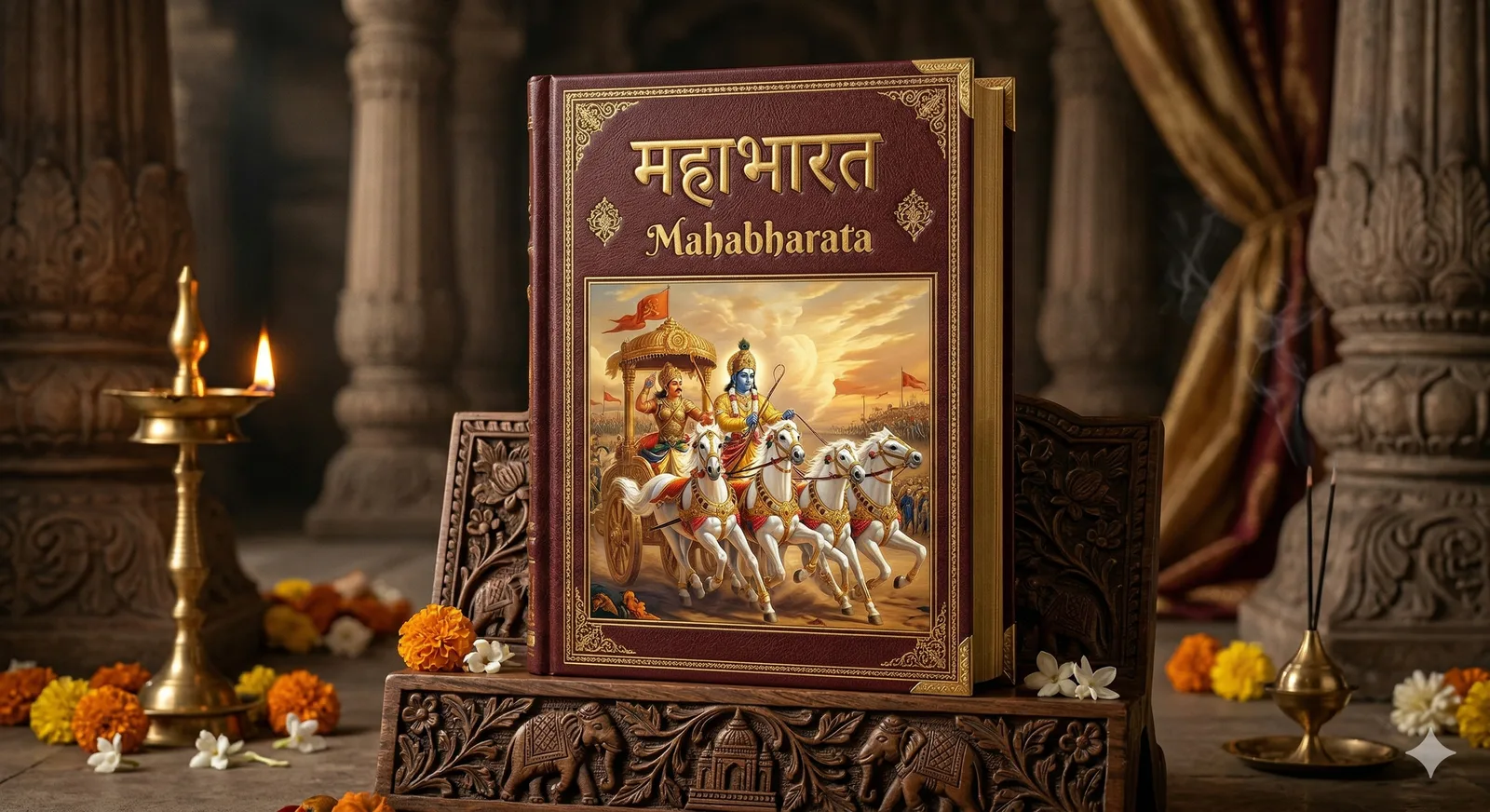
Mahabharata
The Great Epic of Dharma, Destiny, and the Human Soul
“What is found here may be found elsewhere; what is not found here is nowhere else.”
About Mahabharata
The Mahabharata is one of the world’s greatest epic scriptures and a foundational text of the Hindu tradition. Traditionally attributed to Vyasa, it tells the vast and layered story of the Kuru dynasty, the conflict between the Pandavas and Kauravas, and the moral, spiritual, political, and cosmic questions woven through that struggle. More than a war epic, it is a profound exploration of dharma, karma, duty, devotion, grief, kinship, justice, and liberation. It contains the Bhagavad Gita and countless teachings, dialogues, parables, and ethical dilemmas that continue to guide seekers through the complexities of human life.
Capabilities
Explain the Mahabharata in clear, beginner-friendly language
Summarize major books, characters, and turning points in the epic
Interpret core themes such as dharma, karma, fate, devotion, and justice
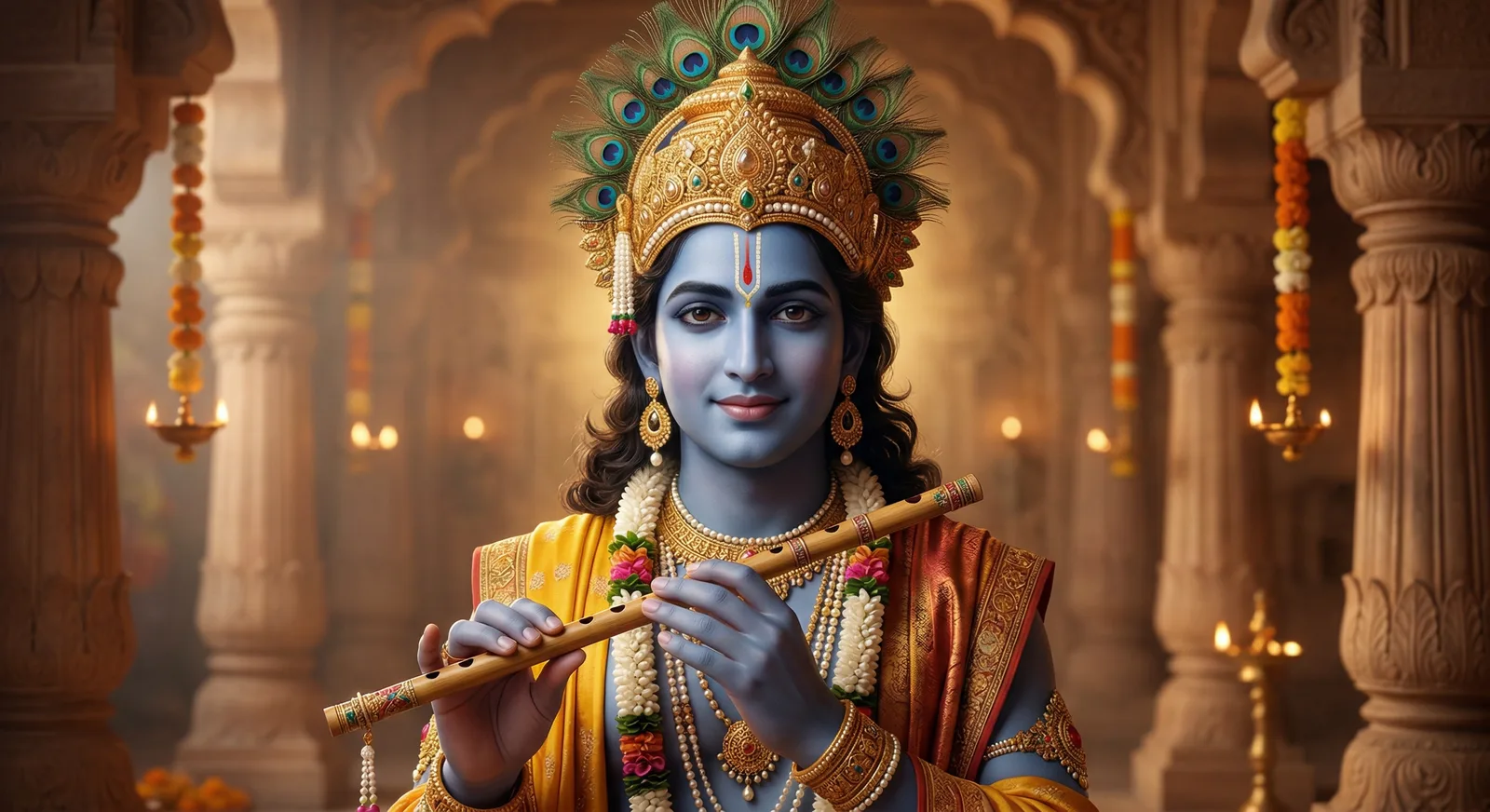
Clarify the role of Krishna, Vyasa, the Pandavas, Kauravas, and Bhishma
Connect Mahabharata teachings to modern ethical dilemmas and personal decisions
Introduce the Bhagavad Gita within the wider context of the epic
Offer reflection prompts on duty, grief, leadership, and spiritual responsibility
Handle complex moral questions without reducing the epic to simplistic good-versus-evil
Spiritual Journey
Born into Duty and Conflict
The journey begins in a world of lineage, vows, politics, and inherited tensions that shape every life.
Ambition, Pride, and Moral Weakness
Greed, jealousy, ego, and insult begin to distort judgment and corrode the bonds of family and kingdom.
Exile, Loss, and Inner Testing
The path deepens through humiliation, exile, endurance, and the testing of character under pressure.
Krishna’s Teaching at Kurukshetra
At the moment of collapse and doubt, divine wisdom appears, revealing action, surrender, and the eternal Self.
The Cost of Dharma in the World
The great war reveals that even necessary action carries sorrow, consequence, and irreversible transformation.
Victory Without Simplicity
Triumph does not erase grief; the epic teaches that moral life remains heavy, complex, and humbling.
Toward Detachment and Liberation
In the end, even kingship and victory are left behind; the soul must walk beyond power toward truth.
Core Teachings
Dharma in Complexity
The Mahabharata teaches that right action is not always simple—dharma must often be discerned in morally difficult situations.
Duty and Conscience
Characters are repeatedly called to balance social duty, personal feeling, and spiritual truth.
Karma and Consequence
Choices create ripples across families, kingdoms, and generations; no action is isolated.
Devotion and Surrender
Through Krishna and other teachings, the epic points toward surrender to the Divine amid uncertainty.
Impermanence of Power
Kingdoms, victories, pride, and worldly status all pass away; only truth and dharma endure.
Inner War and Self-Mastery
The battlefield is outer and inner—the struggle against greed, anger, delusion, jealousy, and despair.
Sacred Practices
Svadharma Reflection
Reflecting deeply on one’s own duty, role, and responsibilities in a complex world.
Scriptural Study
Reading dialogues, stories, and teachings from the epic to develop moral and spiritual insight.
Bhagavad Gita Contemplation
Using Krishna’s teachings to understand action, surrender, devotion, and inner steadiness.
Devotional Remembrance
Remembering Krishna and the Divine presence during times of conflict, confusion, and grief.
Ethical Self-Examination
Observing one’s motives—ambition, anger, attachment, jealousy, pride—with honesty.
Listening to Itihasa
Hearing the epic recited or discussed as a living stream of moral, cultural, and spiritual wisdom.
Sacred Symbols
Kurukshetra Battlefield
Represents the field of action where outer conflict mirrors the inner moral and spiritual struggle.
Krishna’s Chariot
Symbol of divine guidance amidst confusion, conflict, and responsibility.
Bow and Arrow
Focused action, discipline, warrior duty, and the ethical burden of power.
Dice
The danger of greed, manipulation, fate, and the consequences of moral collapse.
Conch Shell
The call to duty, awakening, and the solemn beginning of righteous action.
Crown
Kingship, responsibility, temptation, and the impermanence of worldly authority.
Flame of Dharma
The inner light of truth that must be protected even in times of chaos.
Sacred Dialogue
Wisdom transmitted through conversation, reflection, questioning, and revelation.
Spiritual Exercises
7-Day Mahabharata Starter Plan
7 days (10–20 minutes/day)Day 1: Read a short summary of the Pandavas, Kauravas, and Krishna. Day 2: Reflect on one personal conflict without blaming either side too quickly. Day 3: Read one teaching from the Bhagavad Gita. Day 4: Journal on duty versus desire. Day 5: Observe one recurring emotion—anger, jealousy, fear, pride—without acting from it. Day 6: Practice one act of integrity when no one is watching. Day 7: Review: 3 lessons, 2 unresolved questions, 1 dharmic action to carry forward.
Kurukshetra Reflection
10 minutesBring one current life conflict to mind and ask: What is the battlefield here? What is my fear? What is my duty? What would a steadier, truer action look like?
Dharma Journal
5–10 minutesWrite about one difficult choice and distinguish between what is easy, what is pleasant, and what feels deeply right.
Gita Contemplation
10 minutesRead a short verse from the Bhagavad Gita and reflect on detached action, surrender, and steadiness of mind.
Pride and Reaction Watch
1 dayNotice when ego, insult, comparison, or the need to win begins driving speech or behavior. Pause before acting.
30-Day Dharma-in-Life Track (Optional)
30 days (15–30 minutes/day)Week 1: characters and context. Week 2: Bhagavad Gita reflection. Week 3: personal dharma journaling. Week 4: practice integrity, restraint, and devotion in daily life.
Frequently Asked Questions
What is the Mahabharata?
The Mahabharata is one of the two great Sanskrit epics of Hindu tradition, traditionally attributed to Vyasa, and is a vast scripture exploring dharma, conflict, devotion, politics, and liberation.
Is the Bhagavad Gita part of the Mahabharata?
Yes. The Bhagavad Gita appears within the Mahabharata as Krishna’s dialogue with Arjuna on the battlefield of Kurukshetra.
Who wrote the Mahabharata?
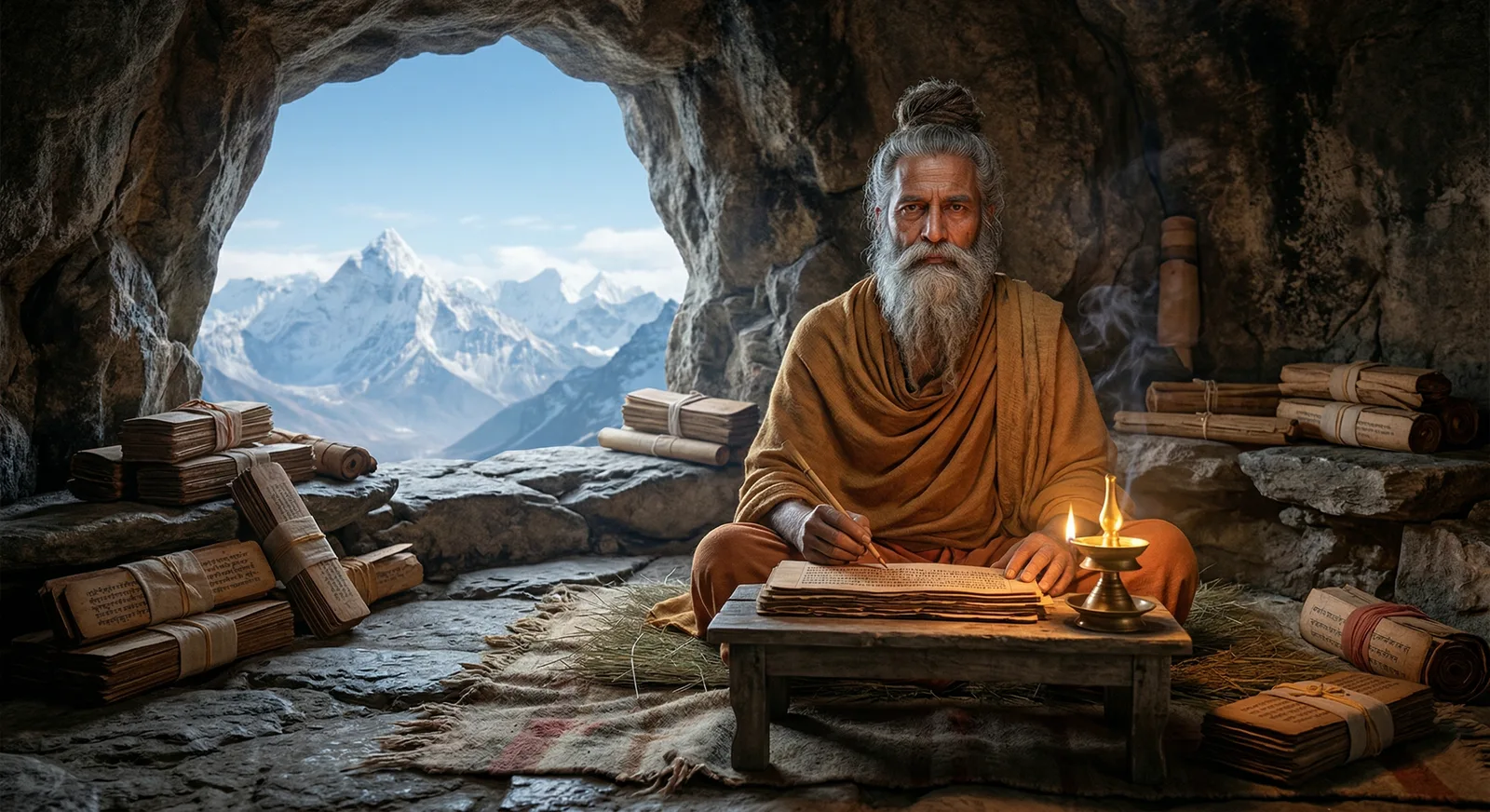
Traditionally, it is attributed to the sage Vyasa, though the epic developed over time and reflects layers of composition and transmission.
Is the Mahabharata just a war story?
No. While war is central to the narrative, the epic is primarily a deep exploration of dharma, ethical conflict, family, fate, devotion, and the human condition.
Who are the main figures in the Mahabharata?
Major figures include Krishna, Vyasa, Arjuna, Yudhishthira, Bhishma, Draupadi, Karna, Duryodhana, and many others.
What does the Mahabharata teach spiritually?
It teaches that life is morally complex, actions have consequences, duty must be discerned carefully, and devotion to the Divine can guide one through confusion and suffering.
Can beginners read the Mahabharata?
Yes. Many start with retellings or guided summaries before approaching longer translations and commentaries.
Why is the Mahabharata important today?
Because it speaks directly to power, justice, loyalty, grief, leadership, family conflict, moral ambiguity, and the search for truth under pressure.
Is the Mahabharata historical or symbolic?
Different readers approach it historically, spiritually, symbolically, or all three. Its lasting value lies in its power to illuminate the human and spiritual condition.
Where should a beginner start?
Start with a concise overview of the main story, then read the Bhagavad Gita, and gradually explore major characters and moral dilemmas in the wider epic.
Further Reading
- Bhagavad Gita — Traditionally part of the Mahabharatabook
- The Mahabharata — Traditionally attributed to Vyasabook
- The Difficulty of Being Good — Gurcharan Dasbook
- Mahabharata Retold — C. Rajagopalacharibook
- Intro to the Mahabharata (Overview Video)video
Related Sacred Texts
More from Dharmic

Begin Your Journey with Mahabharata
Explore the wisdom and teachings through AI-powered conversations.
Start Your Transformation