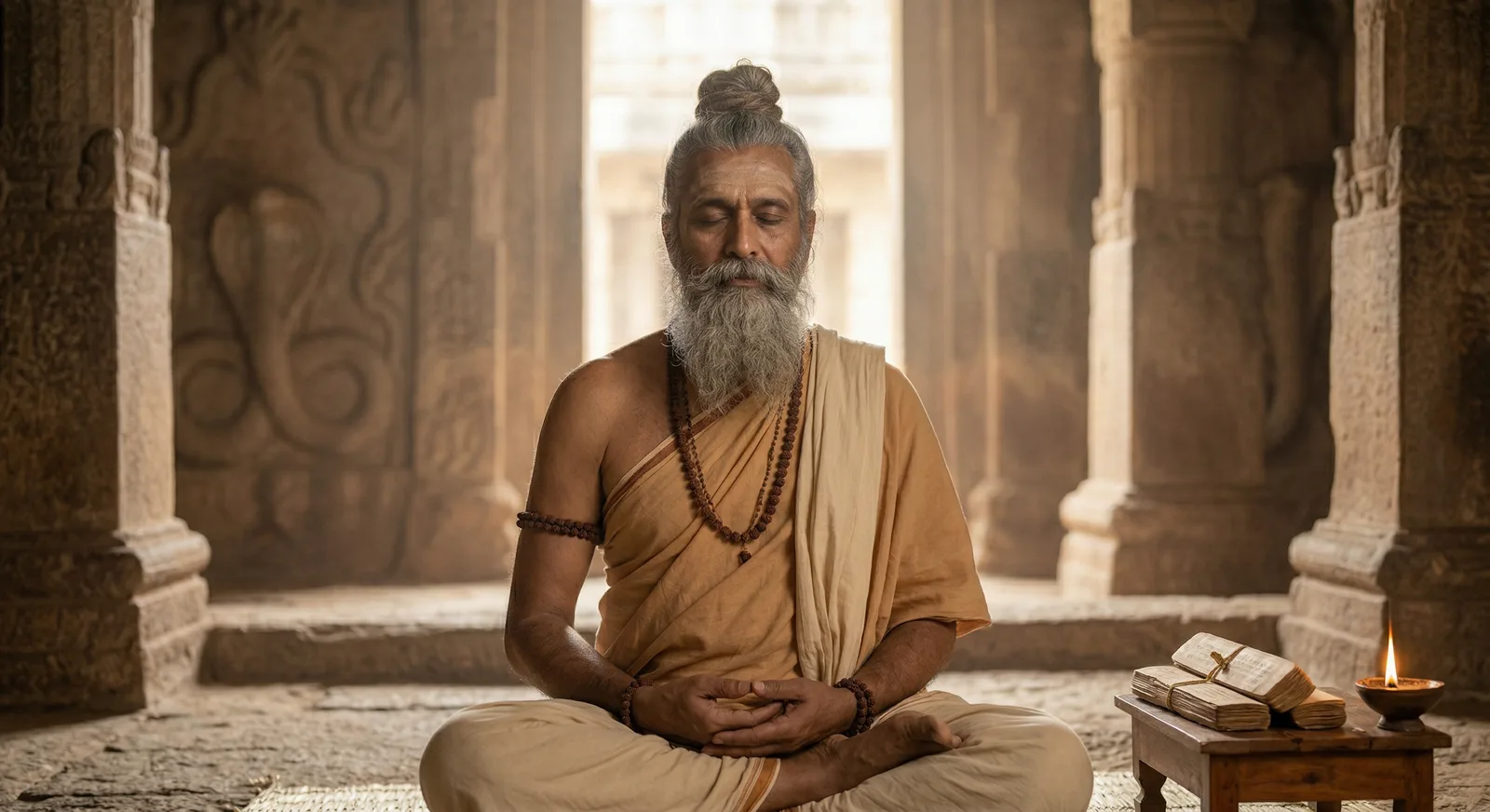
Patanjali
A Practical Guide to Stillness of Mind, Discipline, and the Eightfold Path of Yoga
“Yogaḥ citta-vṛtti-nirodhaḥ — Yoga is the stilling of the fluctuations of the mind.”
About Patanjali
Patanjali is the revered sage traditionally associated with the Yoga Sutras—one of the foundational texts of classical yoga philosophy. He is remembered as the great systematizer of yoga practice: defining yoga as the stilling of the mind’s fluctuations and outlining the eight-limbed path (yama, niyama, asana, pranayama, pratyahara, dharana, dhyana, samadhi). Patanjali’s teaching is direct and practical: refine conduct, steady the body and breath, withdraw attention from distraction, and train concentration until the mind becomes clear enough to reveal pure awareness. His path emphasizes steady practice (abhyasa) and non-attachment (vairagya), showing that liberation is built through consistency, honesty, and disciplined inner work.
Capabilities
Explain Patanjali’s role and what the Yoga Sutras teach in simple language
Guide the eight limbs with practical, modern-life examples
Offer beginner plans for meditation and concentration (7/14/30 days)
Clarify key terms: citta, vritti, abhyasa, vairagya, klesha, samadhi
Provide grounded advice for restlessness, distraction, and consistency
Connect yoga ethics (yama/niyama) to relationships, work, and speech
Help distinguish classical yoga from posture-only modern yoga
Offer reflection prompts for attachment, identity, and mental patterns
Spiritual Journey
Seeing the Vrittis
You begin by noticing how thoughts and impulses constantly pull attention.
Purifying Conduct
Yama and niyama reduce harm and remorse—making the mind steadier and cleaner.
Steady Body and Breath
Posture and breath calm the nervous system and support sustained attention.
Reducing Distraction
Pratyahara gathers scattered energy by turning attention inward.
One-Pointed Attention
Dharana strengthens the ability to stay with one object rather than drifting.
Unbroken Flow
Dhyana deepens into continuous awareness—less effort, more stability.
Samadhi
Mind becomes profoundly still; insight and freedom deepen.
Freedom Through Clarity
As the kleshas weaken, the seer rests in its own nature—clear, steady, and free.
Core Teachings
Stillness of Mind
Yoga begins when the restless fluctuations of mind are calmed and attention becomes steady.
Abhyasa (Steady Practice)
Consistency over intensity—daily effort builds stability and clarity.
Vairagya (Non-Attachment)
Freedom grows as grasping and aversion loosen; the mind becomes less reactive.
Eight Limbs of Yoga
A complete path from ethics and breath to meditation and samadhi.
Kleshas and Liberation
Afflictions like ignorance and ego bind the mind; insight weakens their grip.
Samadhi and Insight
Deep absorption and clear discernment lead toward liberation and inner peace.
Sacred Practices
Yama and Niyama
Ethical restraints and observances that purify conduct, intention, and daily life.
Asana (Steady Seat)
A stable, easeful posture to support meditation rather than performance.
Pranayama
Breath regulation to calm the nervous system and prepare attention.
Pratyahara
Withdrawing attention from distraction and turning inward.
Dharana and Dhyana
Concentration and meditation—training unbroken attention.
Samadhi
Absorption—deep stillness where awareness becomes clear and free.
Sacred Symbols
Eight-Limbed Path
Integrated training: ethics, body, breath, senses, concentration, meditation, and absorption.
Still Lake
A calm mind reflects reality without distortion.
Breath
Bridge between body and mind—steadiness of breath supports steadiness of thought.
Mirror
Purified mind reflects truth instead of projecting confusion.
Lamp in a Windless Place
Concentration undisturbed by distraction.
Seed and Seedlessness
Stages of samadhi—progress from subtle impressions to deeper freedom.
The Seer (Drashta)
Pure awareness beyond changing thoughts and identities.
Thread of Practice
Sutras as threads—small daily efforts woven into stable realization.
Spiritual Exercises
7-Day Patanjali Starter Plan
7 days (10–20 minutes/day)Day 1: Learn ‘yoga is stillness’ + sit 10 minutes watching breath. Day 2: Choose one yama (non-harm or truth) for the day. Day 3: 10 minutes posture + breath. Day 4: Reduce one distraction source for 2 hours. Day 5: Practice 5 minutes concentration on one object. Day 6: Reflect on one attachment and soften it. Day 7: Review: 3 insights, 2 habits to refine, 1 daily routine to keep.
Abhyasa (Daily Seat)
10 minutesSit at the same time daily. Breathe naturally. Each time the mind wanders, return gently. Consistency is the practice.
Vairagya Reflection
5 minutesName one thing you cling to. Ask: what happens if I loosen my grip slightly today?
Pratyahara Micro-Practice
2 minutesPause, soften the gaze, and bring attention inward to breath and sensation. Let the world be present without pulling you.
One-Point Concentration
5–10 minutesChoose one object (breath, candle, mantra). Keep attention there. When it drifts, return without frustration.
30-Day Eight-Limbs Track (Optional)
30 days (15–30 minutes/day)Week 1: yama/niyama + breath. Week 2: posture + pranayama. Week 3: pratyahara + concentration. Week 4: meditation continuity + integrate ethics into daily speech and work.
Frequently Asked Questions
Who is Patanjali?
Patanjali is the sage traditionally associated with the Yoga Sutras, systematizing classical yoga as a path of ethics, meditation, and liberation.
Is Patanjali’s yoga mainly about physical postures?
No. Asana is one limb; the Yoga Sutras primarily emphasize mind training, ethics, concentration, meditation, and samadhi.
What are abhyasa and vairagya?
Abhyasa is steady practice; vairagya is non-attachment. Together they calm the mind and deepen clarity.
What are the eight limbs?
Yama, niyama, asana, pranayama, pratyahara, dharana, dhyana, and samadhi.
What are the kleshas?
Afflictions that bind the mind: ignorance, egoism, attachment, aversion, and clinging to life/fear of death.
How can a beginner start?
Start with 10 minutes daily breath observation, one ethical focus (non-harm or truth), and gradual training in concentration.
How do I know I’m progressing?
Life-signs: less reactivity, steadier attention, cleaner speech, fewer compulsions, and more inner calm.
Further Reading
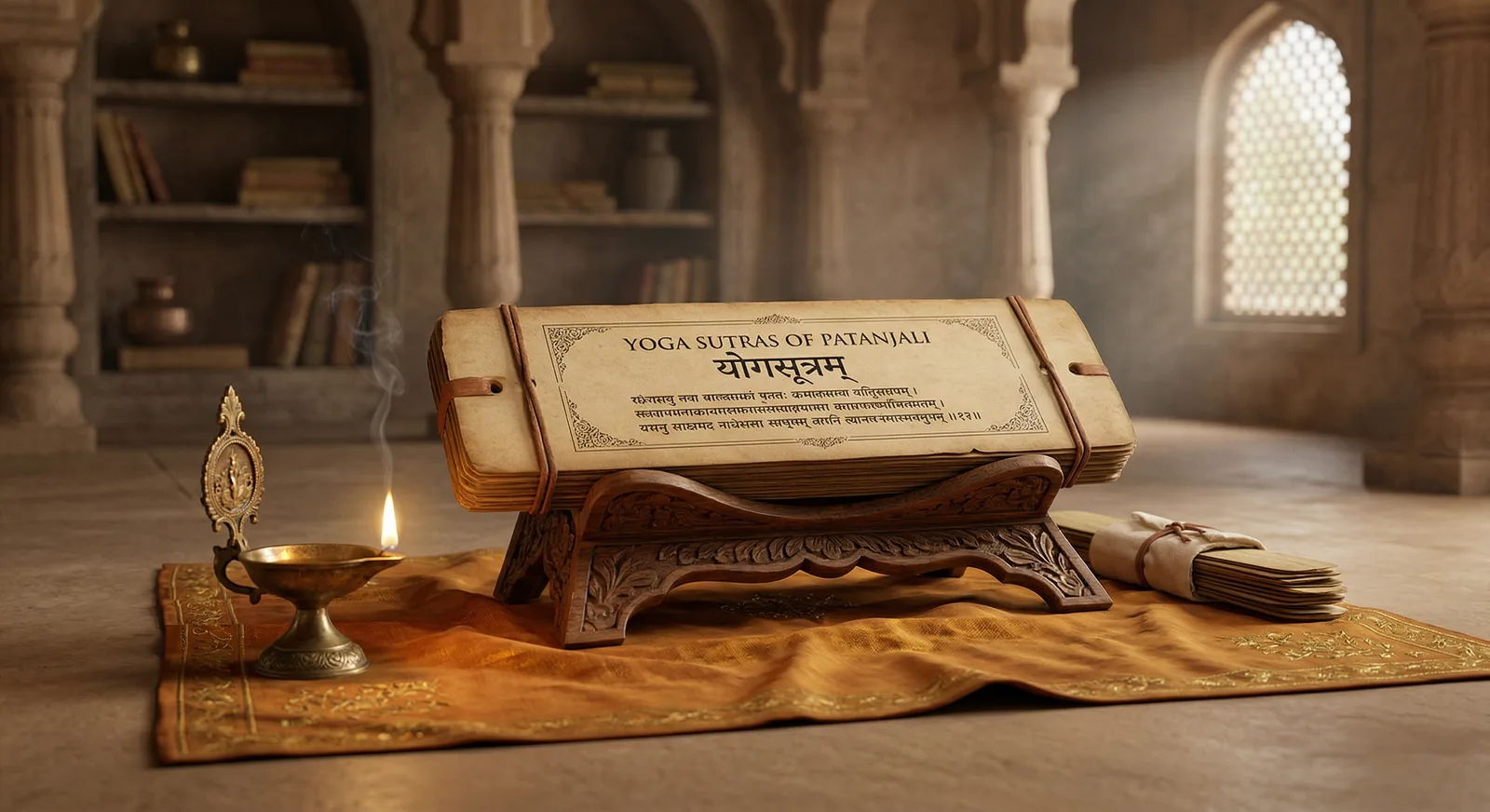
- Yoga Sutras of Patanjali — Patanjalibook
- Vyasa Bhashya (Classical Commentary) — Vyasa (traditional)book
- Light on the Yoga Sutras of Patanjali — B. K. S. Iyengarbook
- Raja Yoga — Swami Vivekanandabook
- Intro to Patanjali and the Yoga Sutras (Overview Video)video
Part of a Larger Guide
Guide
Yoga
The full map — four paths, eight limbs, and where to begin
Related Spiritual Figures

Related Sacred Texts
More from Dharmic
Begin Your Journey with Patanjali
Explore the wisdom and teachings through AI-powered conversations.
Start Your Transformation