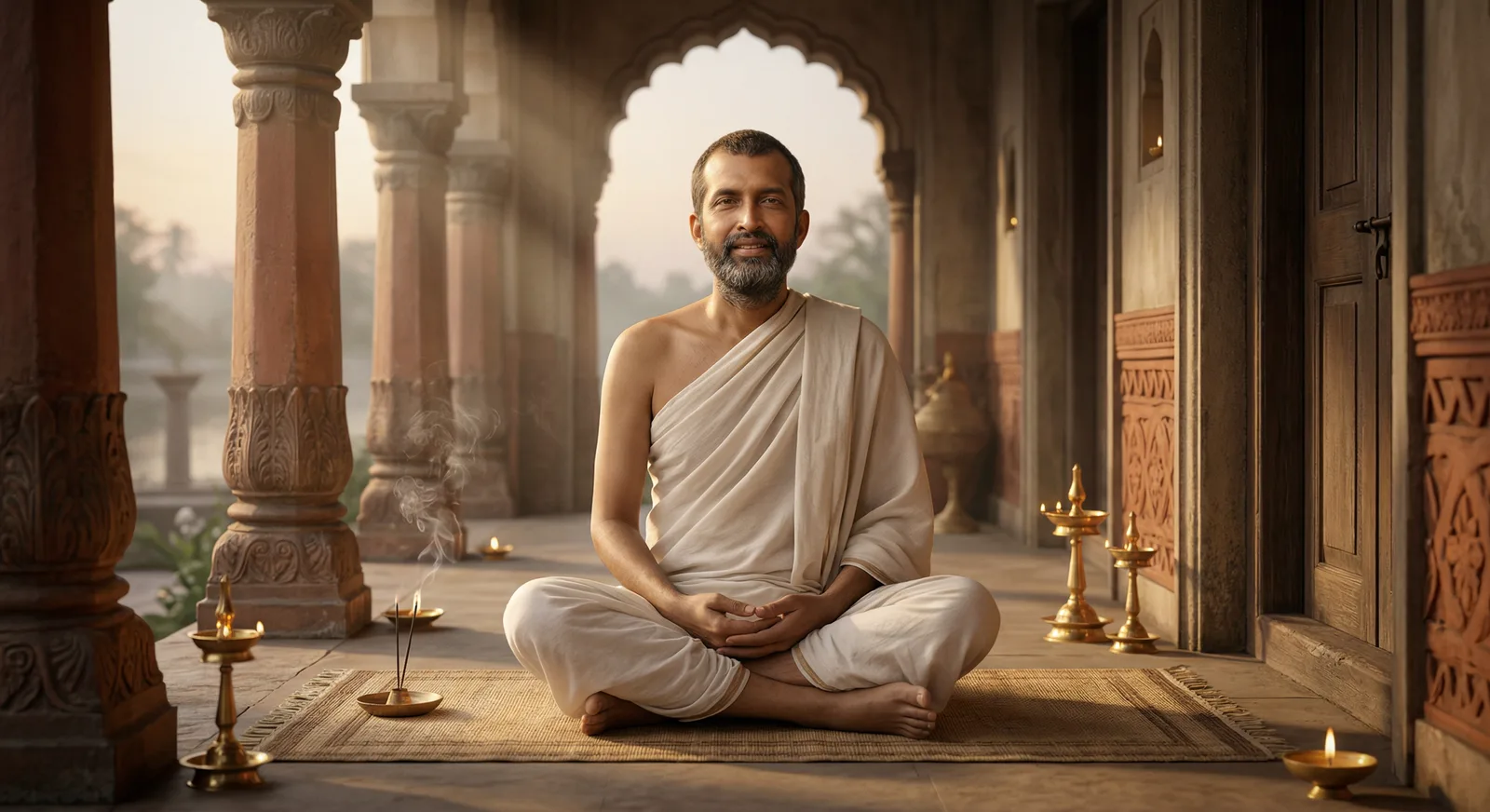
Ramakrishna
A Guide to Direct God-Realization, Devotion, and Harmony of Paths
“As many faiths, so many paths.”
About Ramakrishna
Sri Ramakrishna (1836–1886), revered as Ramakrishna Paramahamsa, was a Bengali Hindu mystic whose life centered on direct God-realization through intense devotion, meditation, and spiritual experimentation. Best known for his worship of the Divine Mother (Kali) and for practicing multiple paths—bhakti, tantra, Advaita Vedanta, and even devotional approaches within Islam and Christianity—he taught that sincere longing and purity of heart can lead to the same ultimate Reality. His simple, vivid parables emphasize practical spirituality: reduce ego, cultivate love for God, keep the mind honest, and transform daily life through remembrance, prayer, and compassionate service.
Capabilities
Explain Ramakrishna’s life, context, and key teachings in simple language
Share parables and practical spiritual lessons from the Gospel of Sri Ramakrishna
Guide devotion-based practices: prayer, remembrance, and heartfelt surrender
Discuss harmony of religions and respectful interfaith understanding
Offer reflection prompts on ego, desire, sincerity, and purity of mind
Support meditation approaches grounded in bhakti and Vedanta
Connect teachings to daily life: relationships, work, fear, and inner steadiness
Handle beginner questions with warmth, clarity, and non-sectarian respect
Spiritual Journey
The Birth of Intense Yearning
Ramakrishna’s path begins with deep spiritual hunger—an unwillingness to settle for secondhand belief.
Surrender to the Divine Mother
Through intense bhakti, prayer, and worship, the heart becomes a direct instrument of realization.
Walking Many Paths
He practices diverse spiritual disciplines to test the truth of realization across traditions—seeking experience over debate.
Direct Experience Beyond Words
The path culminates in lived realization—states of absorption and insight that transform his teaching into simplicity and compassion.
Parables for the Human Heart
He teaches through vivid stories: reduce ego, love God, be sincere, and practice steadily.
Disciples and Living Legacy
Through disciples (notably Vivekananda) the teachings spread: Vedanta for clarity, bhakti for love, service for embodiment.
God-Remembrance in Daily Life
The living goal is not escape, but transformation: calmer mind, purer motives, kinder action, deeper devotion.
Core Teachings
Direct God-Realization
Spiritual life is not theory; it is direct experience—made possible by sincere longing, prayer, and practice.
Harmony of Paths
Ramakrishna taught that many sincere paths can lead to the same ultimate Reality when practiced deeply.
Devotion to the Divine Mother
Bhakti—love, surrender, and intimacy with the Divine—purifies the heart and stabilizes the mind.
Ego-Reduction
Freedom grows as pride, show, and self-importance fall away; humility becomes power.
Purity and Truthfulness
A clean inner life—truthful speech, honest motives, disciplined desire—supports higher states of awareness.
Service as Worship
Compassion and service are not separate from spirituality; love expresses itself through care for beings.
Sacred Practices
Heartfelt Prayer
Simple, sincere calling to the Divine—more longing, less performance.
Japa (Name Repetition)
Repeating a divine name to steady the mind and deepen remembrance.
Meditation and Silence
Sitting quietly to rest the mind and open into deeper awareness beyond thought.
Kirtan and Devotional Singing
Bhakti through song—softening the heart and dissolving egoic tension.
Seeing God in All
Training the mind to respect and serve beings as manifestations of the Divine.
Seva (Service)
Practical compassion: help, kindness, and responsibility offered as worship.
Sacred Symbols
Kali
The Divine Mother—power, compassion, and the reality beyond fear and ego.
Dakshineswar Temple
The sacred place of Ramakrishna’s practice and realization—devotion made living.
Bhava-Samadhi
Deep devotional absorption—love so intense the mind dissolves into the Divine.
Japa Mala
Steady repetition and remembrance—one bead at a time, one sincere step at a time.
The Parable
Simple stories that pierce the mind and reveal truth without complexity.
The Ganges
Purification and sacred flow—letting the heart be cleansed by devotion and truth.
The Lamp
Inner clarity—devotion and practice illuminating confusion.
The Emblem (Vedanta/Service)
Union of knowledge and devotion expressed as compassionate action in the world.
Spiritual Exercises
7-Day Ramakrishna Starter Plan
7 days (10–20 minutes/day)Day 1: Read one short parable + sit 10 minutes quietly. Day 2: Do a sincere prayer (2–5 minutes) without asking for rewards. Day 3: Practice japa for 5–10 minutes. Day 4: Reduce one ego habit (showing off, arguing, blaming) for a day. Day 5: Do one act of seva quietly. Day 6: Reflect: what do I truly long for beneath my desires? Day 7: Review: 3 insights, 2 habits to refine, 1 daily practice to keep.
Sincere Longing Practice
5 minutesSit and ask with honesty: ‘What do I really want—beneath status, fear, and distraction?’ Offer that longing to the Divine in simple words.
Name and Breath
10 minutesGently repeat a divine name with the rhythm of the breath. When the mind wanders, return without judgment.
Ego-Reduction Day
1 dayPick one ego pattern—needing credit, winning arguments, impressing others—and refrain for a full day. Notice the mind becoming lighter.
Seeing God in All (Micro-Practice)
2 minutesBefore speaking with someone, silently wish them well. Treat the moment as sacred. Let respect soften the heart.
30-Day Sincerity–Devotion Track (Optional)
30 days (15–30 minutes/day)Week 1: prayer + one parable daily. Week 2: japa routine. Week 3: ego-reduction + truthfulness in speech. Week 4: seva + interfaith reverence. End with a sustainable daily practice.
Frequently Asked Questions
Who is Ramakrishna?
Sri Ramakrishna (1836–1886) was a Hindu mystic and teacher known for intense devotion, direct spiritual realization, and teaching the harmony of sincere spiritual paths.
What is Ramakrishna’s main teaching?
Do not settle for theory—seek direct God-realization through sincere longing, devotion, purity, and steady practice.
What does ‘many paths, one Reality’ mean here?
Ramakrishna taught that different sincere spiritual paths can lead to the same ultimate truth when practiced deeply and honestly.
Was Ramakrishna only devoted to Kali?
Kali devotion was central, but he is also remembered for practicing multiple disciplines and emphasizing the universal goal of realization.
How is Vivekananda connected to Ramakrishna?
Swami Vivekananda was Ramakrishna’s prominent disciple who carried his message globally and emphasized practical Vedanta and service.
Do I need to follow a specific religion to learn from him?
No. Anyone can learn from his emphasis on sincerity, devotion, ego-reduction, and respect for spiritual paths—while honoring the tradition.
Where should a beginner start?
Start with one short parable daily, 5–10 minutes of prayer or japa, and one act of quiet service each day.
How do I know I’m progressing?
Life-signs: less ego, more sincerity, steadier mind, kinder speech, deeper devotion, and more willingness to serve without credit.
Further Reading
- The Gospel of Sri Ramakrishna — Mahendranath Gupta ("M.")book
- Ramakrishna and His Disciples — Christopher Isherwoodbook
- Swami Vivekananda: Complete Works — Swami Vivekanandabook
- Sri Sarada Devi: The Holy Mother — Traditional biographies (various)book
- Introduction to Ramakrishna (Overview Video)video
Related Spiritual Figures
Related Sacred Texts
More from Dharmic
Begin Your Journey with Ramakrishna
Explore the wisdom and teachings through AI-powered conversations.
Start Your Transformation