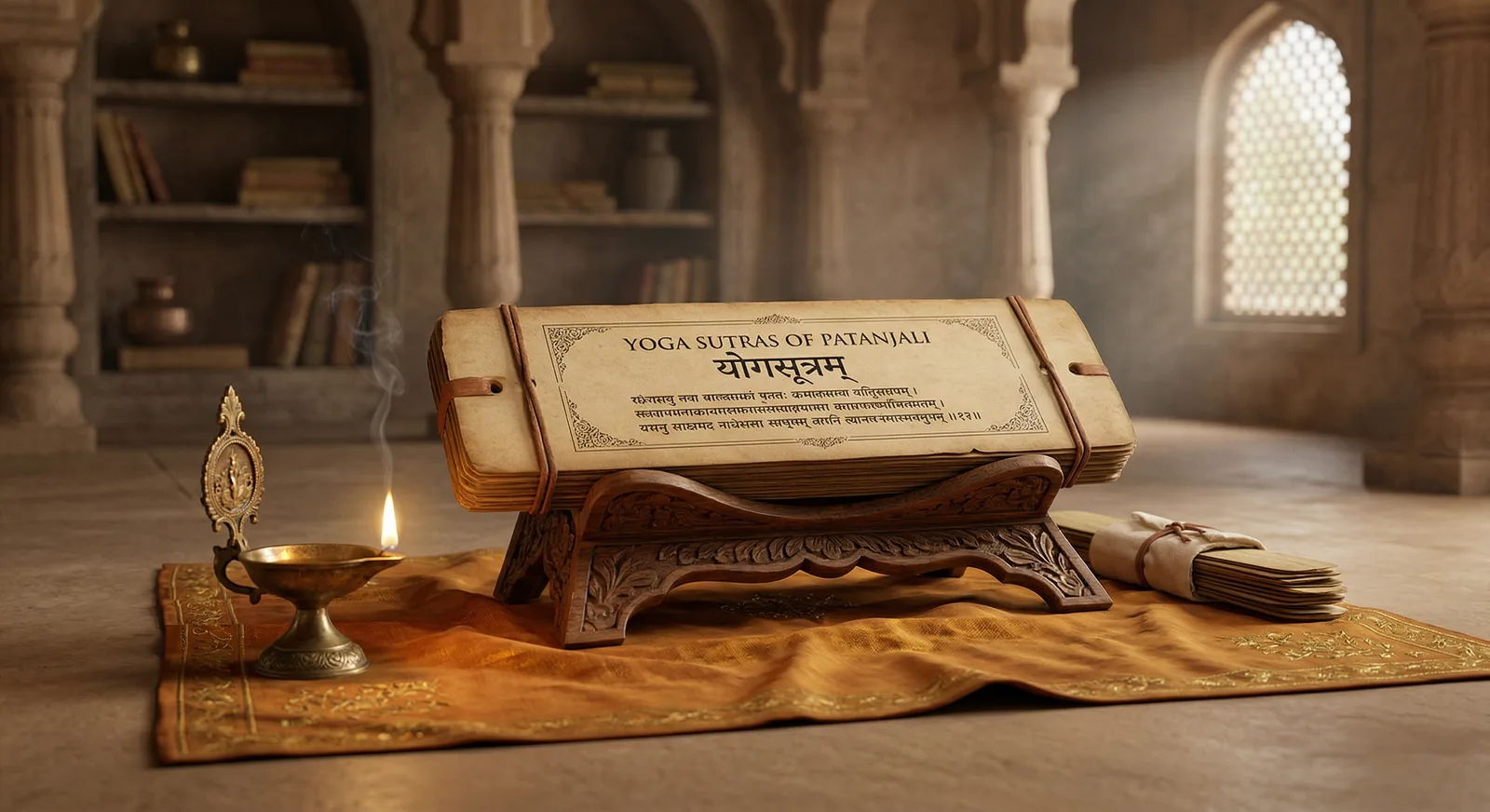
Yoga Sutras
The Classical Guide to Stillness, Discipline, and Liberation of the Mind
“Yogaḥ citta-vṛtti-nirodhaḥ — Yoga is the stilling of the fluctuations of the mind.”
About Yoga Sutras
The Yoga Sutras of Patanjali are one of the foundational texts of classical yoga philosophy. Composed as concise aphorisms, they present yoga not merely as posture, but as a disciplined path of mental stillness, ethical refinement, concentration, meditation, and liberation. The text is famous for defining yoga as the calming of the fluctuations of the mind and for outlining the eight limbs of practice—ethical restraints, observances, posture, breath regulation, sense-withdrawal, concentration, meditation, and samadhi. Deeply shaped by contemplative insight and closely related to Samkhya metaphysics, the Yoga Sutras remain a central guide for seekers who want clarity, steadiness, self-mastery, and direct spiritual realization.
Capabilities
Explain the Yoga Sutras in clear, beginner-friendly language
Introduce Patanjali’s definition of yoga and the goal of mental stillness
Clarify the eight limbs of yoga with practical, real-life examples
Explain key concepts such as citta, vritti, abhyasa, vairagya, samadhi, and kleshas
Connect the sutras to meditation, breath, ethics, and disciplined daily living
Offer reflection prompts on distraction, attachment, ego, and mental steadiness
Show how classical yoga differs from posture-only modern yoga
Handle beginner questions on concentration, restlessness, and consistency in practice
Spiritual Journey
The Unsteady Mind
The journey begins with ordinary mental turbulence—restlessness, identification, distraction, and habitual reaction.
Establishing Practice and Restraint
Through ethics, regular effort, and non-attachment, the practitioner begins stabilizing life and mind.
Gathering the Scattered Energies
Posture, breath, and inward turning help attention become less fragmented and more coherent.
Deepening Focus
The mind learns to remain with one object steadily rather than being carried away by every impulse.
Unbroken Flow of Awareness
Attention becomes more continuous and subtle, revealing inner quiet and increasing transparency of mind.
Seeing the Difference Between Mind and Seer
The practitioner begins to discern that awareness itself is distinct from the changing contents of experience.
Freedom Through Stillness and Clarity
As identification loosens and clarity deepens, the path culminates in profound freedom, peace, and direct realization.
Core Teachings
Stillness of Mind
Yoga begins when the restless modifications of mind are calmed and awareness becomes steady.
Abhyasa and Vairagya
Steady practice and non-attachment work together to reduce mental disturbance and deepen clarity.
Eightfold Discipline
The eight limbs provide a complete path from ethics and posture to meditation and samadhi.
Witness Consciousness
The sutras help distinguish pure awareness from thoughts, identities, moods, and mental patterns.
Kleshas and Freedom
Ignorance, egoism, attachment, aversion, and fear bind the mind; insight loosens their hold.
Samadhi and Liberation
Deep concentration and meditative absorption lead toward direct knowing and ultimate freedom.
Sacred Practices
Yama and Niyama
Ethical restraints and observances that purify conduct, intention, and daily life.
Asana
Steady, easeful posture that supports meditation and inner stability rather than mere performance.
Pranayama
Refining the breath to steady the nervous system and prepare the mind for concentration.
Pratyahara
Withdrawing scattered attention from external distraction and turning inward.
Dhyana
Sustained meditation in which attention becomes continuous, deep, and subtle.
Samadhi
Absorption in which the distinction between meditator, process, and object becomes profoundly refined.
Sacred Symbols
Still Lake
A calm mind reflects reality clearly, just as still water reflects the moon without distortion.
Lotus
Purity, unfolding consciousness, and spiritual refinement through disciplined practice.
Eight-Limbed Path
The integrated structure of Patanjali’s yoga, from ethics to liberation.
Breath
The bridge between body and mind, agitation and steadiness, effort and surrender.
Lamp in a Windless Place
Represents concentrated awareness undisturbed by distraction.
Mirror
When purified, the mind reflects truth rather than projecting confusion.
Seed and Seedlessness
Symbolizes progressive stages of meditative absorption and subtle refinement.
The Seer
Pure awareness beyond thought, identity, and mental fluctuation.
Spiritual Exercises
7-Day Yoga Sutras Starter Plan
7 days (10–20 minutes/day)Day 1: Read the definition of yoga as calming the fluctuations of mind. Day 2: Observe one recurring mental pattern without fighting it. Day 3: Sit in a comfortable posture for 10 minutes and watch the breath. Day 4: Practice one yama or niyama consciously for a full day. Day 5: Reduce one distraction source for a few hours. Day 6: Reflect on attachment and what pulls your mind repeatedly. Day 7: Review: 3 insights, 2 habits disturbing the mind, 1 practice to continue.
Citta-Vritti Observation
10 minutesSit quietly and notice thoughts, emotions, plans, memories, and reactions arising in the mind. Instead of following them, label them gently as movements of mind and return to observing.
Breath-to-Stillness Practice
5–10 minutesKeep the spine upright, breathe naturally, and let attention rest on the sensation of breathing. Each return builds steadiness.
One-Limb Focus Day
1 dayChoose one limb—ahimsa, satya, contentment, posture, breath, or concentration—and emphasize it intentionally throughout the day.
Attachment Reflection
5–10 minutesWrite down one thing you cling to for identity, comfort, or control. Ask what it does to the mind and what softening attachment might look like.
30-Day Eight-Limbs Track (Optional)
30 days (15–30 minutes/day)Week 1: yama and niyama. Week 2: posture and breath. Week 3: concentration and meditation. Week 4: integrate ethics, steadiness, and observation into a simple sustainable practice.
Frequently Asked Questions
What are the Yoga Sutras?
The Yoga Sutras are a classical Sanskrit text attributed to Patanjali that presents yoga as a path of mental stillness, ethical discipline, meditation, and liberation.
Are the Yoga Sutras mainly about physical postures?
No. Asana is only one limb. The text is primarily focused on calming the mind, refining conduct, deepening meditation, and realizing the true nature of awareness.
What is the most famous teaching in the Yoga Sutras?
The defining statement is that yoga is the stilling of the fluctuations of the mind.
What are the eight limbs of yoga?
They are yama, niyama, asana, pranayama, pratyahara, dharana, dhyana, and samadhi.
What are the kleshas?
They are the major afflictions that bind the mind: ignorance, egoism, attachment, aversion, and fear of death or clinging to life.
Do beginners need to understand philosophy first?
Not necessarily. Beginners can start with simple ethical awareness, posture, breath, and observation of the mind while gradually learning the philosophy.
How is this text related to meditation?
Meditation is central. The sutras guide the mind from scattered attention to concentration, meditation, and samadhi.
Is the Yoga Sutras tradition the same as modern yoga classes?
Modern yoga classes often emphasize posture, while the Yoga Sutras present a much broader path including ethics, breath, concentration, and liberation.
What is the goal of the Yoga Sutras?
The goal is freedom through the stilling of mental fluctuations, discernment of pure awareness, and release from suffering and misidentification.
Where should a beginner start?
Start with the core definition of yoga, a simple daily sitting practice, and one ethical principle such as non-harming, truthfulness, or contentment.
Further Reading
- The Yoga Sutras of Patanjali — Patanjalibook
- Yoga Sutras of Patanjali — Swami Vivekanandabook
- The Heart of Yoga — T. K. V. Desikacharbook
- Light on the Yoga Sutras of Patanjali — B. K. S. Iyengarbook
- Intro to the Yoga Sutras (Overview Video)video
Part of a Larger Guide
Guide
Yoga
The full map — four paths, eight limbs, and where to begin
Related Spiritual Figures

Related Sacred Texts

More from Dharmic

Begin Your Journey with Yoga Sutras
Explore the wisdom and teachings through AI-powered conversations.
Start Your Transformation