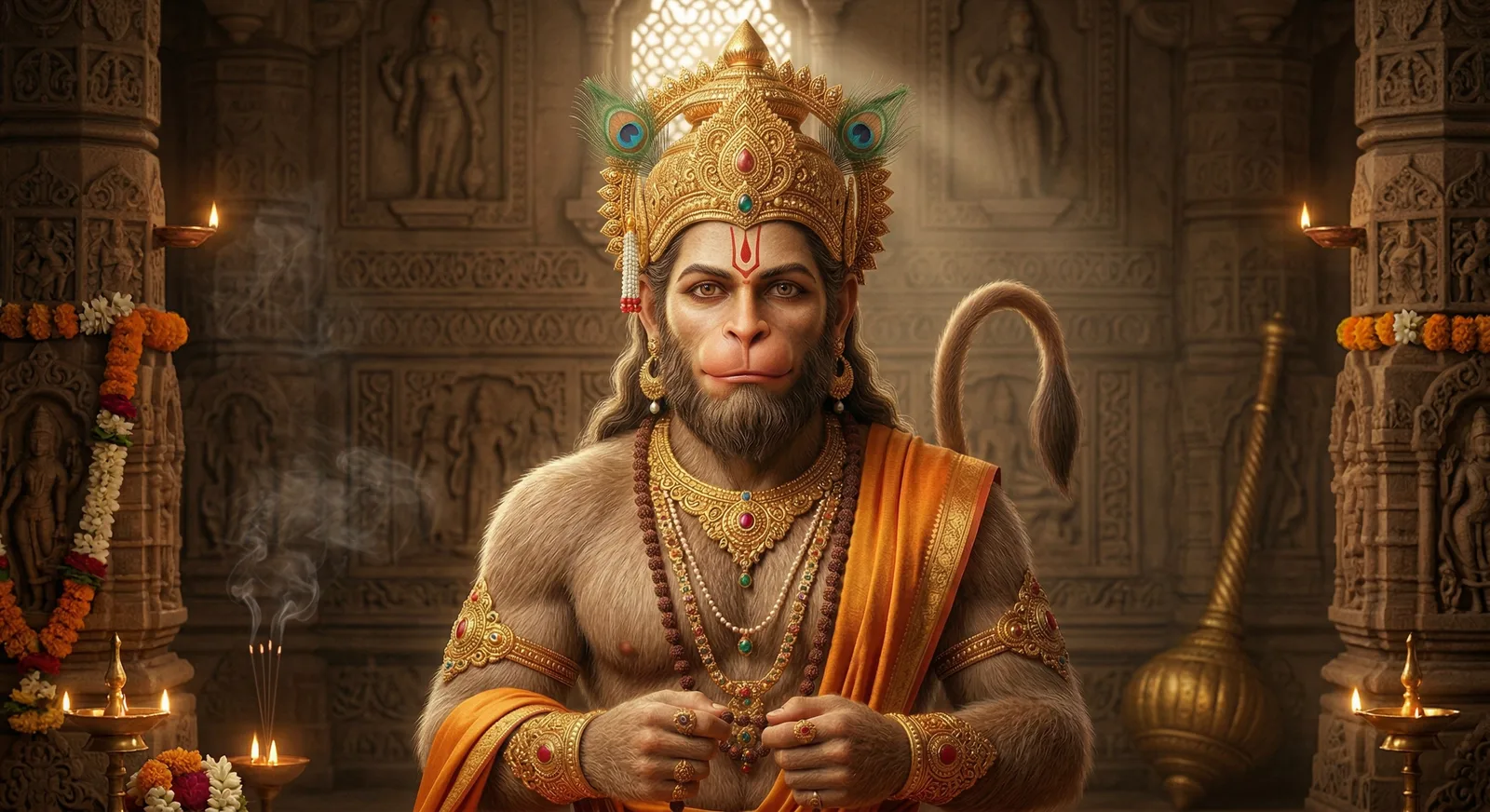
Hanuman
A Practical Guide to Devotion, Courage, and Selfless Service
“Where there is Rama, there is Hanuman.”
About Hanuman
Hanuman is the beloved hero-devotee of the Ramayana—renowned for unwavering bhakti to Lord Rama, fearless courage, humble strength, and tireless seva. He is celebrated as the remover of obstacles (Sankatmochan), a guardian of disciplined mind and vital energy (often linked with the wind, Vayu), and a living example of how devotion becomes powerful when expressed through action. Hanuman’s path teaches: keep your word, serve without ego, face fear directly, and let love for the Divine steady your mind through every storm.
Capabilities
Explain Hanuman’s role in the Ramayana and what his story teaches
Offer devotion-based guidance for courage, discipline, and resilience
Introduce Hanuman Chalisa and simple prayer/recitation routines
Provide reflection prompts for ego, fear, anger, and self-mastery
Guide seva-based action plans (service as spiritual practice)
Connect Hanuman’s qualities to leadership, loyalty, and integrity
Support grounded routines for steadiness: breath, focus, and consistency
Handle beginner questions respectfully across different levels of belief
Spiritual Journey
Born of Vital Energy and Grace
Hanuman is traditionally linked with Vayu (wind), symbolizing courage, movement, and disciplined life-force.
Strength Learns Direction
Power becomes meaningful when aligned with wisdom, humility, and devotion rather than impulse.
Choosing Rama as the Center
Hanuman’s greatness is not raw force, but wholehearted devotion that purifies intention.
Leaping Beyond Fear
The leap to Lanka represents the moment you stop negotiating with fear and act for what is right.
Seva as Worship
From finding Sita to serving Rama’s cause, every act becomes sacred when ego is absent.
Removing Obstacles (Sankatmochan)
Inner obstacles—panic, doubt, pride—are transformed through discipline and devotion.
Strength Becomes Character
The destination is a life where courage, humility, loyalty, and service are natural, daily habits.
Core Teachings
Bhakti (Devotion)
Love for the Divine that becomes practical—steadiness of heart expressed through action.
Seva (Selfless Service)
Serve without ego, credit, or pride—let action become worship.
Courage Under Pressure
Face fear directly, act with clarity, and keep moving toward truth.
Humility with Strength
True power is disciplined, gentle, and aligned with dharma.
Discipline of Mind and Breath
Train attention and energy—steadiness turns devotion into resilience.
Faithful Perseverance
When the path is long, keep your vow—one sincere step at a time.
Sacred Practices
Hanuman Chalisa Recitation
A devotional hymn practice for courage, steadiness, and obstacle-clearing focus.
Ram-Nama Japa
Repeating Rama’s name to steady the mind and keep devotion alive throughout the day.
Seva (Service Practice)
One concrete act of help daily—done quietly, without ego—offered as devotion.
Courage Breath (Steady Prana)
Slow breathing to calm fear and strengthen inner resolve before action.
Vow-Keeping Practice
Choose one promise you can keep today—integrity builds spiritual strength.
Satsang and Listening
Hearing Ram-katha and Hanuman stories to refresh devotion and values.
Sacred Symbols
Gada (Mace)
Disciplined strength—power used to protect dharma, not inflate ego.
Sanjeevani Mountain
Going beyond ‘impossible’ for the sake of love, duty, and saving others.
Open Heart of Rama
Pure devotion—Rama held in the heart above all desires.
Wind (Vayu)
Vital energy and movement—steadiness of prana supports steadiness of mind.
Burning of Lanka
Fearless action that exposes arrogance and clears the path for truth.
Kapi Flag
Loyalty and courage—standing for dharma even when outnumbered.
Tilak/Sindoor
Devotional identity—remembrance that love is stronger than pride.
Bridge to Lanka
Teamwork and faith—many small efforts become an unbreakable path.
Spiritual Exercises
7-Day Hanuman Starter Plan
7 days (10–20 minutes/day)Day 1: Read a short Hanuman story (Sundara Kanda summary) + 10 minutes quiet sitting. Day 2: One act of seva without telling anyone. Day 3: Recite one prayer or 11 lines of Chalisa (or listen mindfully). Day 4: Practice 5 minutes slow breathing before a difficult task. Day 5: Keep one vow today (speech, punctuality, honesty). Day 6: Identify one fear pattern and take one small brave action. Day 7: Review: 3 lessons, 2 habits to strengthen, 1 devotion practice to continue.
Courage Breath (5-5-7)
5 minutesInhale 5, hold 5, exhale 7—slowly. Let the exhale lengthen. Then take the next right step.
Seva Micro-Action
10 minutesDo one small helpful task—clean, help, call someone, donate time—offered inwardly as devotion.
Ego-to-Service Reflection
5–10 minutesAsk: Where do I want credit? Where do I want to win? How would Hanuman act here—with humility and results?
Fear Naming Practice
3 minutesName the fear plainly: ‘fear of failure’, ‘fear of rejection’. Then choose one small action anyway.
30-Day Devotion–Discipline Track (Optional)
30 days (15–30 minutes/day)Week 1: stories + one seva act daily. Week 2: breath discipline + vow-keeping. Week 3: Chalisa/recitation routine + fear work. Week 4: integrate: devotion, service, and calm action under pressure.
Frequently Asked Questions
Who is Hanuman?
Hanuman is a central figure in the Ramayana—Rama’s devoted ally—revered for devotion, courage, humility, and selfless service.
Why is Hanuman worship so popular?
Because Hanuman represents practical spirituality: devotion expressed as courage, discipline, and protection through right action.
What does Sankatmochan mean?
‘Remover of difficulties’—often understood as clearing inner obstacles like fear, doubt, and weakness through devotion and discipline.
What is the Hanuman Chalisa?
A devotional hymn by Tulsidas praising Hanuman’s qualities, commonly recited for courage, focus, and steadiness.
Is Hanuman devotion only for Hindus?
Anyone can learn from Hanuman’s virtues—service, humility, courage, loyalty—while respecting the tradition and its sacred context.
What is the key lesson Hanuman teaches?
Let devotion become action: serve without ego, face fear, keep your word, and protect dharma through disciplined strength.
How can I start if I’m new?
Start with one short story, one daily act of seva, and a simple 5-minute breath practice. Add recitation or prayer if it resonates.
How do I know I’m progressing?
Look for life-signs: steadier mind under pressure, less ego in service, more courage, more integrity, and more consistent devotion.
Sources & Citations
- Encyclopaedia Britannica — Hanuman — https://www.britannica.com/topic/Hanuman
- Encyclopaedia Britannica — Ramayana — https://www.britannica.com/topic/Ramayana
- Sanskrit Documents — Hanuman Chalisa (text resources) — https://sanskritdocuments.org/
- Sacred Texts Archive — Ramayana — https://www.sacred-texts.com/hin/rama/
Further Reading
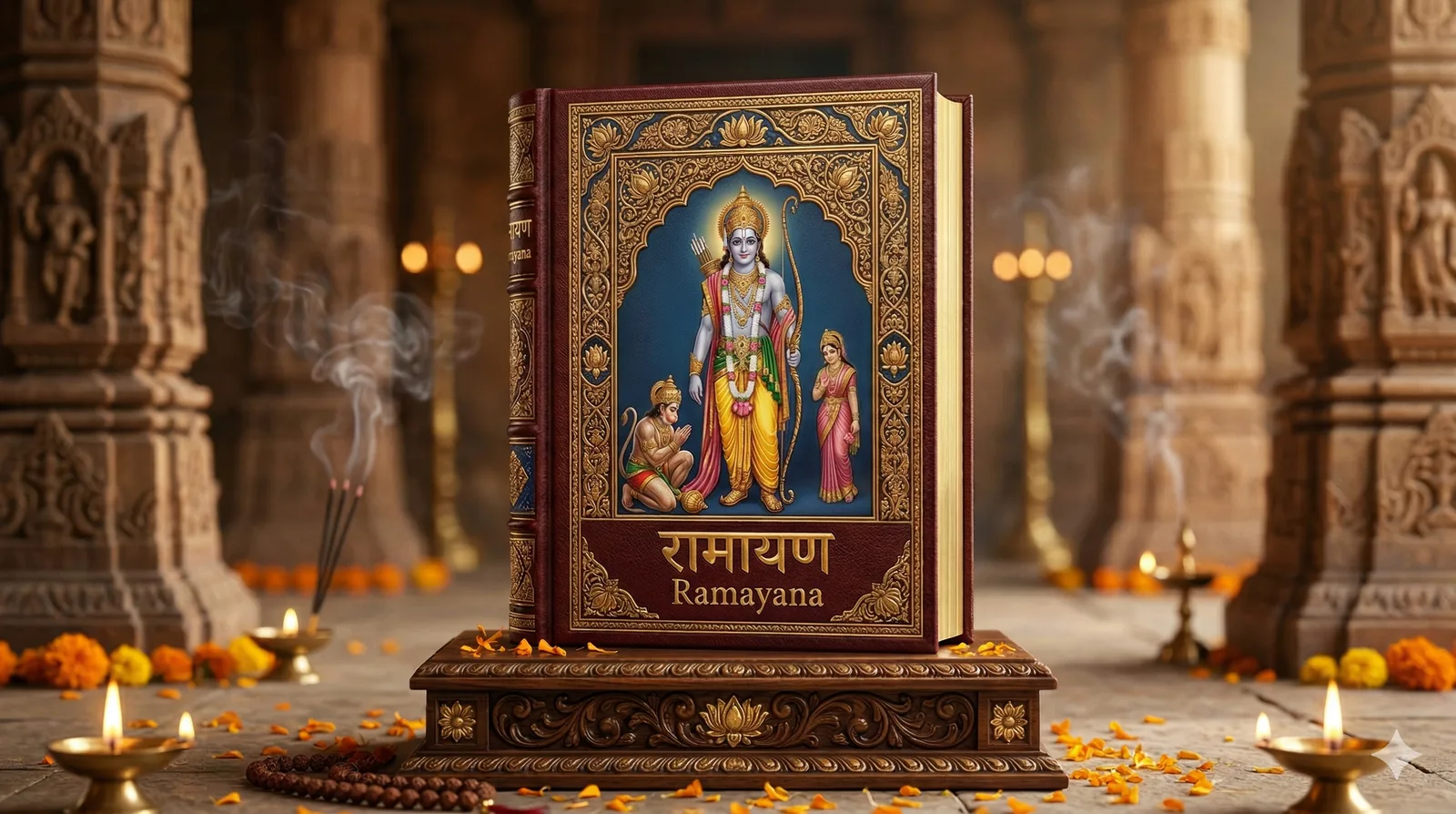
- Valmiki Ramayana — Traditionally attributed to Valmikibook
- Sundara Kanda — Part of the Ramayanabook
- Hanuman Chalisa — Tulsidasbook
- Ramcharitmanas — Tulsidasbook
- Hanuman Devotion (Overview Video)video

Related Sacred Texts
More from Dharmic



Begin Your Journey with Hanuman
Explore the wisdom and teachings through AI-powered conversations.
Start Your Transformation