Key Takeaways
- Sacred Hospitality (Upasana): Performing puja at home is essentially welcoming the Divine as a deeply respected guest—offering light, water, flowers, fragrance, and food with sincere devotion (Bhakti).
- The Core 5 Offerings (Pancha Upachara): A simple daily worship requires five basic elements: Gandha (fragrance/sandalwood), Pushpa (flower), Dhupa (incense), Dipa (lamp flame), and Naivedya (food offering).
- Devotion Over Complexity: Sincerity and mindful attention carry far more spiritual weight than elaborate ritual apparatus or flawless Sanskrit pronunciation.
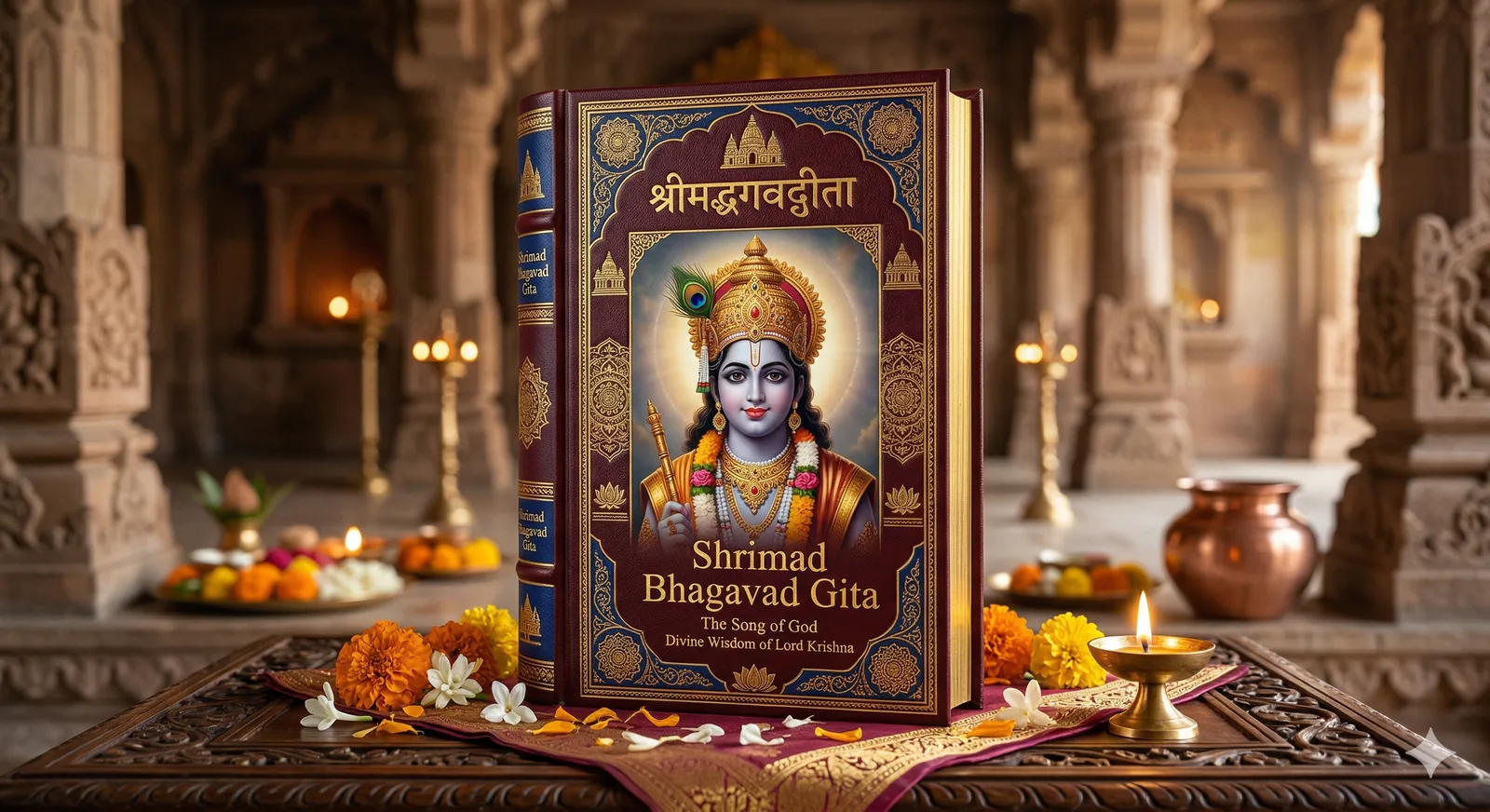
- Scriptural Authority: As Lord Krishna promises in the Bhagavad Gita (9.26), even the simplest offering—a single leaf, flower, fruit, or drop of water—is accepted with joy when offered with a pure heart.
- Accessibility for Everyone: Anyone—regardless of language, background, or living arrangements—can establish a peaceful home mandir and perform meaningful daily prayer.
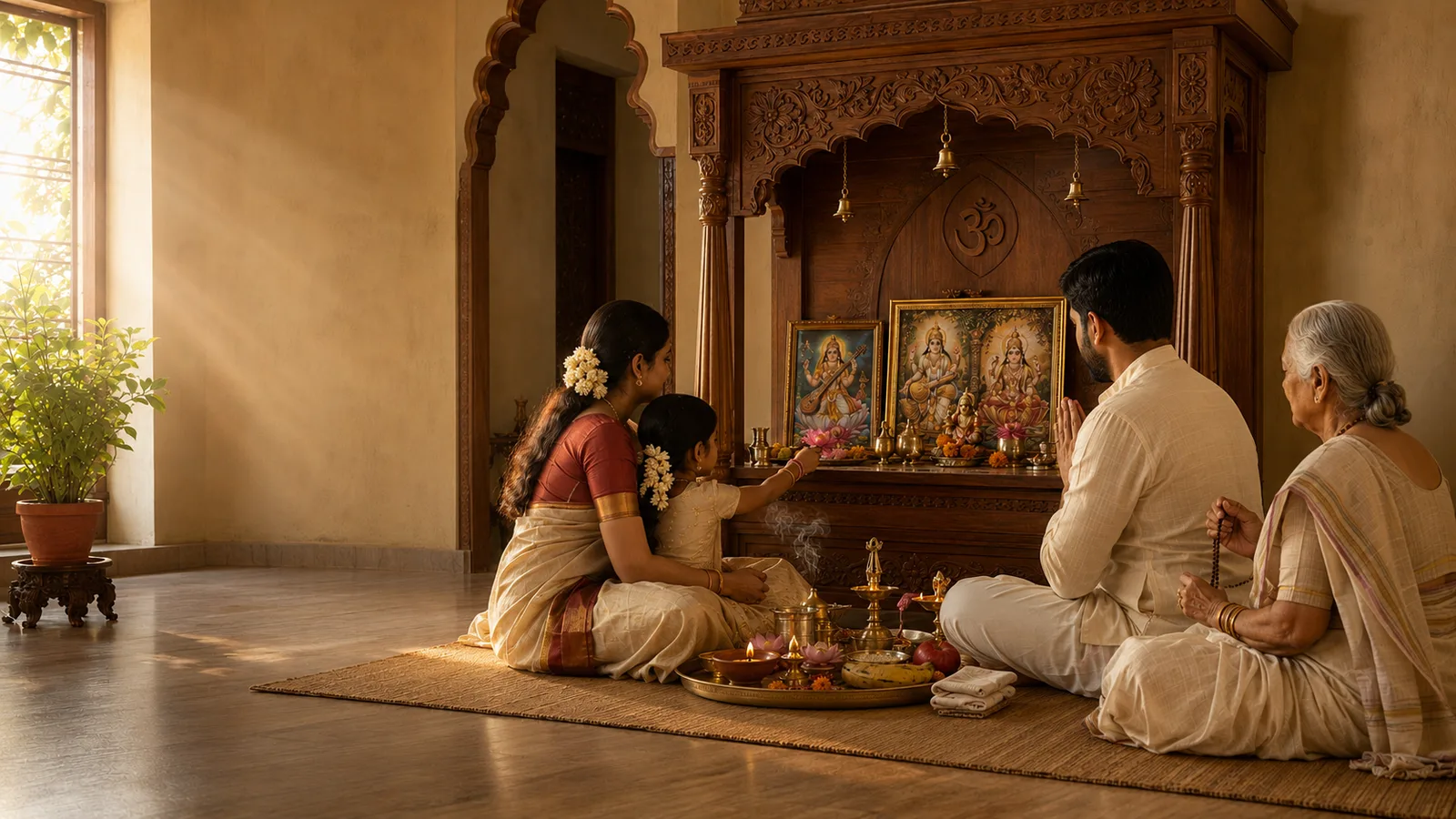
Performing puja at home does not have to be complicated. A simple act of lighting a diya, offering a flower and sitting quietly in prayer can become a meaningful daily spiritual practice. Elaborate ceremonies have an important place in Hindu tradition, but sincerity, attention and devotion remain at the heart of personal worship. This guide explains how to perform a simple Hindu puja at home using items that most families can obtain easily. It is written for beginners, younger Hindus, diaspora families, parents teaching children, people reconnecting with their heritage and non-Hindus learning respectfully.
The steps are intentionally simple. They are not intended to replace the customs taught by your parents, grandparents, guru, temple or sampradaya.
Important context: Hindu puja traditions vary across families, regions, languages, deities and sampradayas. A Tamil Shaiva household, a Bengali Shakta family, a Gujarati Vaishnava home and an Arya Samaj family may worship differently. Follow your inherited tradition where you have one.
What Does Puja Mean?
As Lord Krishna explicitly declares in the Bhagavad Gita:
"Patraṁ puṣpaṁ phalaṁ toyaṁ yo me bhaktyā prayacchati | Tad ahaṁ bhakty-upahṛtam aśnāmi prayatātmanaḥ ||"
"Whoever offers Me with devotion a leaf, a flower, a fruit, or water—that offering of love, made by a pure-minded soul, I accept with joy." — Bhagavad Gita 9.26
This scriptural principle lies at the foundation of Sanatan Dharma: the value of an offering is measured not by its material cost, but by the purity of love (Bhakti) with which it is presented.
┌─────────────────────────────────────────────────────────┐
│              THE DEVOTIONAL ARC OF HOME PUJA            │
└────────────────────────────┬────────────────────────────┘
                             │
            ┌────────────────┴────────────────┐
            ▼                                 ▼
┌───────────────────────┐         ┌───────────────────────┐
│ 1. PREPARATION & SEAT │         │ 2. INVOCATION & LIGHT │
│ • Physical cleanliness│────►    │ • Light diya (Dipa)   │
│ • Mindful stillness   │         │ • Welcome the Divine  │
└───────────────────────┘         └───────────────────────┘
                                              │
                                              ▼
┌───────────────────────┐         ┌───────────────────────┐
│ 4. REFLECTION & AARTI │         │ 3. SACRED OFFERINGS   │
│ • Chanting & Mantras  │◄────    │ • Water, flowers,     │
│ • Offering of Light   │         │   fragrance & food    │
└───────────────────────┘         └───────────────────────┘
            │
            ▼
┌───────────────────────┐
│ 5. PRASAD & PEACE     │
│ • Kshamapanam (Pardon)│
│ • Receive Grace & Peace│
└───────────────────────┘
As Lord Krishna explicitly declares in the [Bhagavad Gita's Guide to Anxiety & Stress](/wisdom/hinduism/bhagavad-gita-anxiety-stress):
"Patraṁ puṣpaṁ phalaṁ toyaṁ yo me bhaktyā prayacchati | Tad ahaṁ bhakty-upahṛtam aśnāmi prayatātmanaḥ ||"
"Whoever offers Me with devotion a leaf, a flower, a fruit, or water—that offering of love, made by a pure-minded soul, I accept with joy." — Bhagavad Gita 9.26
This scriptural principle lies at the foundation of Sanatan Dharma: The Eternal Truth: the value of an offering is measured not by its material cost, but by the purity of love (Bhakti) with which it is presented.
┌─────────────────────────────────────────────────────────┐
│              THE DEVOTIONAL ARC OF HOME PUJA            │
└────────────────────────────┬────────────────────────────┘
                             │
            ┌────────────────┴────────────────┐
            ▼                                 ▼
┌───────────────────────┐         ┌───────────────────────┐
│ 1. PREPARATION & SEAT │         │ 2. INVOCATION & LIGHT │
│ • Physical cleanliness│────►    │ • Light diya (Dipa)   │
│ • Mindful stillness   │         │ • Welcome the Divine  │
└───────────────────────┘         └───────────────────────┘
                                              │
                                              ▼
┌───────────────────────┐         ┌───────────────────────┐
│ 4. REFLECTION & AARTI │         │ 3. SACRED OFFERINGS   │
│ • Chanting & Mantras  │◄────    │ • Water, flowers,     │
│ • Offering of Light   │         │   fragrance & food    │
└───────────────────────┘         └───────────────────────┘
            │
            ▼
┌───────────────────────┐
│ 5. PRASAD & PEACE     │
│ • Kshamapanam (Pardon)│
│ • Receive Grace & Peace│
└───────────────────────┘
Puja, also written as pooja or pūjā, broadly means worship, reverence, honour or adoration.
During puja, a devotee turns their attention towards the Divine through prayer, meditation, sacred images and offerings such as water, flowers, fragrance, light and food. One traditional way of understanding puja is as sacred hospitality. The chosen form of the Divine is welcomed and honoured as a deeply respected guest. Water, flowers, fragrance, light and nourishment are offered with gratitude and devotion.
Puja can include:
- sitting silently before a sacred image;
- chanting a mantra;
- lighting a diya;
- offering flowers or food;
- singing a bhajan;
- reading scripture;
- performing aarti;
- or expressing gratitude in one's own words.
The Smithsonian describes puja as showing reverence to an aspect of the Divine through invocations, prayers, songs and rituals. A murti, picture, sacred vessel, natural object or symbol can provide a point of focus through which the devotee develops a spiritual connection.
Does puja have to be elaborate?
No. A puja can last several minutes or much longer. Hindu home worship may range from lighting a single lamp in the morning to performing an extended ceremony with multiple offerings and mantras. One contemporary Hindu home-puja guide presents an express puja of approximately five to seven minutes, a short puja of around ten to twelve minutes and a more thorough sixteen-offering puja lasting twenty to thirty minutes.
A short puja performed consistently and attentively can be more spiritually meaningful than an elaborate ritual performed hurriedly.
Creating a Simple Home Mandir
A home mandir is a clean and respectfully maintained place set aside for prayer. It does not have to be a separate room or an expensive carved temple. Hindu families around the world use dedicated prayer rooms, cabinets, shelves, small wooden mandirs, wall-mounted platforms and simple tables. Harvard University's Pluralism Project documents the wide variety of Hindu home altars, from separate shrine rooms to converted cupboards and small altar tables in shared living spaces. The form varies, while the purpose remains daily remembrance of the Divine.
Choose a peaceful location
Select a place that is:
- clean;
- reasonably quiet;
- away from shoes and household rubbish;
- protected from accidental disturbance;
- and safe for any lamps or incense you intend to use.
Some Vastu traditions prefer a mandir in the northeast part of the home or recommend facing east during prayer. These may be meaningful family or architectural customs, but they are not practical in every apartment or household. There are no universal location requirements for a simple personal shrine. A respectfully maintained shelf in a small apartment is more useful than waiting indefinitely for a "perfect" room. Hindu guidance on creating a home mandir similarly emphasises that limited space should not prevent sincere worship.
Choose the focus of your worship
Your home mandir may include:
- a murti of your Ishta Devata;
- a framed picture of a deity;
- an Om symbol;
- a Shiva lingam;
- a Shaligram where maintained according to family tradition;
- pictures of several deities;
- an image of a guru;
- a sacred text;
- or another symbol honoured within your tradition.
Ishta Devata means the chosen or personally cherished form of the Divine.
You do not need to place every Hindu deity in one shrine. A simple arrangement centred on the form of the Divine with whom you feel the strongest connection is sufficient.
Keep the shrine uncluttered
Arrange the sacred images neatly and leave enough space for a diya and a small offering plate. Avoid storing unrelated household objects, money, medicine, paperwork, keys or electronic equipment directly among sacred images. Clean the platform regularly and replace wilted flowers or spoiled food promptly.
Basic Puja Items List
You do not need every traditional puja item before beginning. For a simple daily puja, start with a few basic offerings.
Essential beginner's puja items
| Puja item | Purpose | Simple alternative |
|---|---|---|
| Murti, picture or sacred symbol | Focus of worship | A printed image or sacred text |
| Diya | Offering of light | A safe battery-operated lamp where flames are not permitted |
| Cotton wick | Used in the diya | Ready-made diya wick |
| Ghee or suitable oil | Fuel for the diya | Use what your family tradition recommends |
| Clean water | Symbolic welcome and offering | A small cup or spoonful is enough |
| Fresh flower | Beauty, gratitude and devotion | A clean leaf where appropriate |
| Incense | Offering of fragrance | Fresh flowers or sandalwood fragrance |
| Fruit or simple food | Naivedya offered before becoming prasad | A raisin, nut or small piece of fruit |
| Small plate or thali | Holds the offerings | Any clean plate reserved for worship |
| Small spoon and cup | Used for water offerings | Any clean utensils reserved for puja |
| Matches or lighter | Lights the diya and incense | Not required when using flameless alternatives |
| Clean cloth | Keeps the shrine tidy | Any clean cloth used only for the mandir |
Traditional puja commonly includes fragrance, flowers, incense, a lamp and food. These offerings are sometimes called the pancha upacharas, or five principal forms of devotional offering. More elaborate pujas may include sixteen or more acts of sacred hospitality.
Optional puja items
Depending on your family and chosen deity, you may also use:
- sandalwood paste;
- kumkum;
- turmeric;
- akshata, or unbroken rice;
- a small bell;
- Tulsi leaves;
- bilva leaves;
- camphor;
- a conch;
- a japa mala;
- sacred water;
- seasonal sweets;
- or a printed prayer book.
Not every leaf, food or substance is traditionally offered to every deity. Follow your family or sampradaya when you know its customs.
What can you use when an item is unavailable?
Use respectful simplicity rather than abandoning the puja. You can offer:
- one flower instead of a garland;
- plain water instead of several ritual liquids;
- fruit instead of prepared sweets;
- a flower's natural fragrance instead of incense;
- a battery-operated diya where flames are unsafe;
- or a heartfelt mental offering when no physical item is available.
The purpose of the item is to carry devotion. The expense of the item does not determine the value of the prayer.
Preparing Yourself and the Puja Space
Before beginning:
- Wash your hands and face, or bathe where practical.
- Wear clean, comfortable clothing.
- Clean the shrine and surrounding area.
- Place the puja items on a clean tray.
- Silence unnecessary notifications and distractions.
- Sit comfortably before the shrine.
- Take several slow breaths and settle your mind.
Traditional home-puja guidance recommends cleaning the space, washing before worship, wearing clean clothing and arranging the offerings neatly before beginning. Physical cleanliness supports mental attentiveness, but do not allow anxiety about perfect preparation to prevent prayer. A parent caring for a baby, a person with limited mobility or someone travelling may need to adapt.
How to Perform a Simple Hindu Puja at Home
The following ceremony can be completed in approximately ten to fifteen minutes. You may shorten or expand it according to your circumstances.
Step 1: Sit Quietly and Centre Yourself
Sit before your home mandir. Close your eyes and take three slow breaths. Let the concerns of the day settle temporarily. Bring your chosen deity, sacred teaching or understanding of the Divine into your awareness. You may begin by chanting Om three times:
Om Om Om
You may also remain silent. The transition from ordinary activity to prayer is itself an important part of puja.
Step 2: Light the Diya
Place the diya on a stable, heat-resistant surface. Light the wick and pause for a moment before the flame. The light may be understood as representing:
- divine presence;
- knowledge overcoming ignorance;
- awareness;
- hope;
- and the light of the Self.
You may say:
May this light remove ignorance from my mind and guide me towards wisdom, compassion and dharma.
Puja fire safety
Never leave a diya, candle, incense stick or camphor flame unattended. Keep flames away from curtains, loose clothing, paper, children and pets. Extinguish the flame before leaving the room or going to sleep. Fire and Rescue NSW advises placing candles on a secure base, keeping them away from flammable objects and never leaving them unattended. A flameless diya is a respectful practical alternative in hospitals, care facilities, student accommodation, workplaces and homes where an open flame would be unsafe.
Step 3: Offer a Simple Invocation
An invocation respectfully invites the Divine into your awareness and the space of worship. You may fold your hands in Namaste and say:
With respect and devotion, I welcome the Divine presence into my heart and home. Please accept this simple prayer and guide my thoughts, words and actions.
You may address your chosen deity by name:
Lord Ganesha, please accept my prayer.
Lord Shiva, please accept my devotion.
Lord Vishnu, please guide and protect my family.
Mother Durga, please grant us courage and wisdom.
Lord Rama, help me live according to truth and dharma.
Lord Krishna, guide my heart and actions.
These are simple English prayers rather than mandatory ritual formulas. A short optional Sanskrit salutation is:
Om Shri Ganeshaya Namah Salutations to Lord Ganesha.
Many traditions begin by remembering Ganesha as the deity of beginnings and the remover of obstacles. However, the exact opening prayer varies among families and sampradayas.
Step 4: Offer Water
Place a small cup of clean water before the deity or transfer a small spoonful into an offering vessel. Water may represent purity, hospitality, life and refreshment. In a traditional extended puja, water may be offered symbolically for washing the feet, hands and mouth of the honoured Divine guest. A simple home puja may combine these into one respectful water offering. You may say:
I offer this water with respect and gratitude.
Avoid pouring water directly onto a printed picture, painted murti, wooden object or material that could be damaged. Physical bathing or abhisheka should only be performed on objects suitable for it and according to the relevant tradition. For a beginner's daily puja, placing a small vessel of water before the deity is enough.
Step 5: Offer Flowers
Place a fresh flower or suitable leaf before the deity. Hold it briefly between your hands and offer it with gratitude. You may say:
I offer this flower as a symbol of love, purity and devotion.
The flower need not be rare or expensive. A small seasonal flower from your garden can be more personal than an elaborate purchased arrangement. Avoid taking flowers without permission from private property, public gardens or protected areas.
Step 6: Offer Incense or Fragrance
Light an incense stick and place it securely in a suitable holder. Move it gently before the shrine without bringing it too close to the image, cloth, flowers or decorations. You may say:
May my thoughts and actions become pure and uplifting, like this fragrance.
Incense is not essential. People with asthma, allergies, respiratory sensitivities or restrictions in their accommodation can omit it. Suitable alternatives include:
- a naturally fragrant flower;
- a small amount of sandalwood paste;
- ventilation-safe natural fragrance;
- or no fragrance at all.
Puja traditionally engages the senses through offerings including flowers, fragrance, sound, water, food and light.
Step 7: Offer Food
Place a small portion of fruit, nuts, raisins, cooked food or sweets before the deity. This offering is called naivedya before it is offered and is commonly received as prasad after the puja. You may say:
I offer this food with gratitude. May all beings receive nourishment, and may I never forget those who are hungry.
Where possible:
- use fresh food;
- place it in a clean dish;
- offer a small, manageable quantity;
- and avoid tasting it before the offering if that is your family's practice.
Food customs differ significantly. Some households avoid onion and garlic in offerings. Some offer only fruit during daily puja. Others prepare deity-specific foods during festivals. Follow your family or temple tradition rather than treating one food rule as universal.
Step 8: Recite a Mantra, Bhajan or Personal Prayer
After making the offerings, spend several minutes in focused prayer. You may:
- repeat the name of your chosen deity;
- chant a familiar mantra;
- sing a bhajan;
- read a verse from the Bhagavad Gita;
- recite the Hanuman Chalisa;
- listen respectfully to a devotional hymn;
- or sit in silence.
A very simple practice is to repeat:
Om Namah Shivaya
or:
Om Namo Narayanaya
or:
Shri Ram Jai Ram Jai Jai Ram
or:
Om Shri Ganeshaya Namah
Choose a mantra connected with your own tradition rather than trying to chant many unfamiliar mantras during one short puja. You may also pray in English or another language:
Thank you for the life and opportunities I have received. Please give me wisdom to make good decisions, strength to face difficulties and compassion towards every living being. May my family be protected, and may all people find peace.
What If You Do Not Know Sanskrit?
You do not need to be fluent in Sanskrit to begin praying at home. Sanskrit mantras carry deep textual, devotional and sonic traditions, and learning their pronunciation respectfully can enrich your practice. However, puja should not become inaccessible merely because a person was not taught Sanskrit. You may pray in:
- Hindi;
- Tamil;
- Telugu;
- Bengali;
- Gujarati;
- Punjabi;
- Marathi;
- Kannada;
- Malayalam;
- English;
- or any language through which you can pray sincerely.
You can also pray silently. A useful beginner's approach is:
- Learn one short mantra.
- Understand its basic meaning.
- Pronounce it slowly.
- Supplement it with prayer in your own language.
- Learn gradually from a trusted teacher or temple.
Home puja exists in short and accessible forms precisely because the depth of devotion is not measured only by ceremonial complexity. Contemporary Hindu guidance emphasises sincerity, mindful awareness and devotion even when time, space or access to traditional materials is limited. Do not pretend to know a mantra when you do not. Reading carefully from a trusted transliteration is more respectful than chanting rapidly without attention.
Step 9: Perform a Simple Aarti
Aarti, also written as arati, is the offering of light before the deity.
Hold the diya or aarti lamp carefully in your right hand, supporting the arm or plate with the other hand where needed. Move the lamp gently in clockwise circles before the sacred image. You may sing a traditional aarti associated with your deity, such as:
- Om Jai Jagdish Hare;
- Jai Ganesh Deva;
- Om Jai Shiv Omkara;
- Jai Ambe Gauri;
- or another hymn followed by your family.
When you do not know an aarti song, you may silently circle the lamp while expressing gratitude. The lamp offering traditionally appears near the conclusion of puja. Harvard's Pluralism Project describes aarti as the careful circling of an oil lamp before the deity and identifies it as one of the central offerings of Hindu worship. Keep the movement calm and controlled. Aarti is an offering, not a performance.
Afterwards, family members may pass their hands safely above the flame and bring them towards their forehead or face, symbolically receiving the blessing of the light. Children should do this only with close adult supervision.
Step 10: Bow and Conclude the Puja
Place the lamp securely. Fold your hands and bow. You may say:
Thank you for accepting this simple worship. Please forgive any mistakes I have made knowingly or unknowingly. Guide me towards truth, compassion and right action.
A traditional home-puja conclusion may include kshamapanam, a humble request for forgiveness for errors or omissions made during the ceremony. You may conclude with:
Om Shanti, Shanti, Shanti May there be peace within us, around us and throughout existence.
Remain silent for a few moments before standing.
Receiving and Sharing Prasad
After the prayer is complete, the offered food becomes prasad or prasadam. Prasad is not merely a snack placed before a sacred image. It is received with gratitude as food that has participated in worship and carries the meaning of divine grace. Share it respectfully among family members and guests. The Pluralism Project describes prasad as the blessed food and offerings returned to worshippers after puja. Fruits, flowers, water and other offerings may be received as gifts of grace.
What should you do with the offered water?
Depending on your tradition, the water may be:
- received in a small quantity;
- shared with family members;
- added to food;
- or poured respectfully onto a plant.
Do not drink water that has become contaminated by ash, chemicals, inedible flowers or unsuitable materials.
What should you do with old flowers?
Remove flowers when they wilt. Where local rules permit, natural offerings may be composted, buried or returned respectfully to nature. Do not place plastic, foil, synthetic cloth, chemical colours or non-biodegradable materials into rivers, lakes or public spaces. Hindu home-puja guidance recommends consuming edible offerings, reusing suitable items and returning natural materials respectfully in accordance with local regulations.
A Five-Minute Daily Hindu Puja
Busy mornings do not require abandoning worship. A simple five-minute routine can be:
- Wash your hands and sit before the mandir.
- Light a diya or switch on a flameless lamp.
- Chant Om three times.
- Offer one flower or a small amount of water.
- Repeat your chosen mantra.
- Express gratitude in your own words.
- Bow and conclude with Om Shanti.
This short practice can also be used:
- while travelling;
- in student accommodation;
- during illness;
- before work;
- before an examination;
- or when caring responsibilities limit your time.
A short puja is not an inferior puja. Consistent remembrance matters more than creating anxiety around ritual length.
A Simple Hindu Morning Prayer Routine
Morning is a popular time for home worship because it allows prayer to shape the beginning of the day. A practical Hindu morning prayer routine may include:
Upon waking
Pause before checking your phone. Express gratitude for another day. You may say:
Thank you for this new morning. May my thoughts, words and actions serve dharma.
After washing or bathing
Approach the mandir in clean clothing. Open any shrine curtain if your family uses one.
Light the diya
Sit quietly before the flame.
Offer water or a flower
A small daily offering is enough.
Recite one prayer
Choose a mantra, verse, stotra or personal prayer that you can maintain consistently.
Set an intention
Ask yourself:
- How can I speak truthfully today?
- Whom can I help?
- Which harmful habit should I control?
- How can I perform my duties without unnecessary anger or ego?
Bow and begin your day
The purpose of morning worship is not only to complete a ritual. It is to carry its awareness into work, school, family relationships and decisions. Home altars have long supported brief morning and evening practices in which families light a lamp, offer flowers, meditate or pray together before beginning their daily responsibilities.
How Parents Can Teach Children Puja
Children learn spiritual practice most effectively through participation rather than fear. Give them simple responsibilities such as:
- placing a flower;
- ringing a small bell gently;
- folding their hands;
- repeating one divine name;
- helping arrange fruit;
- singing a short bhajan;
- or sharing prasad.
Explain the meaning of each action. For example:
We light the diya to remember the light of knowledge.
We offer food because we are grateful for what we receive.
We bow to practise humility.
We share prasad because blessings are meant to be shared.
Do not shame children for imperfect pronunciation, movement or attention. Correct them patiently and keep flames, camphor, hot oil and incense under adult control.
Common Puja Mistakes and Respectful Alternatives
Mistake 1: Waiting until you know every rule
Respectful alternative: Begin with a diya, a flower and a sincere prayer. Learn gradually.
Mistake 2: Treating puja as a mechanical checklist
Respectful alternative: Pause during every offering and remember why you are making it.
Mistake 3: Believing expensive items create greater blessings
Respectful alternative: Use simple, clean and responsibly sourced offerings.
Mistake 4: Copying another sampradaya without understanding it
Respectful alternative: Learn from your family, temple or a trustworthy teacher. Appreciate other traditions without claiming that they are all identical.
Mistake 5: Leaving old food and flowers at the shrine
Respectful alternative: Remove offerings before they spoil and keep the mandir clean.
Mistake 6: Using excessive smoke
Respectful alternative: Use one incense stick, improve ventilation or omit incense completely when it affects health.
Mistake 7: Leaving a diya unattended
Respectful alternative: Remain in the room, use a stable lamp and extinguish it safely when finished.
Mistake 8: Becoming afraid of making a small error
Respectful alternative: Conclude by humbly asking forgiveness for mistakes and continue learning.
Mistake 9: Using Sanskrit without understanding anything
Respectful alternative: Learn the meaning of one mantra and combine it with sincere prayer in your own language.
Mistake 10: Judging another Hindu family's practice
Respectful alternative: Recognise that Hindu worship varies across regions, deities, languages and lineages.
The Heart of Home Puja
A home mandir can become a quiet centre within a busy household. The diya reminds us to seek knowledge. Water teaches purity and hospitality. Flowers express beauty and gratitude. Food reminds us that nourishment is received through grace and should be shared. The deepest purpose of puja is not to impress the Divine with expensive offerings or perfect pronunciation. It is to transform the person performing the worship.
A meaningful puja should help us become:
- more truthful;
- more compassionate;
- more disciplined;
- less controlled by anger and ego;
- more grateful;
- and more aware of the sacred presence within life.
Begin simply. Light one diya. Offer one flower. Speak one honest prayer. Allow the practice to deepen naturally through learning, devotion and consistency.