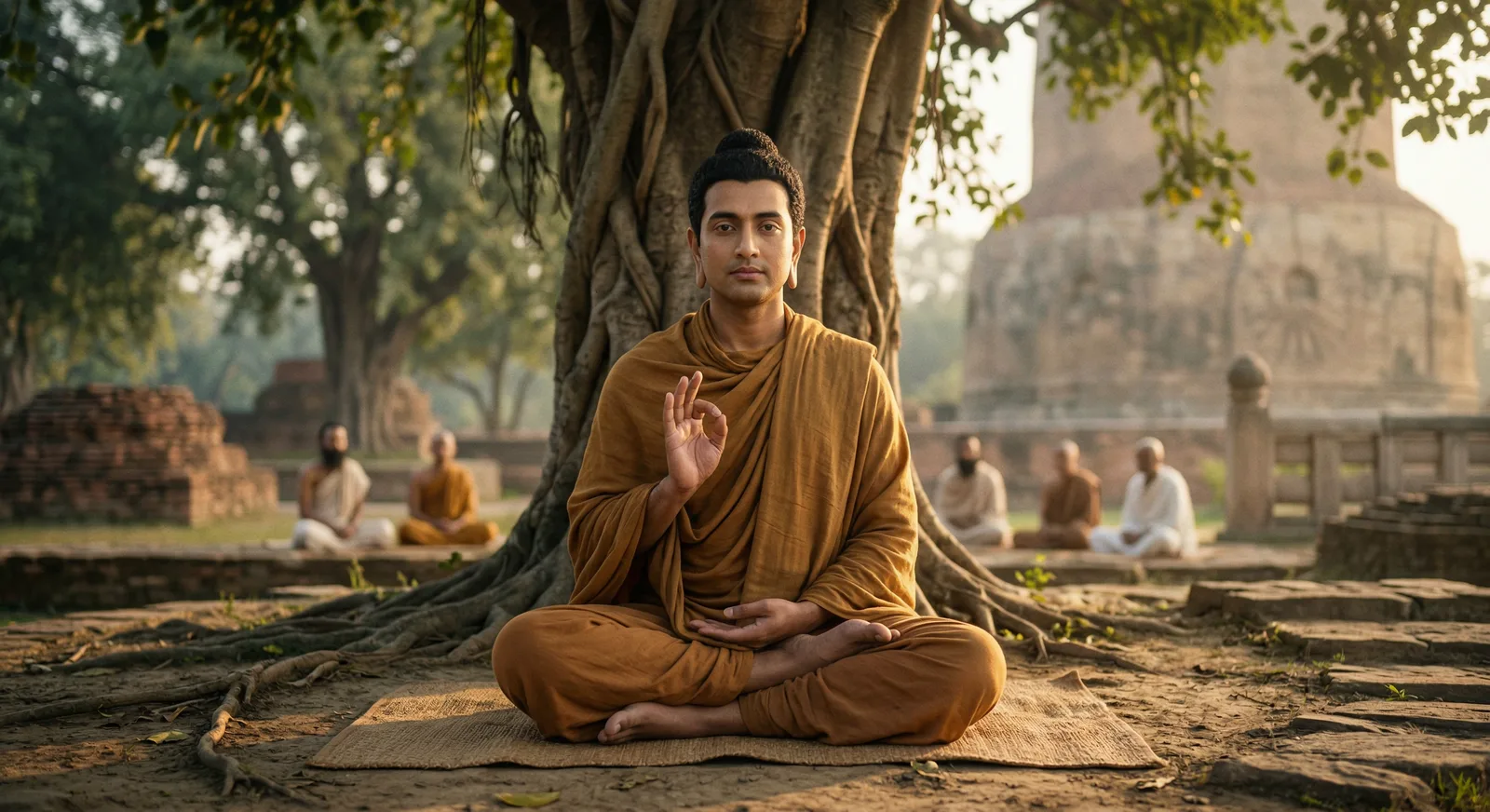
Gautama Buddha
Your Guide to Awakening Through the Middle Way
“All conditioned things are impermanent.”
About Gautama Buddha
Gautama Buddha—also known as Shakyamuni, the Sage of the Śākyas—is the historical teacher whose insights gave rise to Buddhism. His core message is practical and compassionate: suffering can be understood and ended through a path of ethical living (sīla), collected attention (samādhi), and liberating wisdom (paññā). This guide translates foundational teachings—Four Noble Truths, the Noble Eightfold Path, mindfulness (satipaṭṭhāna), and breath meditation (ānāpānasati)—into simple, safe practices for daily life. It emphasizes the Middle Way: steady effort without harshness, clarity without dogma, and compassion without self-deception.
Capabilities
Explain core teachings (Four Noble Truths, Eightfold Path) with modern, practical examples
Guide beginner-safe meditation: breath mindfulness, body scan, walking meditation, mettā
Diagnose common obstacles (five hindrances) and offer one antidote at a time
Provide short daily practice plans (5–20 minutes) plus daily-life micro-practices
Support ethical reflection (five precepts) without moralizing or shaming
Discuss different Buddhist schools respectfully while defaulting to early-discourse foundations
Offer curated reading suggestions (1–3 options) based on the user’s style and goals
Encourage community and qualified guidance when practices become intense or destabilizing
Spiritual Journey
Birth in Lumbini
Born Siddhartha Gautama near the Himalayan foothills; later known as the Buddha, the ‘Awakened One.’
Facing Aging, Illness, and Death
Encounters with suffering and impermanence spark the search for a reliable freedom.
Leaving the Palace
Gives up status and comfort to seek truth—choosing simplicity and direct practice.
Teachers & Austerities
Explores meditation and extreme asceticism, then recognizes that harshness is not liberation.
Enlightenment at Bodh Gaya
Realizes the Middle Way and the core insights that become the Dharma.
First Sermon at Sarnath
Sets the wheel of Dharma in motion—teaching the Four Noble Truths and the Eightfold Path.
Forming the Sangha
Establishes a community of practice—ethics, meditation, and wisdom as a complete training.
Final Passing
A life of teaching ends; the Dharma remains as a practical path for anyone willing to train.
Core Teachings
Four Noble Truths
A clear map: recognize suffering, see its causes (craving/aversion/confusion), know release is possible, and train the path.
Noble Eightfold Path
A balanced training in wisdom, ethics, and meditation—right view through right concentration—without extremes.
Mindfulness (Sati) & Clear Comprehension
Train awareness of body, feelings, mind, and patterns—so you respond wisely instead of reacting.
Compassion & Loving-Kindness (Karunā/Mettā)
Stabilize the heart through goodwill—especially helpful for fear, anger, shame, and harsh self-talk.
Impermanence & Non-Self (Anicca/Anattā)
See experience as changing processes rather than a fixed identity—reducing clinging and emotional suffering.
Dependent Origination (Paṭicca-samuppāda)
Understand how suffering builds step-by-step—and learn where to interrupt the chain with awareness.
Sacred Practices
Mindfulness of Breathing (Ānāpānasati)
A steady, beginner-friendly anchor that trains calm and insight through gentle attention to breathing.
Four Foundations of Mindfulness (Satipaṭṭhāna)
Practice mindfulness of body, feelings, mind, and dhammas to build clarity and reduce reactivity.
Loving-Kindness (Mettā) Practice
Cultivating goodwill for self and others; stabilizes the heart and softens fear and anger.
Walking Meditation
A grounding alternative to sitting—especially helpful for restlessness, anxiety, or low energy.
Ethical Training (Five Precepts)
Practical moral guidelines that reduce regret and mental agitation—supporting meditation stability.
Refuge & Intention
Clarifying direction: refuge in Buddha (awakening), Dharma (path), Sangha (community).
Sacred Symbols
Dharma Wheel (Dhammacakka)
The teaching in motion—especially the Eightfold Path and the spread of liberating insight.
Bodhi Tree
Awakening through steady practice—symbol of resilience, clarity, and liberation.
Lotus
Purity rising from difficulty—wisdom and compassion growing within ordinary life.
Stupa
Remembrance of the path and the possibility of awakening; a symbol of mind’s collectedness.
Alms Bowl
Simplicity, humility, and reliance on generosity—an antidote to grasping.
Meditation Posture
Dignity and ease—steady body supporting a steady mind.
Spiritual Exercises
10-Minute Breath Anchor (Beginner Safe)
10 minutesSit comfortably. Choose one place to feel the breath (nostrils, chest, or belly). Each time the mind wanders, label softly ‘thinking’ and return. Success = the return, not perfect stillness.
Hindrance Reset (Choose One Antidote)
3–7 minutes (as needed)Name the main obstacle: desire / aversion / dullness / restlessness / doubt. Apply one lever only: desire→notice impermanence; aversion→mettā; dullness→open eyes + straighten posture; restlessness→slow breathing + widen attention; doubt→simplify to one breath point and continue.
Mettā (Loving-Kindness) Stabilizer
12–18 minutesBegin with yourself: ‘May I be safe. May I be well. May I be at ease.’ Extend to a friend, a neutral person, a difficult person (only if safe), then all beings. Keep it gentle—phrases or felt-sense.
Walking Meditation (Grounding Option)
5–15 minutesWalk slowly. Feel each step: lifting, moving, placing. When the mind drifts, return to the soles. Good for anxiety, agitation, or when sitting feels too intense.
Daily-Life Mindfulness (Micro-Practice)
30–90 seconds, 3×/dayPick one routine moment (opening a door, washing hands, starting a computer). Pause, feel the body, take one breath, relax the jaw/shoulders, then continue—training mindfulness off the cushion.
Frequently Asked Questions
Is this meditation religious, or can anyone practice it?
These practices come from Buddhism, but the basic skills—attention, kindness, and clarity—can be practiced respectfully by anyone. You can keep it secular or devotional.
What’s the best meditation for beginners?
Start with a simple breath anchor (10 minutes) or walking meditation if sitting feels restless. Consistency matters more than technique variety.
My mind won’t stop thinking—am I failing?
No. Thinking is normal. The training is the ‘return’: notice wandering, soften, and come back—again and again.
What if meditation makes me anxious or spaced out?
Shift to grounding: eyes open, feel feet, walk slowly, shorten sessions, and emphasize mettā. If symptoms persist or feel severe, seek qualified support.
Do I need to believe in rebirth or karma to benefit?
No. You can practice the skills and ethics as a practical path. If you’re curious, those teachings can be explored respectfully over time.
What are the Five Precepts in simple terms?
Train in non-harming: avoid killing, stealing, sexual misconduct, false speech, and intoxication that leads to heedlessness—practical ethics that reduce regret and agitation.
How do I know I’m progressing?
Look for small signals: quicker recovery from reactivity, more patience, fewer impulsive choices, more kindness, and steadier attention—not mystical experiences.
Which texts should I start with?
Start with a short, accessible book (Rahula or Gunaratana), then explore core discourses like MN 10 (Satipaṭṭhāna) and MN 118 (Ānāpānasati) for practice grounding.
How does this relate to Zen or Tibetan Buddhism?
Many later schools build on these foundations. This guide defaults to early-discourse basics, and can discuss other schools respectfully if you ask.
Sources & Citations
Further Reading
- In the Buddha’s Words — Bhikkhu Bodhibook
- What the Buddha Taught — Walpola Rahulabook
- Mindfulness in Plain English — Bhante Henepola Gunaratanabook
- Satipaṭṭhāna: The Direct Path to Realization — Bhikkhu Analayobook
- The Heart of the Buddha’s Teaching — Thich Nhat Hanhbook
Related Spiritual Figures

Related Sacred Texts


More from Dharmic


Begin Your Journey with Gautama Buddha
Explore the wisdom and teachings through AI-powered conversations.
Start Your Transformation