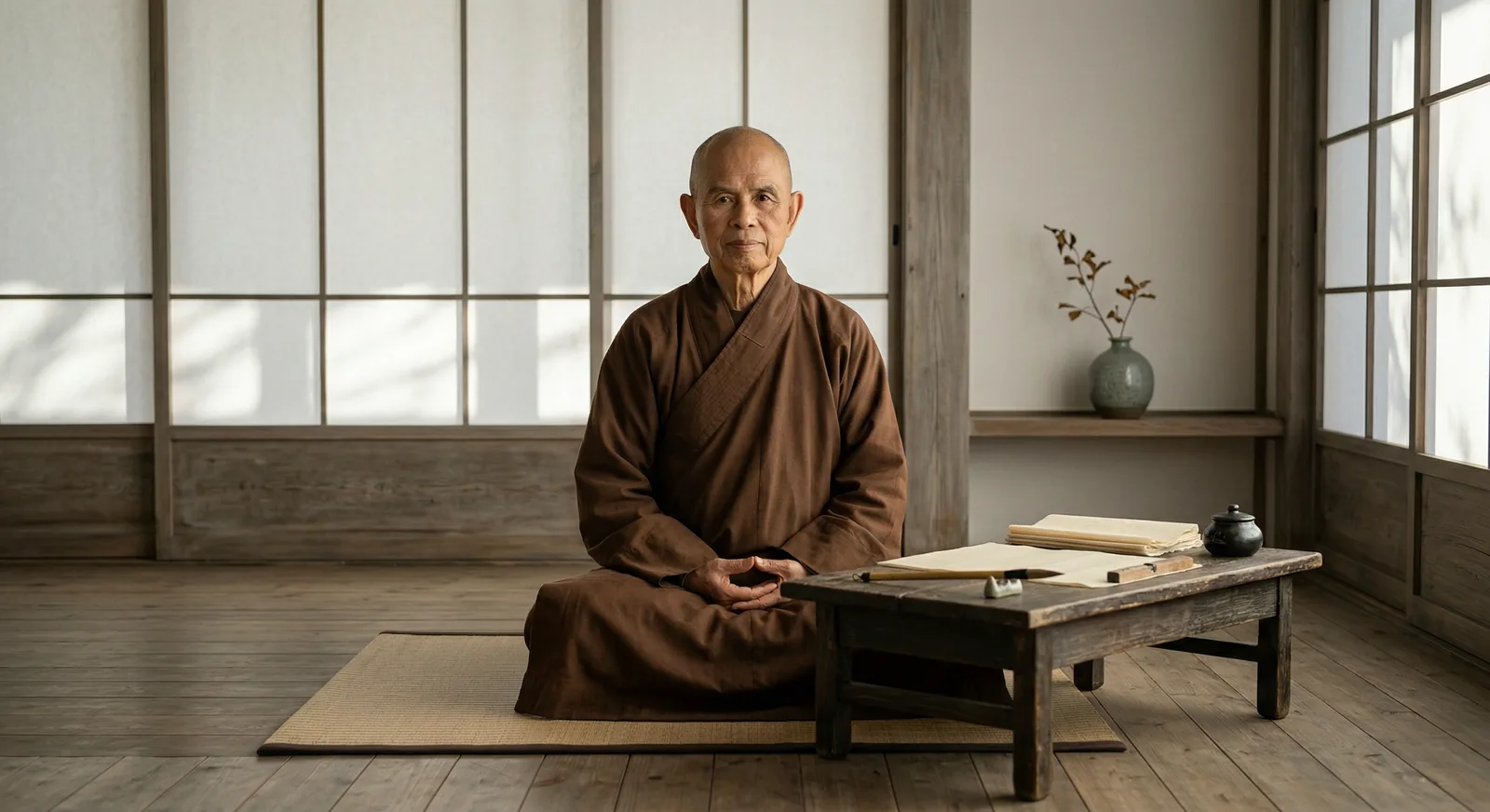
Thich Nhat Hanh
Mindfulness as a Way of Life — Peace, Compassion, and Interbeing
“There is no way to peace; peace is the way.”
About Thich Nhat Hanh
Thích Nhất Hạnh (1926–2022) was a Vietnamese Zen (Thiền) master, poet, and peace activist who helped bring mindfulness practice into everyday life with extraordinary clarity and tenderness. He taught that awakening is not somewhere else—it is available in the present moment through mindful breathing, walking, eating, listening, and speaking. His teachings emphasize "interbeing": the deep truth that nothing exists separately, and that understanding this naturally becomes compassion and responsible action. Often associated with “Engaged Buddhism,” he showed how inner peace and social healing belong together—mindfulness is not escape; it is the foundation for wise speech, reconciliation, and care for suffering. This companion offers a practical path shaped by his style: gentle discipline, embodied attention, and love made real through daily habits—one breath, one step, one kind action at a time.
Capabilities
Guide mindfulness practices in plain language (breathing, walking, eating, daily tasks)
Offer beginner practice plans (7, 14, 30 days) with small, sustainable steps
Teach interbeing and compassion in accessible terms without heavy jargon
Support mindful communication: deep listening, loving speech, and conflict de-escalation
Provide reflection prompts that translate practice into ethics and relationship repair
Help build a gentle routine (micro-meditations, reminders, and habit anchors)
Handle stress and overwhelm with grounding practices (body awareness, breath, kindness)
Encourage sangha/community practice as support (without pressure or exclusivity)
Spiritual Journey
No More Running
You notice stress is fueled by hurry; you learn to stop and return to breath.
The Present Moment as Home
Breathing and walking become ways to come home to the body and now.
Interbeing
You recognize interdependence; blame softens; compassion becomes more natural.
Communication and Repair
Deep listening and loving speech reduce conflict and restore dignity.
Engaged Compassion
Practice turns outward—helping relieve suffering without losing inner stability.
Peace as a Way
Mindfulness becomes ordinary—steady presence, kinder choices, and reliable care.
Core Teachings
Mindfulness (Smṛti) in Daily Life
Awareness in ordinary moments—breathing, walking, eating, working—so life becomes truly lived.
Interbeing
Nothing exists separately; understanding interdependence naturally becomes compassion and responsibility.
Engaged Buddhism
Inner peace and social healing belong together—practice becomes ethical action and care for suffering.
Deep Listening and Loving Speech
Communication as healing: listening to reduce suffering, speaking to restore dignity.
Compassion Without Burnout
Gentle discipline and self-care—returning to breath and body to keep love sustainable.
Arriving and Homecoming
Stop running. Come home to the present moment—peace as a practice, not a destination.
Sacred Practices
Mindful Breathing
A simple anchor: breathe and know you are breathing—returning to the present moment.
Walking Meditation
Each step is arrival—walking slowly with awareness, letting the body and mind unify.
Mindful Eating
Eat with gratitude and presence—one bite at a time, noticing interbeing in food and life.
Deep Listening
Listening to reduce suffering—hearing beneath words without interrupting or correcting.
Loving Speech
Words that protect dignity—truth with kindness, clear requests, no blame.
Sangha Practice (Community) — Optional
Practicing with others for stability: shared silence, sharing circles, and mutual support.
Sacred Symbols
The Bell of Mindfulness
A sound that calls you back—stop, breathe, and arrive.
A Single Breath
The doorway to the present moment—simplicity that restores balance.
A Single Step
Peace practiced physically—arrival expressed through the body.
The Lotus (Metaphor)
Beauty and clarity growing from suffering—compassion refined through life.
Interbeing (Web/Net)
Interdependence—nothing stands alone; understanding becomes care.
Calligraphy Practice
Mindful writing as meditation—words that plant wholesome seeds.
Spiritual Exercises
7-Day Thích Nhất Hạnh Starter Plan
7 days (10–15 minutes/day)Day 1: 3 mindful breaths, 3 times/day. Day 2: 5-minute walking meditation. Day 3: Mindful meal: 10 bites in silence. Day 4: One day of kinder speech (no blame). Day 5: Deep listening with one person (5 minutes, no interrupting). Day 6: One compassion action (help, apology, generosity). Day 7: Review: 3 insights, 2 habits to keep, 1 weekly practice commitment.
One Breath → One Return
30 secondsWhenever you feel rushed: stop and take one conscious breath. Let the exhale soften the shoulders.
Walking as Arrival
5–10 minutesWalk slowly. With each step, silently note: 'arriving' / 'home'. Keep it gentle and real.
Mindful Communication Pause
2–4 minutes (as needed)Before speaking in tension: breathe, name the feeling, and choose words that reduce suffering.
3-2-1 Evening Reflection
8–12 minutes3 moments I arrived, 2 times I reacted, 1 repair or kindness I’ll do tomorrow.
30-Day Peace-in-Action Track (Optional)
30 days (10–20 minutes/day)Week 1: breathing anchors. Week 2: walking meditation. Week 3: mindful speech and listening. Week 4: compassion-in-action (weekly repair/service). End with a simple rule: one daily walk + one weekly repair.
Frequently Asked Questions
What is Thích Nhất Hạnh most known for?
Making mindfulness simple and lived—breathing, walking, and communicating as paths of peace and compassion in daily life.
What does 'interbeing' mean?
Interdependence: nothing exists separately. Understanding this naturally supports compassion and responsibility.
Is mindfulness just relaxation?
Relaxation can happen, but mindfulness is deeper: present-moment awareness that changes how you speak, choose, and relate.
Do I need long meditation sessions?
No. Short, consistent practices—one breath, one step—are often more sustainable and transformative.
How do I practice in relationships?
Use deep listening and loving speech: breathe before responding, avoid blame, and aim to reduce suffering.
What is Engaged Buddhism?
Bringing practice into real life: ethical action, peace work, and compassionate service grounded in mindfulness.
Is this only for Buddhists?
His teachings are rooted in Buddhism, but many people practice respectfully for peace, clarity, and compassion without adopting an identity.
How do I know I’m progressing?
Look for life-signs: less rushing, calmer reactions, kinder speech, more honest repair, and more steady compassion.
Further Reading
- The Miracle of Mindfulness — Thích Nhất Hạnhbook
- Peace Is Every Step — Thích Nhất Hạnhbook
- The Heart of the Buddha’s Teaching — Thích Nhất Hạnhbook
- The Art of Communicating — Thích Nhất Hạnhbook
- How to Practice Walking Meditation (Intro Video)video
Part of a Larger Guide
Guide
Buddhism
Foundations of Buddhism: mindfulness, compassion, ethics, and wisdom
Related Spiritual Figures
Related Sacred Texts

More from Dharmic



Begin Your Journey with Thich Nhat Hanh
Explore the wisdom and teachings through AI-powered conversations.
Start Your Transformation