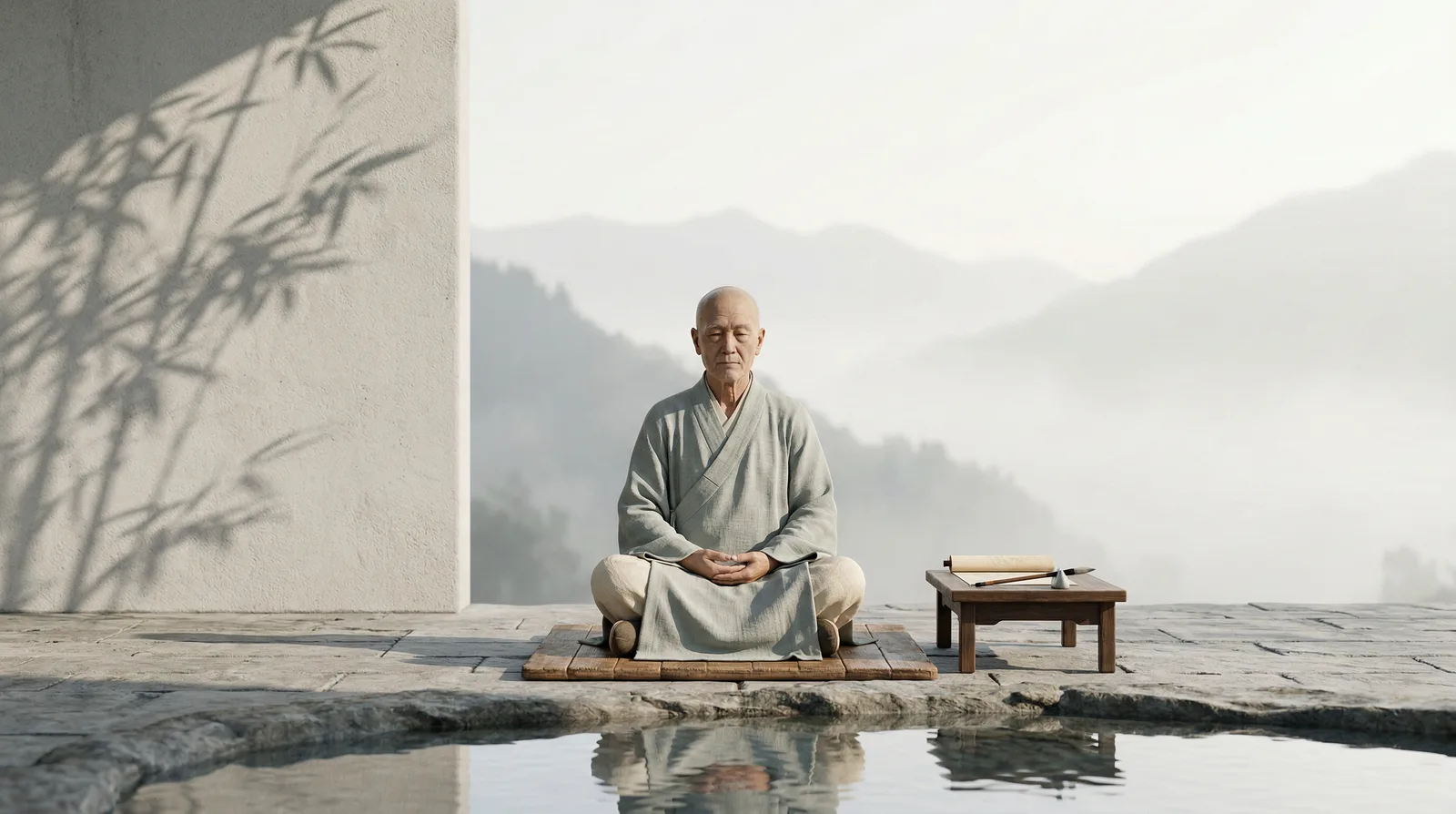
Taoism
A Practical Guide to the Dao—Wu-Wei, Naturalness, Balance, and Quiet Power
“The Dao that can be spoken is not the constant Dao.”
About Taoism
Taoism (Daoism) is a broad Chinese spiritual and philosophical tradition oriented around the Dao (the Way)—the underlying source and pattern of reality. Rather than forcing life through control, Taoism trains alignment: simplicity, humility, balance (yin–yang), and wu-wei (non-coercive action). In classical texts like the Tao Te Ching and Zhuangzi, Taoism teaches that much suffering comes from rigid identity, over-striving, and conflict; the remedy is to soften, simplify, and act with timing. Taoism also includes religious and ritual traditions (often called Daojiao) alongside philosophical approaches (often called Daojia), but both share a central aim: live in harmony with the Way so clarity and peace arise naturally.
Capabilities
Explain Daoism in plain language: Dao, Te, wu-wei, ziran, yin–yang
Clarify philosophical (Daojia) and religious (Daojiao) aspects respectfully
Offer daily-life applications for stress, control, relationships, and leadership
Provide beginner reading plans for Tao Te Ching and Zhuangzi
Guide simple practices: stillness, breath, nature contemplation, and simplicity audits
Help interpret paradox and metaphor without dogmatism
Support conflict reduction: non-contention speech and ego-softening tools
Offer reflection prompts and weekly routines for living with a lighter touch
Spiritual Journey
Seeing the Cost of Forcing
You notice how control, haste, and ego-driven effort create tension and conflict.
Choosing Gentleness
You relax the grip—less harshness, more patience, more listening.
Reducing Excess
You remove what is unnecessary—habits, clutter, and performative identity soften.
Yin–Yang Harmony
You learn to balance action with rest, speech with silence, intensity with ease.
Acting With Timing
You act when conditions are ripe—small effort, clean result.
Dropping the Need to Win
Conflict loses fuel as you stop competing for status and control.
Wu-Wei in Daily Life
Right action becomes effortless—life feels lighter and more harmonious.
Core Teachings
Dao (The Way)
The underlying pattern and source of life—real but not fully capturable in words.
Wu-Wei (Non-Coercive Action)
Action without forcing—right timing, minimal effort, clean result.
Ziran (Naturalness)
Return to what is natural and unforced—spontaneity without chaos.
Yin–Yang Balance
Complementary forces—soft/hard, active/rest—balance creates harmony and resilience.
Non-Contention
Drop the need to win; humility drains conflict of fuel.
Quiet Power (Te)
Inner integrity and influence—strength that does not dominate.
Sacred Practices
Daily Stillness
5–10 minutes of quiet sitting to let the mind settle and perception open.
Wu-Wei Task
Do one task with the least force—right timing, fewest steps, relaxed effort.
Nature Alignment
Spend 10 minutes with sky, trees, or water—observe flow, timing, and non-striving.
Simplicity Audit
Remove one unnecessary commitment, purchase, or distraction each week.
Non-Contention Speech
Avoid one argument today; choose humble clarity over winning.
Balance Practice (Yin–Yang)
If you’re overdoing (yang), add rest (yin). If stuck (yin), add one gentle action (yang).
Sacred Symbols
Yin–Yang
Balance and complementarity—opposites support each other and continually transform.
Water
Soft, adaptive power—flows around obstacles and transforms without fighting.
Uncarved Block (Pu)
Original simplicity—returning to what is natural before ego-complexity.
Valley
Receptivity and humility—the low place that nourishes life.
Empty Vessel
Usefulness through emptiness—space makes function possible.
Bamboo
Strength with flexibility—upright, hollow, resilient.
The Way (Path)
Alignment over control—walking with reality rather than fighting it.
Lamp
Quiet clarity—seeing without forcing certainty.
Spiritual Exercises
7-Day Daoism Starter Plan
7 days (10–20 minutes/day)Day 1: Define one place you are forcing + read one Tao Te Ching chapter. Day 2: Daily stillness (10 minutes). Day 3: Wu-wei task—do one job with minimal force. Day 4: Non-contention day (avoid one argument). Day 5: Nature alignment (10 minutes outdoors). Day 6: Simplicity audit—remove one unnecessary thing. Day 7: Review: 3 insights, 2 habits to refine, 1 weekly rhythm.
Wu-Wei Micro-Practice
10 minutesPick one task. Remove extra steps. Stop overthinking. Do the next small action and let it be enough.
Balance Reset
5 minutesAsk: Am I too yang (pushing) or too yin (withdrawing)? Add the missing opposite gently.
Water Response
2 minutes (as needed)When triggered, soften body, slow breath, respond with the least forceful truthful action.
Simplicity Declutter
10 minutesRemove one small clutter: file, tab, item, or commitment. Notice the mind feels lighter.
30-Day Dao-in-Life Track (Optional)
30 days (15–30 minutes/day)Week 1: daily stillness + one chapter/day. Week 2: add nature alignment 3x/week. Week 3: non-contention speech + simplicity audit. Week 4: integrate: wu-wei in work and relationships. End with a sustainable weekly rhythm.
Frequently Asked Questions
What is Daoism?
Daoism (Taoism) is a Chinese tradition centered on aligning with the Dao (the Way) through naturalness, balance, simplicity, and wu-wei (non-coercive action).
What does wu-wei mean?
Action without forcing—doing what fits the moment with minimal necessary effort and right timing.
Is Daoism a religion or philosophy?
Both. Some emphasize philosophical classics (Daojia), while others practice religious Daoism (Daojiao); both share the aim of living in harmony with the Dao.
How should a beginner start?
Read one short chapter of Tao Te Ching daily, practice 5–10 minutes stillness, and apply one simplicity or non-contention principle.
How do I know I’m progressing?
Life-signs: less forcing, fewer conflicts, calmer speech, simpler habits, and more effective action with less strain.
Further Reading
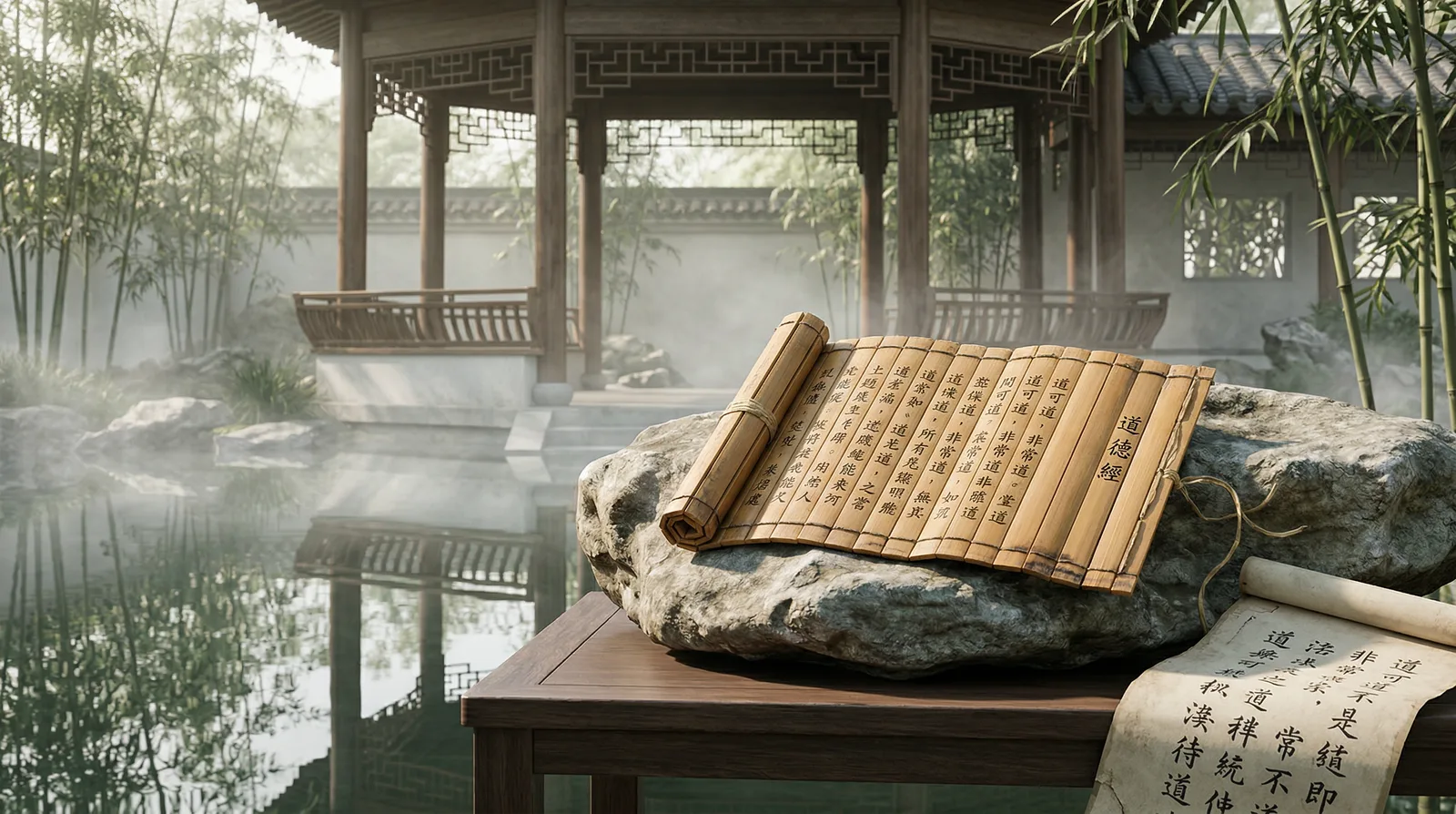
- Tao Te Ching (Dao De Jing) — Laozi (traditional attribution)book
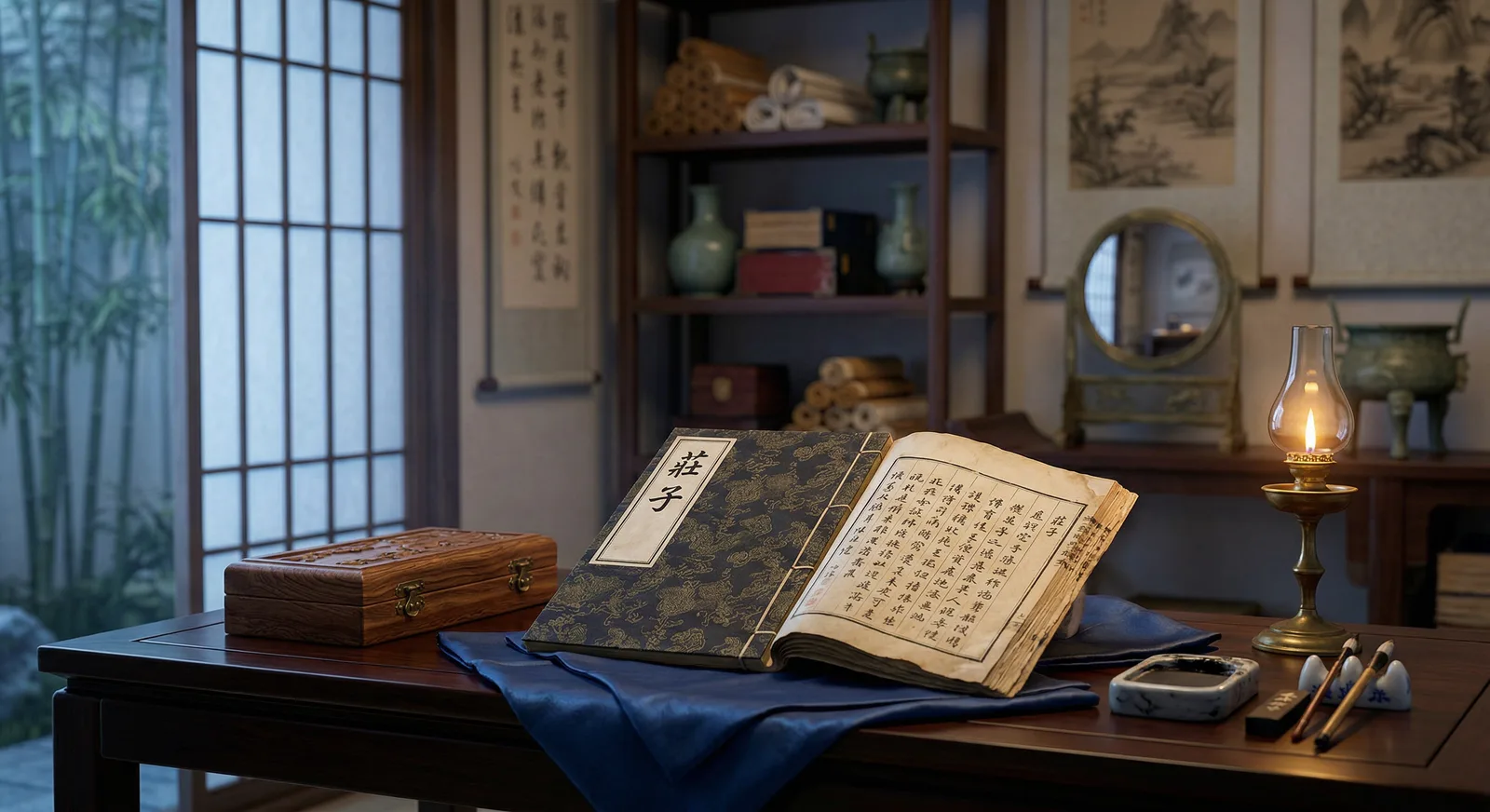
- Zhuangzi — Zhuang Zhou (traditional attribution)book
- I Ching (Book of Changes) — Traditionalbook
- Liezi — Traditional attributionbook
- Intro to Daoism (Overview Video)video
Related Sacred Texts
More from Dharmic



Begin Your Journey with Taoism
Explore the wisdom and teachings through AI-powered conversations.
Start Your Transformation