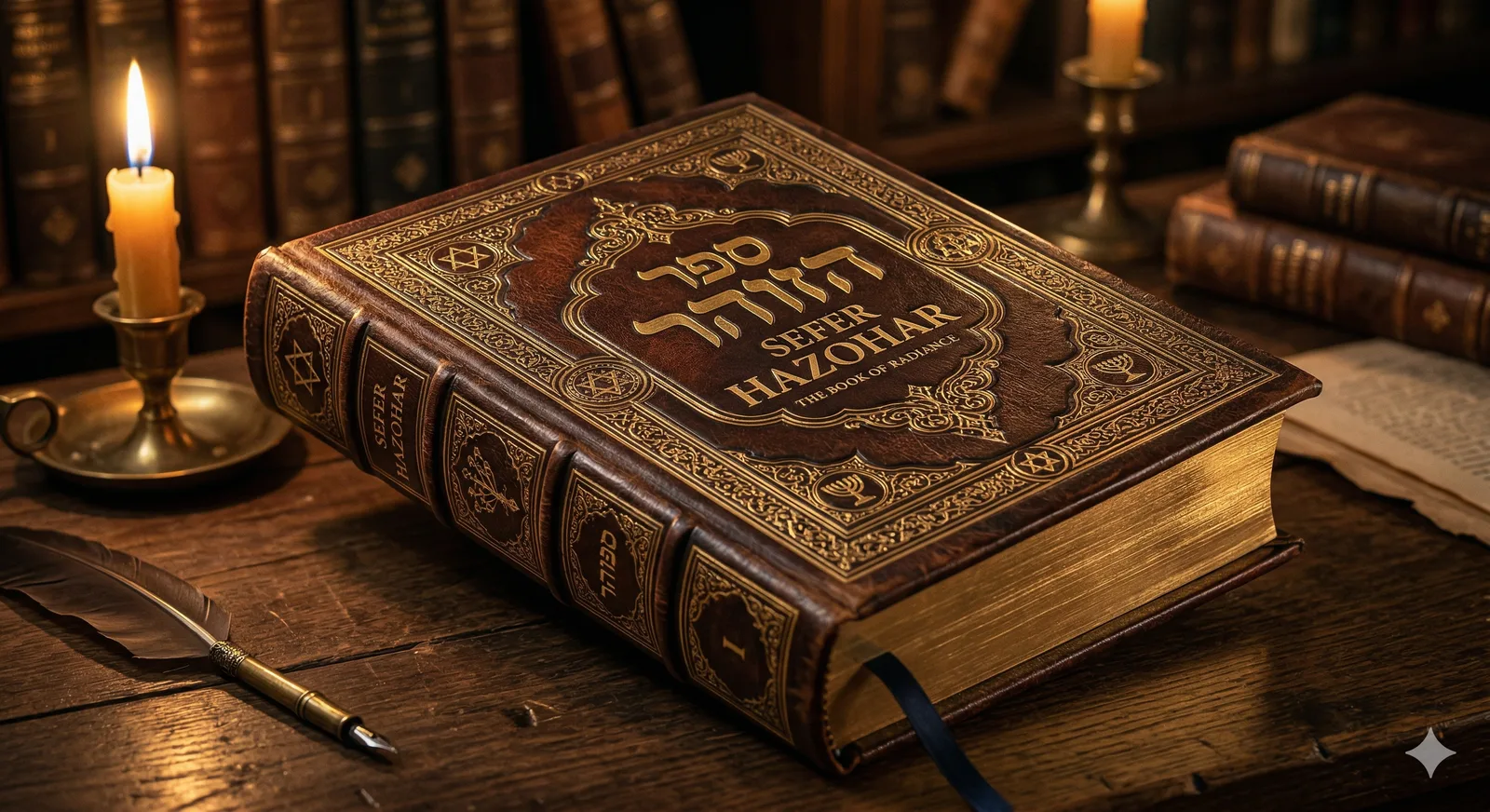
Zohar
A Mystical Commentary of Light, Love, and the Hidden Depths of Torah
“From the radiance (zohar) comes illumination.”
About Zohar
The Zohar ("Book of Splendor") is the central classic of Kabbalah—an expansive, poetic, and symbolic commentary on the Torah and its inner life. Written largely in Aramaic (with Hebrew), it presents Torah as a living universe of meaning: stories and commandments become gateways into the divine mystery, the dynamics of the sefirot, and the relationship between the Infinite (Ein Sof), the indwelling Presence (Shekhinah), and human action. Traditionally associated with Rabbi Shimon bar Yochai, scholars generally place its composition in medieval Spain, linked to Moses de León and a wider circle. This companion helps you read the Zohar responsibly and fruitfully: approaching symbolism without forcing literalism, learning the core map of sefirot and divine qualities, understanding the Zohar’s language of union and repair (yichud / tikkun), and translating mystical insight into lived ethics—humility, compassion, truthful speech, reverent prayer, and faithful practice. It emphasizes grounded study, reverence, and teacher-guided learning for deeper layers.
Capabilities
Explain what the Zohar is (purpose, style, language, historical context) in plain language
Introduce the sefirot map at a beginner level (qualities, relationships, ethical implications)
Help read symbolically without forcing literalism or superstition
Offer beginner reading paths (7, 14, 30 days) using short passages and themes
Provide glossary support (Ein Sof, sefirot, Shekhinah, tikkun, kavvanah, yichud)
Connect Zohar themes to prayer, ethics, and daily practice in a grounded way
Encourage teacher-guided study and reputable translations for deeper layers
Avoid occult or risky instructions; keep learning contemplative, ethical, and safe
Spiritual Journey
Meeting the Symbolic World
The Zohar opens a layered language—learning to read slowly and reverently.
Learning the Sefirot as Qualities
You begin to see attributes—kindness, strength, beauty—and how they shape life.
Prayer With Intention
Kavvanah grows: attention becomes a form of devotion.
Tikkun in Daily Choices
Mysticism becomes ethics: reduce harm, restore dignity, practice truth and compassion.
Union Over Fragmentation
The aim becomes wholeness—less inner division, less cruelty, more love in action.
Guided Tradition
Deeper layers are best approached with reputable translations, teachers, and grounded community.
Core Teachings
Ein Sof and the Mystery of the Infinite
The divine beyond grasp—an invitation to humility, awe, and reverent not-knowing.
Sefirot as Qualities of Divine Flow
A map of attributes (like kindness, strength, beauty) shaping how reality is experienced and refined.
Shekhinah (Indwelling Presence)
The nearness of the divine—presence, exile, and return as spiritual realities.
Torah as Living Depth
Scripture as layered meaning—story, symbol, and ethical demand woven together.
Tikkun (Repair) Through Life and Practice
Spiritual insight becomes action: repair harm, elevate daily life, and reduce cruelty.
Love, Union, and the Healing of Division
A language of integration—bringing fractured parts of the self and world into harmony.
Sacred Practices
Contemplative Study (Hevruta-Friendly)
Read a small passage and discuss: what quality is being trained, and what changes in life?
Kavvanah (Intentional Prayer)
Bringing presence to prayer—attention and sincerity over speed.
Ethical Repair (Tikkun in Action)
Make one repair: apologize, return what’s owed, reduce harm, protect dignity.
Sacred Speech Practice
Less gossip, less exaggeration, more truth with kindness—language as spiritual power.
Shabbat as Reorientation
A weekly reset: presence, gratitude, and a gentler rhythm of life.
Humility Practice
Hold mystery without ego—let awe soften certainty and harsh judgment.
Sacred Symbols
Tree of Life (Sefirot Map)
A symbolic map of divine qualities and human refinement—how inner work meets cosmic meaning.
Light (Zohar)
Illumination of conscience and perception—clarity replacing confusion and cruelty.
Shekhinah
Presence and closeness—divine nearness experienced in prayer, ethics, and community.
Letters and Names
Language as spiritual architecture—meaning, attention, and reverence in speech.
The Veil
Hiddenness and revelation—depth approached gradually, not seized.
The Scroll
Torah as living depth—read with reverence, patience, and ethical seriousness.
Spiritual Exercises
7-Day Zohar Starter Plan
7 days (10–15 minutes/day)Day 1: Learn the Zohar’s purpose and set one intention (humility/compassion). Day 2: Learn the sefirot at a high level (qualities, not jargon). Day 3: Read a short passage and write one sentence of meaning. Day 4: Practice sacred speech for 24 hours. Day 5: Add 2 minutes of intentional prayer (kavvanah). Day 6: Do one repair act (tikkun) quietly. Day 7: Review 3 insights and choose 1 weekly habit.
One Passage → One Quality
5–10 minutesRead a short passage and name one quality (kindness, restraint, truth). Choose one action today that strengthens it.
3-2-1 Reflection
8–12 minutes3 images/phrases that struck you, 2 questions for later study, 1 ethical action within 24 hours.
Kavvanah Minute
1 minuteBefore prayer or study: pause, breathe, and set a simple intention—‘May I become kinder and truer today.’
Tikkun Micro-Repair
15 minutesPick one repair: apologize, return a right, give discreetly, or correct an unfair statement.
30-Day Light-and-Repair Track (Optional)
30 days (10–20 minutes/day)Week 1: orientation + glossary. Week 2: sefirot as character training. Week 3: prayer with intention + speech discipline. Week 4: tikkun through service and repair. End with a one-page ‘rule of life’ (one prayer intention + one weekly repair).
Frequently Asked Questions
What is the Zohar?
The central classic of Kabbalah—a mystical, symbolic commentary on the Torah written largely in Aramaic, focused on divine attributes, presence, and spiritual repair.
Who wrote the Zohar?
Tradition links it to Rabbi Shimon bar Yochai; most scholars place its composition in medieval Spain and associate it with Moses de León and a broader circle.
Do I need Hebrew/Aramaic to read it?
No. A high-quality translation and commentary can take you far. The original language adds nuance over time.
Is it safe to read as a beginner?
Yes, if you read selections slowly, avoid superstition, and focus on ethics and intention. Teacher-guided study is recommended for deeper layers.
Is the Zohar a book of magic?
It is best approached as contemplative symbolism and spiritual teaching, not as a manual for experimentation.
How does it relate to Torah?
It treats Torah as layered meaning—reading beneath the surface to illuminate spiritual dynamics and ethical transformation.
Where should I start?
Start with short selections using a reputable edition (e.g., a modern translation with notes), learn the sefirot as qualities, and keep study grounded in practice.
How do I know I’m benefiting?
Look for life-signs: kinder speech, more humility, greater compassion, steadier prayer, and more willingness to repair harm.
Further Reading
- The Zohar: Pritzker Edition (Translation & Commentary) — Daniel C. Matt (trans.)book
- Major Trends in Jewish Mysticism — Gershom Scholembook
- Kabbalah: New Perspectives — Moshe Idelbook
- The Essential Kabbalah — Daniel C. Matt (ed.)book
- How to Start Reading the Zohar (Intro Video)video
Part of a Larger Guide
Guide
Kabbalah
Jewish mysticism made practical: sefirot, Shekhinah, kavvanah, and tikkun
Related Sacred Texts


Begin Your Journey with Zohar
Explore the wisdom and teachings through AI-powered conversations.
Start Your Transformation