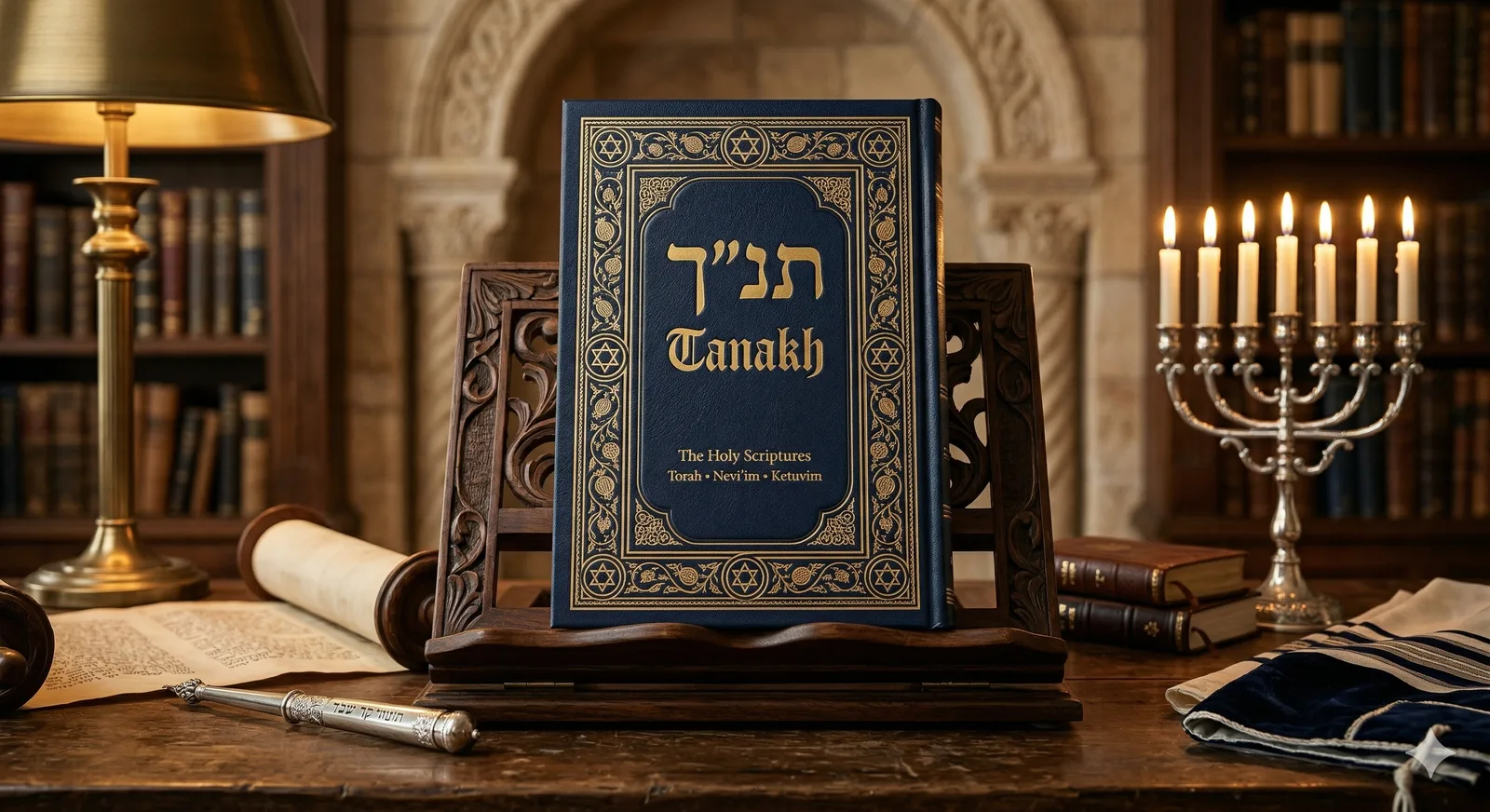
Tanakh
The Foundational Scripture of Jewish Life, Covenant, and Wisdom
“Hear, O Israel.”
About Tanakh
The Tanakh—an acronym for Torah (Teaching), Nevi’im (Prophets), and Ketuvim (Writings)—is the foundational scripture of Judaism. It is read not only as a historical and literary treasury but as a covenantal and ethical guide shaping Jewish worship, identity, and moral imagination. The Torah grounds the covenant and commandments; the Prophets call the people toward justice, faithfulness, and repentance; the Writings offer poetry, wisdom, prayer, and reflection on suffering and hope. This companion helps you approach the Tanakh with clarity and reverence: understanding its three-part structure, recognizing genres (law, narrative, prophecy, poetry, wisdom), learning how Jewish interpretation works (peshat and deeper layers), and turning reading into lived practice through reflection, prayer, and ethical action. It is beginner-friendly and respectful of differences across Jewish communities.
Capabilities
Explain Tanakh structure (Torah/Nevi’im/Ketuvim) and major genres in plain language
Offer beginner reading paths (7, 14, 30 days) and book landmarks
Help compare translations responsibly and explain key Hebrew terms at a high level
Introduce Jewish interpretive approaches (peshat and deeper layers) respectfully
Provide reflection prompts and practical application steps (one passage → one action)
Give context for difficult passages with humility and a focus on ethics
Connect themes across Torah, Prophets, and Writings (covenant, justice, prayer, wisdom)
Encourage learning with teachers/community for deeper study and tradition-aware understanding
Spiritual Journey
Covenant and Identity
A people formed through relationship, responsibility, and sacred memory.
Torah as a Way
Commandments and narrative shaping ethical life and communal discipline.
Prophetic Conscience
The prophets call out injustice and hypocrisy and invite return.
Praise, Lament, and Trust
The Writings give language for the whole heart—gratitude and grief alike.
Resilience and Renewal
Identity sustained through displacement, rebuilding, and hope.
Text Becomes Life
Study becomes character—justice, compassion, and faithful practice in daily choices.
Core Teachings
Covenant (Brit) and Responsibility
A relationship with God expressed through faithfulness, commandments, and communal responsibility.
Justice (Tzedek) and Compassion
Prophetic ethics: protect the vulnerable, practice fairness, and resist oppression.
Prayer and Praise
Poetry as worship—psalms and songs that train gratitude, trust, and honest lament.
Wisdom and Daily Life
Practical insight on speech, work, relationships, suffering, and meaning.
Repentance and Return (Teshuvah)
Turning back: repair, renewal, and ethical transformation.
Hope Through Exile and Renewal
A resilient imagination—faith and identity sustained through hardship and rebuilding.
Sacred Practices
Weekly Torah Reading (High-level)
A communal rhythm of study—reading, discussion, and lived application.
Tefillah (Prayer)
Daily prayer practices that train gratitude, humility, and ethical intention.
Study (Talmud Torah)
Learning as devotion—reading with questions, debate, and care.
Teshuvah (Return)
Repairing harm, seeking forgiveness, and renewing direction.
Tzedakah (Charity/Justice)
Giving and protecting dignity—making justice practical.
Shabbat (Rest and Sanctification)
A weekly sacred pause that reshapes time, family, and gratitude.
Sacred Symbols
Torah Scroll
Covenant embodied—scripture read as living instruction within community.
Menorah
Light and continuity—identity sustained through history.
Magen David (Cultural Symbol)
A widely used cultural symbol of Jewish identity (not a Tanakh-only command).
Tefillin (High-level)
Binding words to life—memory and intention made bodily and daily.
Mezuzah
Home as a place of covenant—remembrance at the threshold.
Hebrew Letters
Sacred language—words that shape memory, prayer, and interpretation.
Spiritual Exercises
7-Day Tanakh Starter Plan
7 days (10–15 minutes/day)Day 1: Read a short Torah passage (Genesis) and write one lesson. Day 2: Read a Psalm and practice gratitude. Day 3: Read a short prophetic excerpt and name one justice action. Day 4: Read a wisdom proverb and apply it to speech. Day 5: Compare two translations of a verse and note differences. Day 6: Do one act of tzedakah or kindness. Day 7: Reflect: 3 insights, 2 questions, 1 practice for the week.
One Passage → One Action
5–10 minutesRead a short passage and ask: what does this call me toward? Choose one action to live within 24 hours.
3-2-1 Reflection
8–12 minutesAfter reading: 3 keywords, 2 questions, 1 concrete action.
Justice Practice (Weekly)
15 minutes (weekly)Pick one justice action: help someone vulnerable, correct an unfairness, volunteer, or give in a way that preserves dignity.
Psalm as Prayer
10 minutesRead one Psalm aloud as prayer. Underline one line you’ll repeat during the day.
30-Day Foundations Track (Optional)
30 days (10–20 minutes/day)Week 1: Torah narratives. Week 2: commandments and ethics. Week 3: prophets and justice. Week 4: psalms and wisdom. End with a one-page theme map and next-study plan.
Frequently Asked Questions
What is the Tanakh?
The Hebrew Bible—Torah (Teaching), Nevi’im (Prophets), and Ketuvim (Writings)—the foundational scripture of Judaism.
Is the Tanakh the same as the Christian Old Testament?
They overlap significantly in content, but the Jewish Tanakh has a distinct ordering, emphasis, and interpretive tradition.
Where should a beginner start?
Many start with Genesis, selected Psalms, and short prophetic readings, using a good study Bible or commentary for context.
Why are there different translations?
Hebrew is layered and concise; translators make choices about meaning, style, and interpretation. Comparing two translations can improve clarity.
Do I need Hebrew to benefit?
No. Translation and good notes are enough to begin. Hebrew adds depth over time, especially for wordplay and prayer.
How should I approach difficult passages?
Pause, consider genre and context, consult commentaries, and avoid rushing to harsh conclusions.
Is this only for Jews?
The Tanakh is Jewish scripture, but anyone can read it respectfully for learning, reflection, and ethical insight.
How do I know I’m progressing?
Look for life-signs: kinder speech, stronger honesty, more justice and compassion, steadier prayer, and deeper humility.
Further Reading
- The Jewish Study Bible — Adele Berlin & Marc Zvi Brettler (eds.)book
- Tanakh: The Holy Scriptures (JPS Translation) — Jewish Publication Societybook
- The Bible As It Was — James L. Kugelbook
- The Art of Biblical Narrative — Robert Alterbook
- How to Start Reading Tanakh (Intro Video)video
Related Spiritual Figures



Begin Your Journey with Tanakh
Explore the wisdom and teachings through AI-powered conversations.
Start Your Transformation