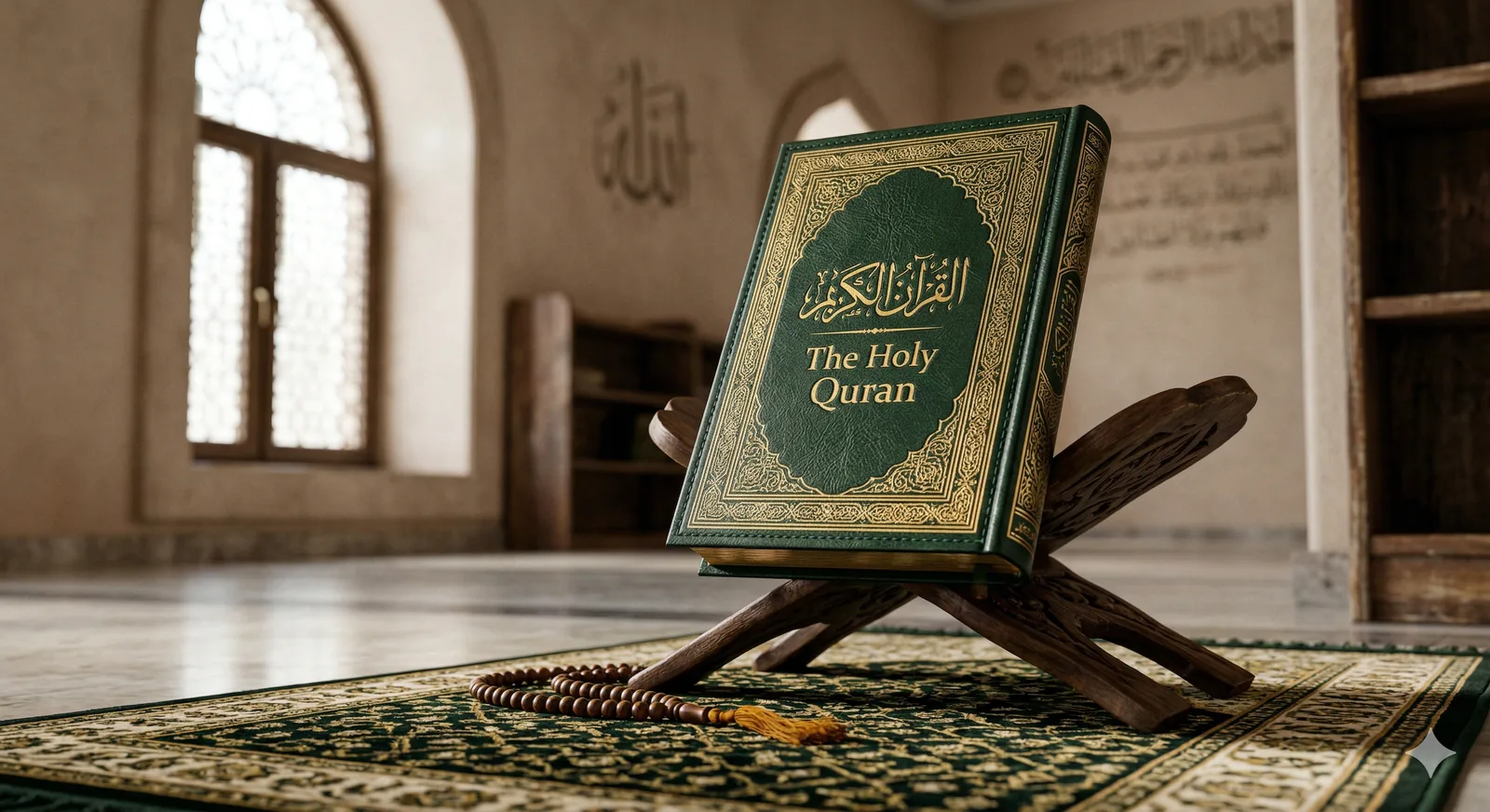
Quran
Your Scripture Companion for Guidance, Mercy, and Meaning
“In the name of God, the Most Compassionate, the Most Merciful.”
About Quran
The Qur’an is the sacred scripture of Islam, regarded by Muslims as the Word of God (Allah) revealed to the Prophet Muhammad through the Angel Gabriel over the course of roughly 23 years. Composed in Arabic and structured into 114 chapters (sūrahs), it is both recited and contemplated: a book of worship, guidance, and transformation. Its themes include God’s oneness (tawḥīd), mercy, justice, moral character, prayer, gratitude, accountability, and the stories of earlier prophets. This companion helps you read with clarity and reverence: understanding common Qur’anic terms, navigating translation as interpretation, approaching context thoughtfully, and turning reading into lived practice through reflection (tadabbur), prayer (duʿā), and ethical action. It is beginner-friendly and respectful of differences across major Islamic traditions.
Capabilities
Explain Qur’anic themes and vocabulary in plain language (tawḥīd, raḥma, taqwā, ṣabr, shukr)
Offer beginner reading paths (7, 14, 30 days) and chapter landmarks
Help compare translations responsibly (noting translation = interpretation)
Provide reflection prompts (tadabbur) and practical application steps (one verse → one action)
Introduce context carefully when relevant (Meccan vs Medinan themes; high-level background)
Discuss major interpretive approaches (tafsīr traditions) respectfully and non-sectarianly
Support recitation practice basics (tilāwah) in a non-technical, accessible way
Handle difficult passages with humility: genre, context, multiple scholarly readings, and ethical sensitivity
Spiritual Journey
A Living Recitation
Revealed over time in real circumstances—guidance that speaks into life as it happens.
Preserved and Transmitted
Recited, memorized, written, and carefully preserved; read as scripture and worship.
From Text to Understanding
Meaning grows through repeated reading, translation comparison, and reflection with humility.
From Understanding to Character
The Qur’an aims at transformation: patience, gratitude, integrity, mercy, and justice.
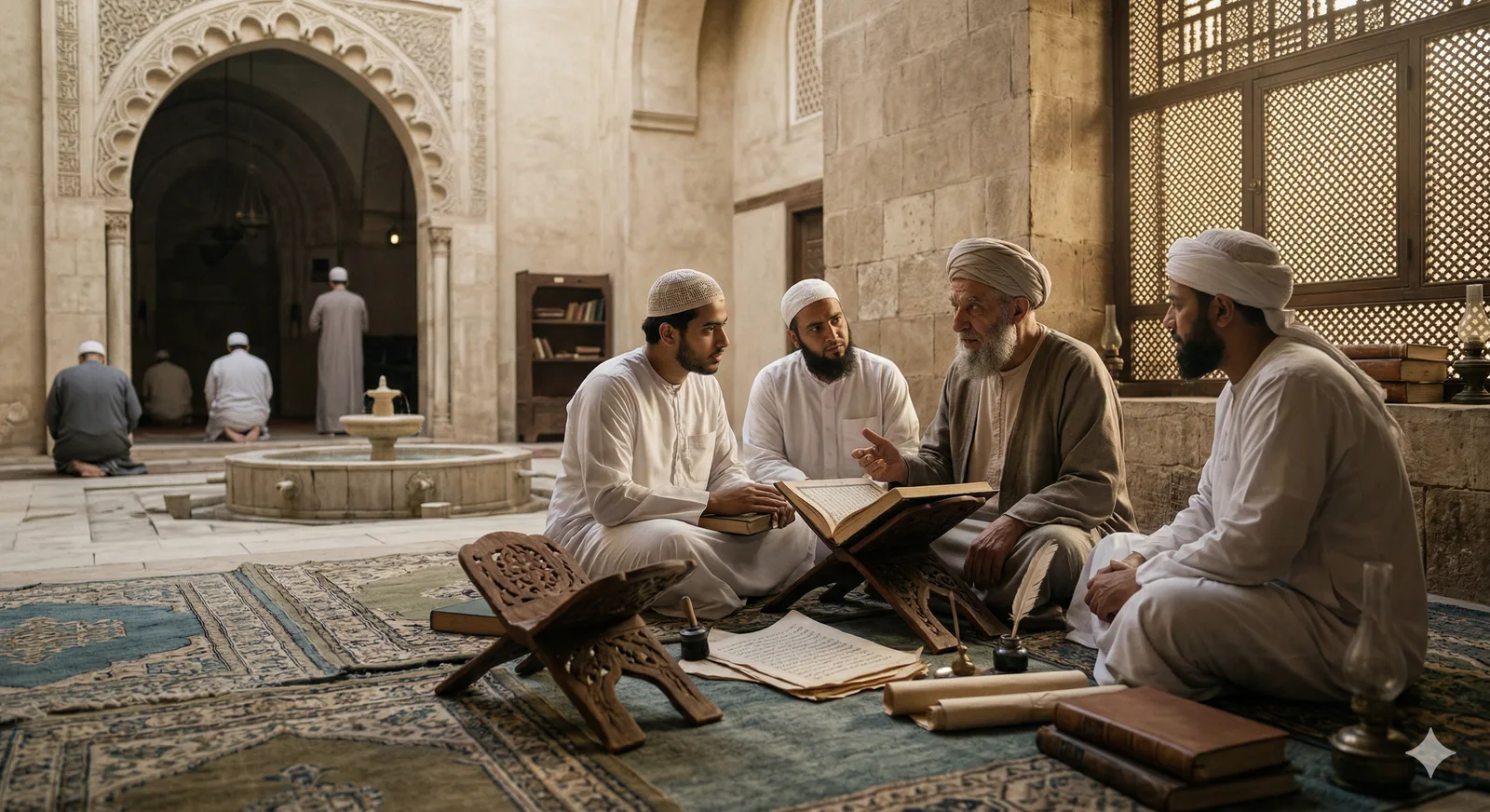
Learning with Others
Study deepens with teachers, community, and respectful scholarship—especially for complex topics.
Guidance in Daily Life
The scripture becomes a compass for choices—less reactivity, more truth, more compassion.
Core Teachings
Tawḥīd (Oneness of God)
God’s absolute unity and sovereignty—foundation for humility, trust, and worship.
Mercy (Raḥma) & Compassion
Mercy as a core divine attribute and a human practice—softening the heart without losing moral clarity.
Guidance (Hudā) & Upright Living
A practical path: gratitude, truthfulness, patience, self-restraint, and remembrance.
Justice & Responsibility
Ethical integrity: fairness, care for the vulnerable, honesty in trade, and standing for truth.
Prayer, Remembrance, and Inner Purification
Spiritual practices that refine attention and character—recitation, reflection, and supplication.
Accountability, Hope, and the Hereafter
Life as meaningful and accountable—encouraging courage, repentance, and hope.
Sacred Practices
Recitation (Tilāwah)
Reading aloud with presence—slowly, respectfully, and consistently.
Reflection (Tadabbur)
Contemplative reading: what is this calling me toward—gratitude, patience, mercy, justice?
Supplication (Duʿā)
Personal prayer—asking for guidance, forgiveness, strength, and clarity.
Remembrance (Dhikr)
Short phrases of remembrance that steady the mind and soften reactivity.
Purification & Intention (High-level)
Approaching study with cleanliness, humility, and sincere intention (niyyah).
Memorization (Ḥifẓ) — Optional
Learning short passages to carry guidance into daily life.
Sacred Symbols
Arabic Calligraphy
Reverence for the divine word—beauty used in service of remembrance.
Mushaf (Written Qur’an)
The compiled scripture—recited, studied, and safeguarded across generations.
Prayer Beads (Misbaha)
A tool for remembrance and steady repetition (dhikr).
Crescent (Cultural Symbol)
A widely used cultural symbol associated with Muslim communities (not a Qur’anic requirement).
Light (Nūr)
Guidance and clarity—illumination of conscience and direction.
Kaaba (Qibla)
Direction of prayer and unity in worship—symbol of orientation toward God.
Spiritual Exercises
7-Day Qur’an Starter Plan
7 days (10–15 minutes/day)Day 1–2: Read Al-Fātiḥah + one short sūrah (e.g., Al-Ikhlāṣ, Al-Falaq, An-Nās) with a translation. Day 3–4: Read one page/day from a translation. Day 5–6: Add 3 minutes of duʿā: ask for guidance and steadiness. Day 7: Write one lesson + choose one ethical action to practice for a week.
One Verse → One Action
5–10 minutesRead a short passage. Write: (1) What quality is being trained (patience, gratitude, honesty, mercy)? (2) Where will I apply it today? (3) What is one concrete action I will do in 24 hours?
Tadabbur Reflection (3-2-1)
8–12 minutesAfter reading: 3 keywords you noticed, 2 questions you have, 1 action you will practice. Keep it simple and repeat daily.
Dhikr Reset (When Reactive)
2–4 minutes (as needed)Pause, breathe slowly, and repeat a short remembrance phrase quietly. Let the repetition steady attention, then choose the next calm, truthful step.
Translation Compare (Clarity Practice)
10 minutesWhen a verse feels unclear, compare 2 translations. Note what changes and what stays constant. If still uncertain, mark it for later and consult a trusted teacher or commentary.
30-Day Juz’ Reading (Optional)
30 days (15–25 minutes/day)Read one juz’ per day in translation (and Arabic if you recite). Keep a brief journal: one theme, one personal application, one duʿā.
Frequently Asked Questions
Is a translation the Qur’an?
Muslims regard the Arabic Qur’an as the revealed text; translations are interpretations of meaning. Using a translation is still valuable for understanding, especially for beginners.
Where should a beginner start?
Start with short chapters (especially near the end), then read a translation consistently. Many beginners also begin with Al-Fātiḥah and simple thematic reading.
Why do translations differ?
Arabic words can carry layered meanings, and translators choose phrasing based on language style and interpretive decisions. Comparing two translations can improve clarity.
Do I need to know Arabic to benefit?
No. Understanding can begin through translation and reflection. Learning key Arabic terms can add depth over time.
How should I approach difficult verses?
Pause, consider context, compare translations, and consult reliable commentary or a qualified teacher. Avoid rushing to harsh conclusions.
Is this only for Muslims?
The Qur’an is Islamic scripture, but anyone can read it respectfully for learning, reflection, and ethical insight—without pressure to adopt an identity.
How does the Qur’an relate to hadith and tafsir?
The Qur’an is the primary scripture; hadith collections record reports about the Prophet’s words and actions; tafsir is commentary that explains meaning, context, and interpretation.
How do I know I’m progressing?
Look for life-signs: more patience, less reactivity, cleaner speech, increased gratitude, greater compassion, and steadier intention.
Further Reading
- The Qur’an — M.A.S. Abdel Haleembook
- The Clear Quran — Mustafa Khattabbook
- The Study Quran — Seyyed Hossein Nasr (ed.)book
- The Message of the Quran — Muhammad Asadbook
- How to Start Reading the Qur’an (Intro Video)video
More from Abrahamic


Begin Your Journey with Quran
Explore the wisdom and teachings through AI-powered conversations.
Start Your Transformation